 Whalesbook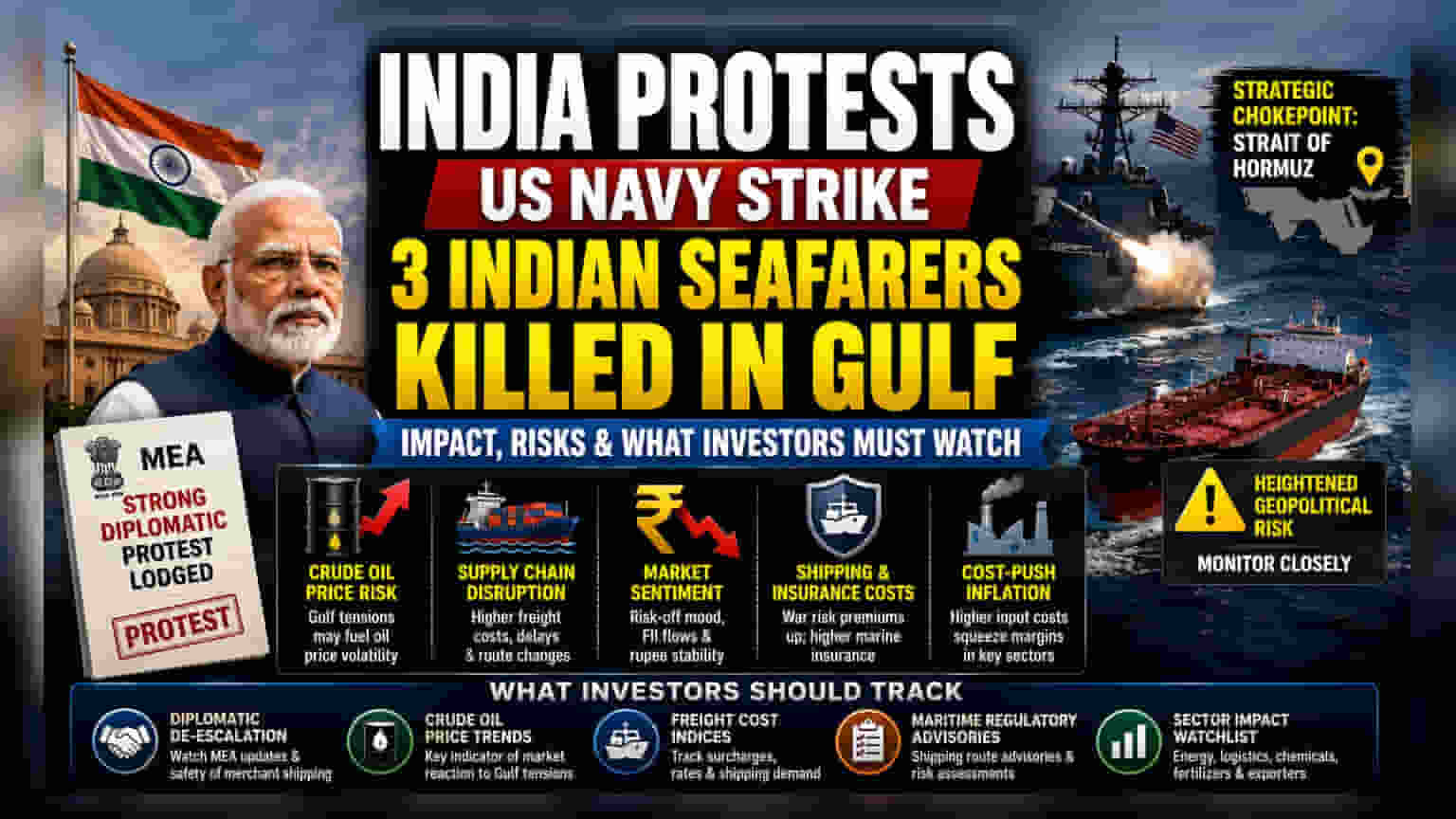


US Navy strikes in the Gulf have resulted in the tragic deaths of three Indian sailors, drawing strong diplomatic protests from New Delhi. For investors, this event elevates geopolitical risk in a critical maritime corridor. The incident highlights potential headwinds for crude oil prices, logistics costs, and supply chain stability, which are key watchpoints for India's trade and inflation outlook.
What Happened
India has officially lodged a strong diplomatic protest with the United States following a military strike by the US Navy in the Gulf that resulted in the death of three Indian merchant mariners. The Ministry of External Affairs has raised formal objections, citing the danger posed to commercial shipping personnel in international waters. Prime Minister Narendra Modi’s administration has characterized these actions as unjustified, even as New Delhi maintains its broader strategic and economic partnerships with the United States.
Why This Matters For Investors
For the stock market, this event is significant primarily due to its connection to the Strait of Hormuz, a critical maritime chokepoint for global energy and trade. When conflict impacts this corridor, it typically creates a ripple effect across Indian markets through two main channels: energy prices and supply chain costs. As India relies heavily on energy imports, any escalation in Gulf tensions often fuels concerns about crude oil price volatility, which can influence domestic inflation and corporate margins in energy-intensive sectors like manufacturing, logistics, and chemicals.
How Investors May Read This
Investors are likely to view this development as a signal of heightened geopolitical risk rather than an isolated incident. Market sentiment often reacts to such news by favoring 'defensive' positions. Increased uncertainty in trade routes can lead to higher marine insurance premiums and freight rates, as shipping companies may be forced to reassess traditional routes or face operational delays. While the direct impact on the stock market depends on the duration of these tensions, historical precedents suggest that investors monitor how such events influence the risk-off sentiment, foreign institutional investor (FII) flows, and the stability of the Indian Rupee.
The Bigger Business Context
India’s logistics and shipping sectors are particularly sensitive to disruptions in West Asian corridors. Any prolonged instability can impact the utilization of shipping capacity and drive up the 'war risk' surcharges on cargo. Companies involved in import-heavy businesses often face the immediate challenge of managing inventory costs, while exporters might see delays in reaching Western markets if vessels are diverted. Furthermore, since a significant portion of India's trade and energy security is tied to the stability of the Gulf region, persistent friction could strain macroeconomic stability, particularly if it translates into a sustained rise in global crude oil prices.
What Could Go Wrong
The primary risk for shareholders is the potential for cost-push inflation. If the situation leads to a spike in crude oil prices, this would increase the input costs for a wide range of industries, potentially squeezing profit margins. Additionally, any major disruption to supply chains—ranging from fertilizers to industrial raw materials—could result in production bottlenecks, which would weigh on the earnings outlook for manufacturing and consumer-facing sectors. There is also the broader risk of market volatility driven by uncertainty, which often leads to reduced risk appetite among institutional investors.
What Investors Should Track
Moving forward, the key monitorables are the progress of diplomatic de-escalation and any official updates on the safety of merchant shipping. Investors should track global crude oil price movements, as these are the quickest indicators of market reaction to Middle Eastern tensions. Additionally, trends in freight cost indices and any advisories from India's maritime regulators regarding shipping routes will provide clarity on the operational impact for the logistics and export-heavy sectors.