 Whalesbook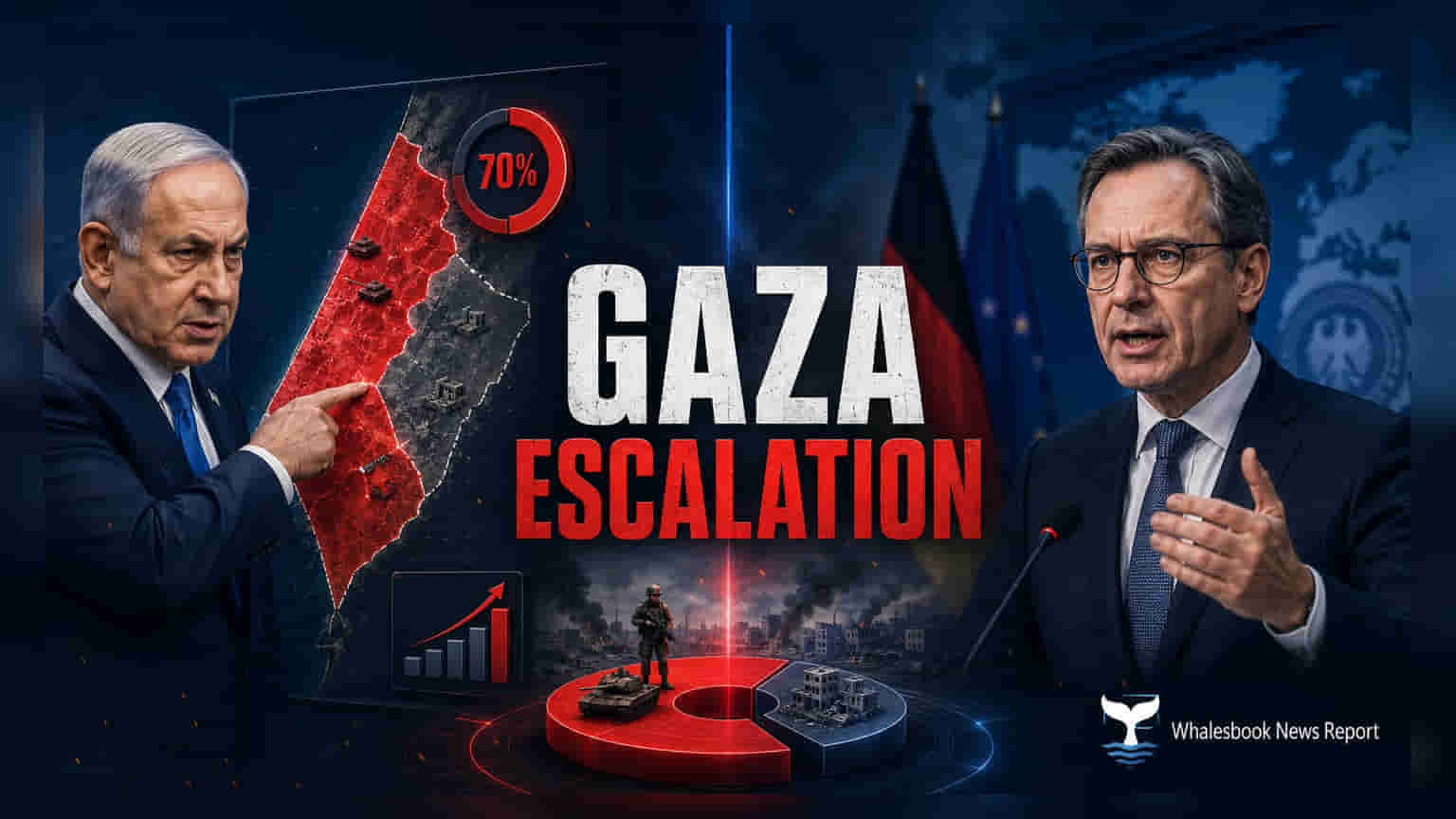


The Geopolitical Fracture
The diplomatic friction between Berlin and Jerusalem reached a new zenith as Germany explicitly challenged Israel’s territorial posturing in Gaza. By moving to solidify control over 70% of the enclave, the Israeli cabinet has effectively bypassed the operational boundaries established in the October ceasefire. This strategic pivot creates a direct conflict with Germany’s stated foreign policy objective, which seeks to prevent the permanent fragmentation of Palestinian territories. For Berlin, the political cost of supporting a key ally is being weighed against the mounting international pressure to arrest the slide into a protracted regional occupation.
Economic and Humanitarian Destabilization
The material reality on the ground highlights an unsustainable trajectory. With more than 50% of the healthcare infrastructure neutralized and nearly all educational facilities incapacitated, the long-term fiscal burden is shifting toward the international donor community. Estimates from the European Union and the United Nations place the eventual reconstruction requirement in excess of $70 billion. This figure serves as a sobering benchmark for institutional investors assessing the long-term risk profile of the Levant, as the lack of a stable political settlement guarantees that capital expenditure in the region will be focused on restorative, rather than productive, development.
The Forensic Bear Case
From a risk-assessment perspective, the current operational environment is characterized by extreme volatility and institutional degradation. The transition from a limited military footprint to an indefinite occupation strategy threatens to permanently alienate key regional partners, including Qatar and Turkiye, who acted as critical intermediaries for the original ceasefire. Furthermore, the explicit discourse from members of the Israeli Defense Ministry regarding population displacement poses a significant ESG-related risk for international entities with exposure to the region. The divergence between stated political goals—Netanyahu’s focus on the final elimination of militant elements—and the logistical reality of managing 2.3 million displaced persons suggests a high probability of continued socioeconomic decay.
Strategic Outlook
Market analysts remain concerned that the abandonment of the 'Yellow Line' boundary protocols will trigger a broader regional decoupling. As Israel signals an intent to push beyond the 70% threshold, the potential for an escalated conflict cycle increases. For international observers, the primary indicator of further destabilization will be any formal withdrawal of German support for military exports, which would represent a major recalibration of European-Israeli defense ties. Investors are currently pricing in a prolonged period of uncertainty, with little evidence of a viable pathway toward the economic or administrative stabilization of the enclave.