

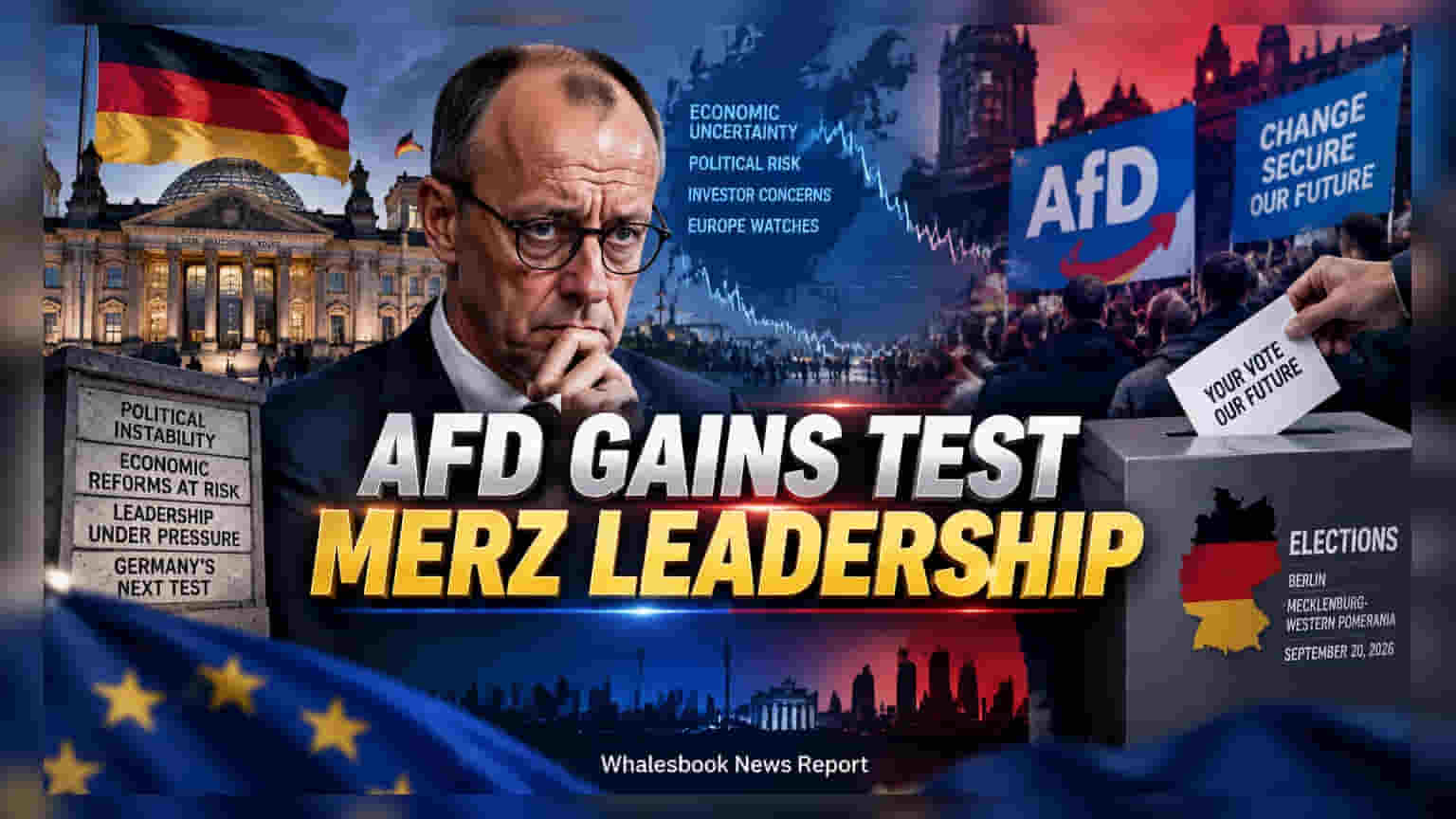
German Chancellor Friedrich Merz is facing a political crisis as his party, the CDU, deals with historic electoral losses and rising support for the far-right AfD. With regional elections on September 20, 2026, the focus for global investors is on whether political instability will stall Germany’s economic reform agenda.
German Chancellor Friedrich Merz is under significant political pressure following a historic electoral defeat for his Christian Democratic Union (CDU) party in the Saxony-Anhalt state election on September 6. With the far-right Alternative for Germany (AfD) securing 43.8% of the vote in that contest, the federal government is now facing a period of heightened instability ahead of two crucial regional elections in Berlin and Mecklenburg-Western Pomerania, scheduled for September 20, 2026.
The political situation has reached a critical stage, with Chancellor Merz—who has led the country since May 2025—canceling his planned trip to the United Nations General Assembly in New York. This move is widely viewed by political observers as a direct response to the domestic crisis, signaling a need for the leadership to remain in Berlin to manage internal party tensions and potential fallout from the upcoming regional contests.
Economic Implications of Political Volatility
For international investors and businesses, the stability of Germany is paramount as it remains Europe’s largest economy. The primary concern is that a weakened federal government may struggle to push through necessary economic reforms. Chancellor Merz campaigned on a platform of reviving Germany’s sluggish economic growth, but the current political climate, characterized by low public approval ratings and internal party discord, threatens to create a policy bottleneck. If the CDU continues to lose ground in regional states, it could lead to opposition in the Bundesrat, the legislative body representing the states, effectively paralyzing the government’s reform agenda.
Recent discussions within the CDU/CSU alliance regarding a potential change in leadership have added another layer of uncertainty. While the Chancellor has stated his intent to complete his mandate, the pressure from party members and the public is testing the resilience of the coalition. The rise of the AfD, which has gained momentum by focusing on economic concerns and migration policies, is fundamentally challenging the traditional political balance in Germany and making it difficult for mainstream parties to govern without forming complex, often fragile alliances.
What Investors Should Monitor Next
The immediate monitorable for both domestic and international stakeholders is the outcome of the elections in Berlin and Mecklenburg-Western Pomerania on September 20. These results will likely serve as a referendum on Chancellor Merz’s leadership and the effectiveness of the government’s current economic policies. Any further electoral losses could deepen the divide within the CDU and potentially lead to a more defensive or cautious policy approach from Berlin. Market observers will be looking for signs of whether the government can stabilize its political standing or if the country faces an extended period of legislative gridlock that could impact Europe’s broader economic outlook.