

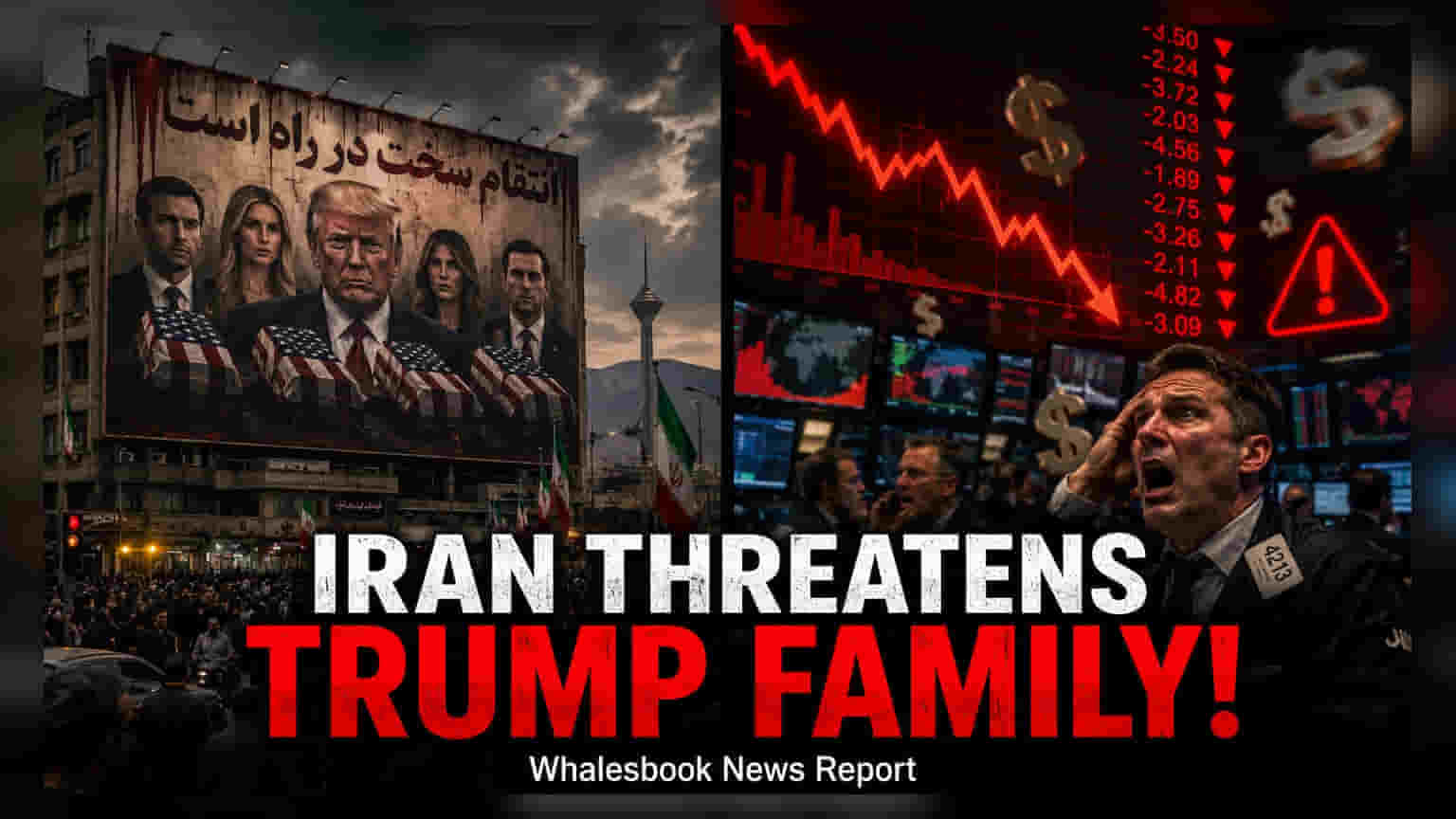
A provocative billboard in Tehran featuring the US President and his family has surfaced, escalating tensions between the two nations. The display follows recent strikes against Iranian leadership, marking a sharp increase in aggressive rhetoric. Investors often monitor such geopolitical friction, as it can influence global oil prices, shipping costs, and broader market sentiment regarding regional stability.
A new billboard in Tehran's Palestine Square has brought international attention to the deepening conflict between the United States and Iran. The display, which depicts President Donald Trump and his family above coffins covered in American flags, carries the slogan "Blood for Blood." This visual threat serves as a direct call for retaliation following recent military strikes that resulted in the deaths of senior Iranian leadership and their relatives.
Historical Context and Messaging
Palestine Square has long been used as a site for state-sanctioned messaging that expresses opposition to US and Israeli policies. The murals in this area are frequently updated to reflect the government's current stance and are often managed by organizations linked to the Islamic Revolutionary Guard Corps. Such displays are typically part of a broader strategy of public messaging, which in this instance focuses on personal retribution for the loss of former supreme leader Ali Khamenei and his kin.
Potential Impact on Global Markets
While this event is primarily geopolitical, it holds relevance for Indian investors due to the potential for secondary economic effects. Increased friction between the US and Iran often impacts global energy markets. A significant rise in regional instability can lead to volatility in crude oil prices, which is a major factor for India's import bill and inflation levels. If tensions were to disrupt shipping lanes or energy supplies in the Middle East, it could place pressure on sectors such as oil marketing, aviation, and logistics.
Investors may monitor whether these developments lead to further sanctions or changes in trade policy, as such actions can influence the cost of raw materials and the stability of global supply chains. While the current situation is focused on rhetoric and symbolic threats, the primary monitorable for the financial markets remains the risk of actual supply disruptions or a significant escalation that requires international intervention. Market participants often track statements from both the US and Iranian governments, as well as shifts in global oil futures, to gauge the severity of the situation.