

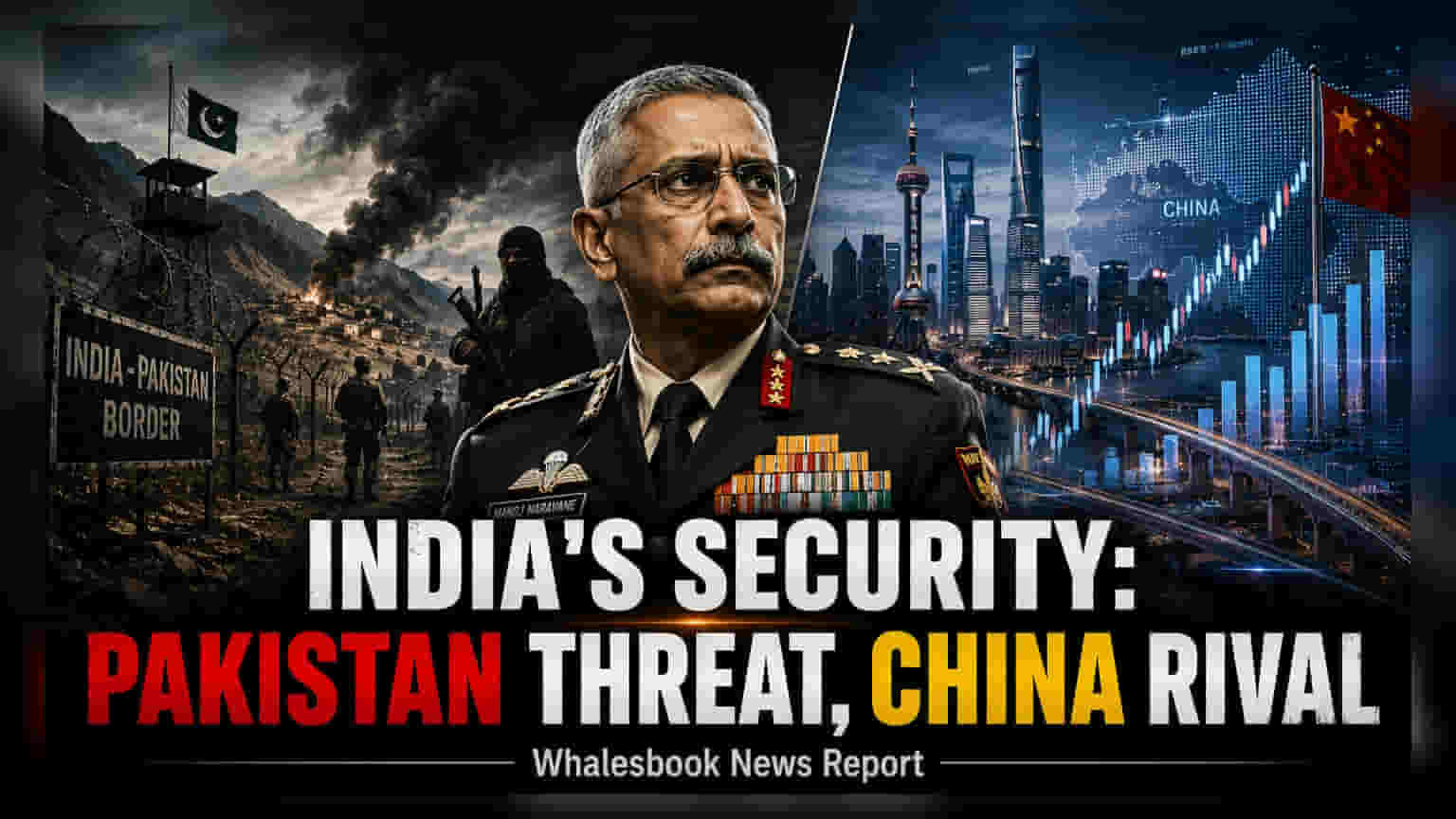
Former Army Chief General Manoj Naravane has classified Pakistan as an immediate security concern while highlighting China as India’s primary long-term competitor across economic and military domains. For investors, this assessment reinforces the strategic priority placed on domestic defense manufacturing and supply chain diversification as the nation builds long-term deterrence.
Former Indian Army Chief General Manoj Naravane has provided a clear assessment of India's regional security challenges, identifying distinct roles for Pakistan and China. Speaking at the launch of his book, 'The Curious and the Classified: Unearthing Military Myths and Mysteries,' General Naravane highlighted that while Pakistan remains an immediate threat due to cross-border terrorism, China represents a comprehensive, long-term competitor spanning political, economic, and trade sectors.
Strategic Implications for Defense and Industry
General Naravane’s comments underscore the necessity of 'strong deterrence' to maintain stability. For the Indian market, this strategic view has long been a core driver of the government’s push for indigenization in the defense sector. The focus on domestic manufacturing—often termed 'Atmanirbharta' or self-reliance—is directly linked to the need for continuous military preparedness. As the nation aims to reduce dependence on foreign equipment, companies operating within the defense, aerospace, and security hardware sectors remain key monitorables for long-term growth trends.
Beyond military hardware, the characterization of China as a long-term competitor reinforces India's ongoing economic strategy to pivot away from reliance on Chinese supply chains. This shift toward a 'China plus one' strategy has implications for several industries, including electronics, chemicals, and pharmaceuticals, where companies are working to establish alternative manufacturing bases or secure non-Chinese raw material sources.
Geopolitical Risk and Investor Focus
General Naravane also addressed the broader neighborhood, noting that instability in regions like Nepal, Bhutan, Bangladesh, and Myanmar could have adverse consequences for India. For market observers, geopolitical developments serve as a reminder that stability in the immediate region is essential for domestic economic growth. While these comments are strategic in nature rather than corporate events, they highlight the environment in which Indian companies operate.
Investors typically watch how such high-level strategic assessments translate into government spending priorities. Future updates regarding the national defense budget, capital outlay for military modernization, and policies aimed at bolstering domestic industrial capacity will likely remain the primary indicators of how the country manages these long-term competitive pressures. As diplomatic and deterrence efforts continue, the ability of Indian industry to scale up domestic manufacturing will be a central factor in the nation's long-term economic and security resilience.