

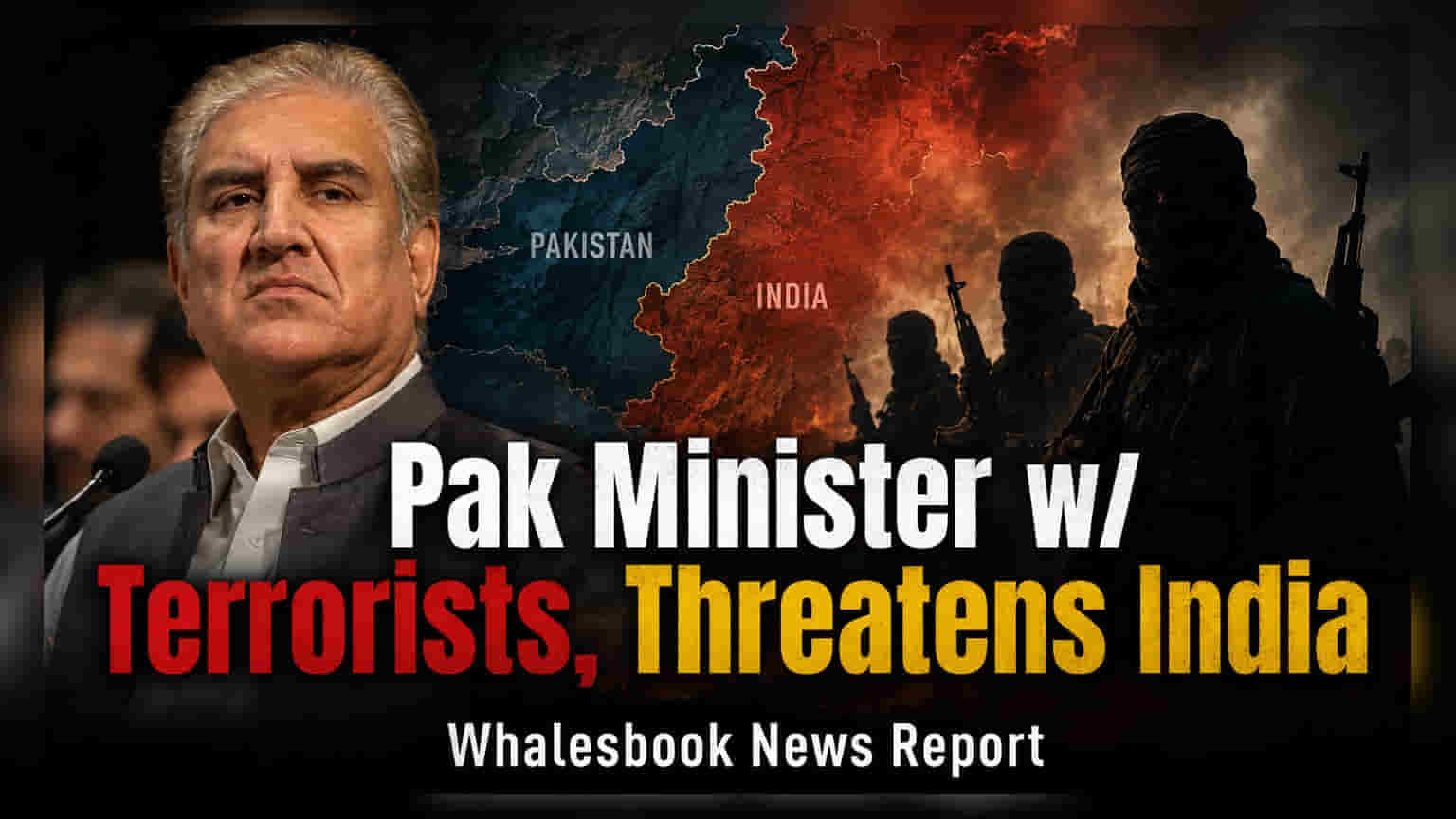
Former Pakistan Interior Minister Sheikh Rasheed Ahmed has sparked controversy by praising terrorist leader Hafiz Saeed and threatening India. While this development has no direct impact on any listed Indian company, such rhetoric increases regional instability, which investors often monitor as a factor in broader market sentiment and foreign capital flows.
Former Pakistani Interior Minister Sheikh Rasheed Ahmed recently appeared at a public event alongside senior Lashkar-e-Taiba (LeT) operatives, publicly pledging allegiance to terror leader Hafiz Saeed. During the event, the former minister issued direct threats against India, vowing what he termed as "divine retribution." These statements have drawn sharp attention given the official background of the individual involved.
This incident coincides with significant legal developments involving Hafiz Saeed, who has been named by India's National Investigation Agency (NIA) as the primary mastermind behind the April 2025 terror attack in Pahalgam. A Jammu court has issued a non-bailable warrant against the terror leader, with legal proceedings currently advancing in absentia. The intersection of political rhetoric and ongoing counter-terrorism legal actions highlights the complex security landscape in the region.
For Indian market participants and investors, news involving geopolitical instability serves as a background monitorable. It is important to note that there is no direct link between these specific political statements and the financial performance, operations, or valuations of any companies listed on the NSE or BSE. The event does not alter the fundamental financial health or earnings potential of Indian corporates.
However, regional geopolitical developments are often tracked by market participants as part of the broader risk environment. While Indian markets have historically shown significant resilience to isolated political comments from across the border, sustained rhetoric of this nature can occasionally influence the risk perception of international capital allocators. Foreign Institutional Investors (FIIs) typically evaluate the overall stability of the South Asian region when determining their asset allocation strategies. Consequently, any perceived change in cross-border stability is often noted, even if it does not trigger immediate market volatility.
Investors generally track such developments to assess whether they signal a shift in diplomatic or security policy. In the absence of tangible escalation or policy shifts, the impact on equity markets remains negligible. The primary monitorables for the investment community will remain official diplomatic updates and border stability, which serve as the foundation for the long-term risk assessment in the region.