

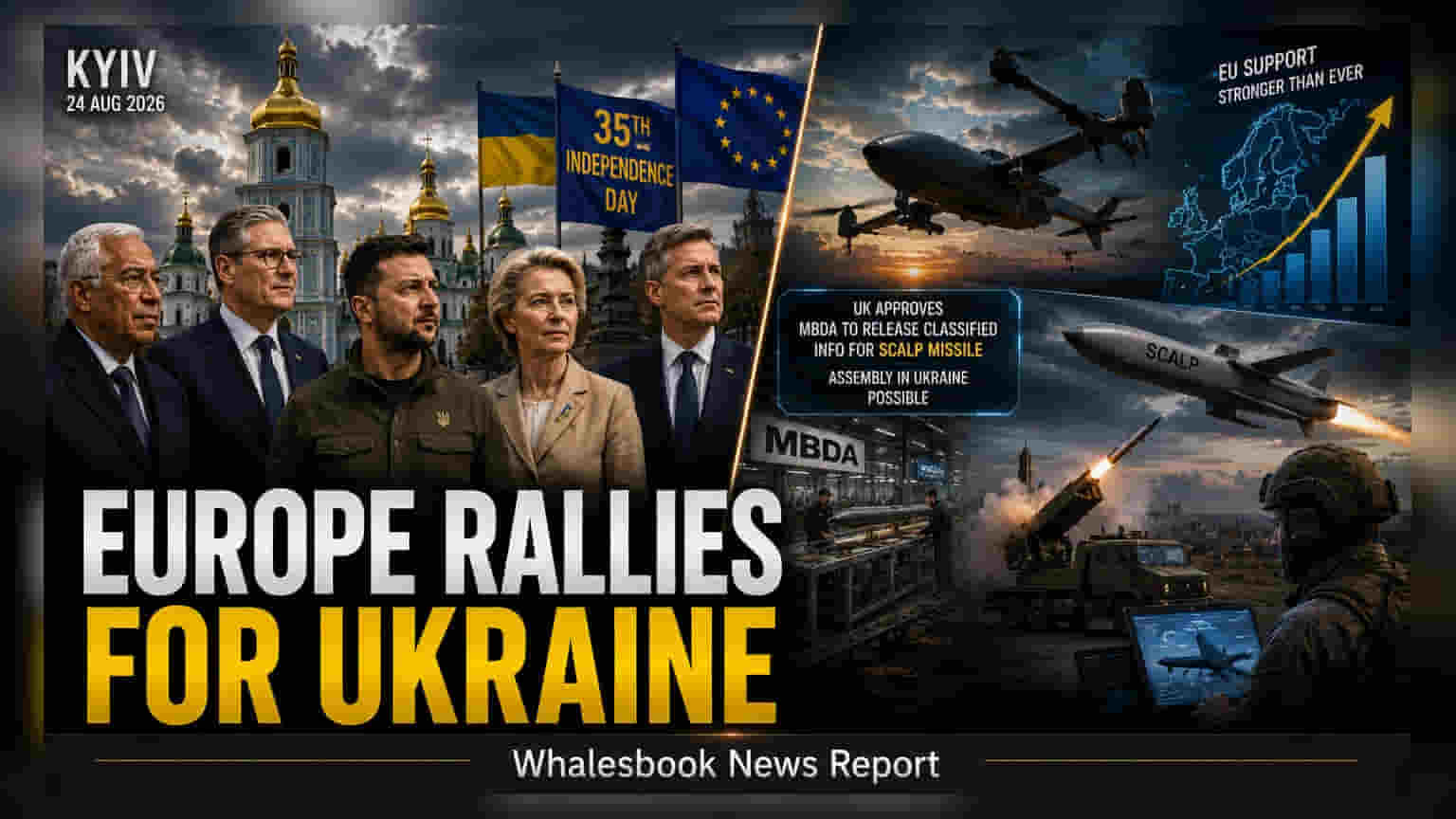
UK Prime Minister Andy Burnham and European leaders arrived in Kyiv for Ukraine's 35th Independence Day. While political support remains, Ukraine faces a critical $27 billion defense budget shortfall. The event highlights the growing supply chain and economic pressures from the prolonged conflict.
European leaders traveled to Kyiv today to mark Ukraine's 35th Independence Day, signaling a strong political commitment as the war with Russia enters its fourth year. The delegation, which included European Council President António Costa and UK Prime Minister Andy Burnham, arrived to reaffirm support for President Volodymyr Zelenskyy. For Prime Minister Burnham, this visit served as his first official overseas trip since taking office in July 2026, underlining the priority placed on the region by the new UK administration.
Defense Cooperation and Technology Transfer
Beyond political symbolism, the visit addressed practical defense needs. A major announcement included the UK government’s approval for the defense firm MBDA to release classified information regarding components for the SCALP long-range missile. This move is designed to allow Ukraine to potentially assemble these missiles locally, reducing reliance on imported supplies. The initiative is part of a broader "Coalition of the Willing" strategy, which aims to provide consistent military and security guarantees as the conflict continues.
The Financial and Supply Chain Reality
Despite the show of solidarity, the economic reality of the war remains challenging. President Zelenskyy has highlighted a significant $27 billion shortfall in Ukraine's defense budget as of August 2026. This funding gap is critical, as the country continues to navigate high costs for military equipment and the need to maintain essential services. The conflict has also disrupted supply chains across the region, impacting various industries. For instance, recent drone strikes have hit logistics and e-commerce facilities, including those operated by the online retailer Ozon, underscoring how modern warfare increasingly affects corporate infrastructure and global supply routes.
Macroeconomic and Operational Risks
The ongoing aerial conflict, involving drone warfare and long-range strikes on infrastructure, poses continuous risks. With static front lines and stalled peace negotiations, the pressure on energy and logistics networks remains high. The potential for further escalation, combined with intense demand on global defense production capacities, creates uncertainty for commodity markets and supply chain stability. For global investors and businesses, these factors continue to influence volatility in energy prices and the cost of doing business in and around Eastern Europe.
Monitoring Future Developments
The most important developments to monitor in the coming months involve how Ukraine manages its significant defense budget deficit and whether international funding pledges can bridge this $27 billion gap. Additionally, the operational status of energy and logistics infrastructure in the region, and any further updates on defense technology transfers, will remain key focus areas for those tracking the economic impact of the conflict.