

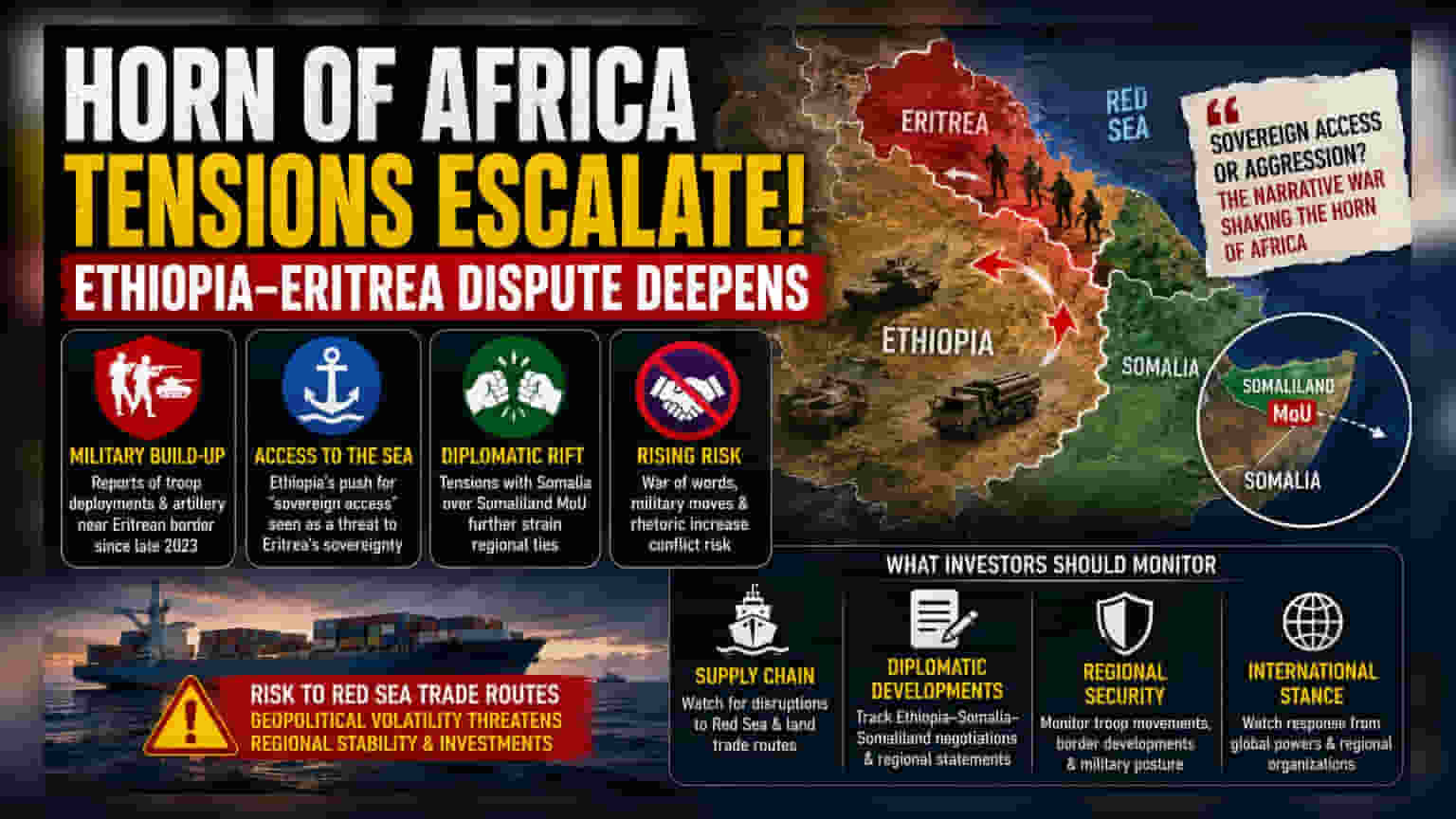
Geopolitical friction in the Horn of Africa has intensified following accusations regarding Ethiopia's narrative on regional conflicts and its stated intent to secure sovereign access to the sea. These tensions, which also involve Somalia and Somaliland, raise concerns for investors regarding trade routes and stability in the strategic Red Sea corridor.
What Happened
Tensions in the Horn of Africa have escalated following the publication of an opinion piece by senior Ethiopian officials, Redwan Hussein and Getachew Reda, in Al Jazeera. Critics are now challenging the narrative presented in the article, accusing Ethiopian leadership of reframing historical conflicts to mask aggressive military posturing toward Eritrea. The dispute centers on claims that Ethiopia is using a campaign for "sovereign access to the sea" to justify military mobilization near the Eritrean border since late 2023. The situation highlights a growing divide between the regional powers, with accusations of regional destabilization and non-interference violations.
Impact on Regional Stability
For international observers and investors, the Horn of Africa is a critical region due to its proximity to the Red Sea, a vital maritime shipping route. Increased military rhetoric and the deployment of mechanized divisions near borders create significant geopolitical uncertainty. Any escalation of conflict between Ethiopia and Eritrea could threaten regional trade flows and infrastructure projects. The situation is further complicated by Ethiopia’s existing diplomatic tensions with Somalia, specifically regarding a Memorandum of Understanding signed with Somaliland that aims to grant Ethiopia coastal access without Somalia’s consent.
The Strategic Conflict
At the core of the friction is Ethiopia’s stated policy of securing direct access to the sea, which Eritrea views as a direct threat to its sovereignty. The recent narrative dispute suggests that Ethiopia is attempting to normalize its military build-up by portraying itself as a victim of external factors, a position that both Eritrea and regional critics reject. The dispute extends beyond a war of words, with reports of military asset movement and artillery deployments raising fears that regional policy in the Horn of Africa is shifting toward unilateral action rather than diplomatic negotiation.
What Investors Should Monitor
Investors tracking the East African region should focus on several key monitorables that could impact the business environment:
- Supply Chain Continuity: Monitor any developments that might impact transit through the Red Sea or regional land-based trade routes, as geopolitical volatility often disrupts logistics costs and insurance premiums.
- Diplomatic Relations: Keep track of official statements from regional bodies regarding the Ethiopia-Somaliland-Somalia situation, as the failure to resolve these maritime access disputes can deter foreign direct investment.
- Regional Security: Observe updates regarding troop movements or border security, as increased military presence can lead to sudden shifts in operating environments for businesses present in Ethiopia, Eritrea, and neighboring states.
- International Policy Stance: Note the response of international trade partners and regional organizations, as diplomatic pressure is often the primary tool to prevent the escalation of border-related conflicts in the region.