

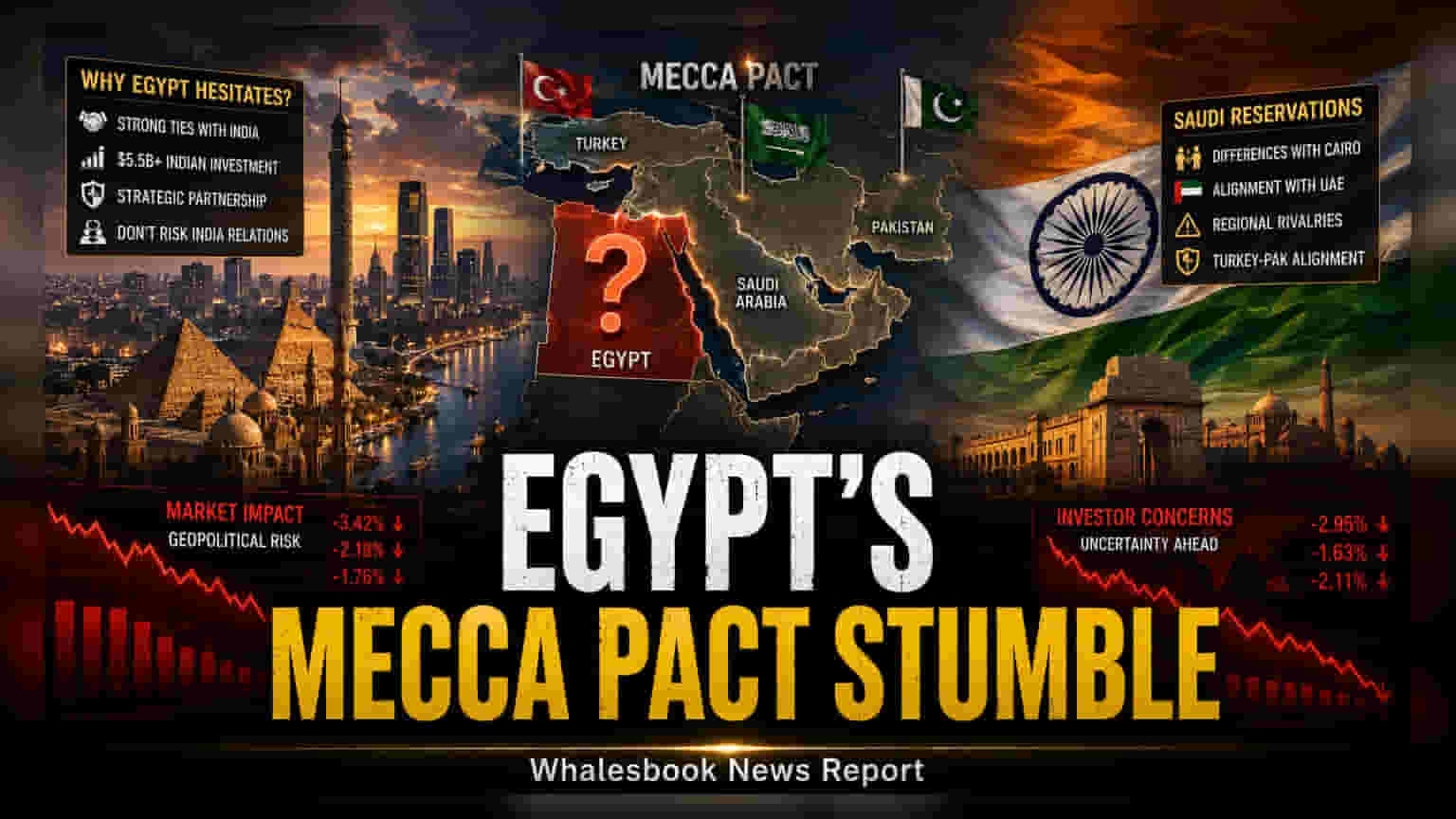
Egypt has held back from joining the newly formed Mecca Joint Defence Agreement, which includes Saudi Arabia, Turkey, and Pakistan. The delay is linked to Saudi reservations and Cairo's priority of maintaining its strategic partnership with India. For investors, this diplomatic maneuvering is significant as it influences the regional stability of a nation hosting over $5.5 billion in Indian corporate investments.
The Mecca Joint Defence Agreement, signed on August 7, 2026, aims to create a collective defense framework—similar to the NATO model—among Saudi Arabia, Turkey, and Pakistan. While Turkey has publicly invited Egypt to join the alliance, the North African nation has remained outside the pact. This decision reflects a complex web of regional diplomacy where Cairo is carefully weighing its foreign policy goals against the potential risks of entering a new military bloc.
The India Strategic Factor
A primary factor contributing to Egypt’s hesitation is its deepening relationship with New Delhi. The two nations established a Strategic Partnership in 2023, which has since seen approximately 70 Indian companies invest roughly $5.5 billion in the Egyptian economy. Joining an alliance that includes Pakistan—a country with historically adversarial relations with India—poses a diplomatic challenge for Cairo. Egyptian policymakers appear unwilling to jeopardize their robust economic, trade, and defense collaboration with India for the sake of the new pact.
Regional Tensions and Saudi Reservations
Beyond its ties with India, Egypt is navigating friction within the alliance’s own leadership. Saudi Arabia, a core member of the new defense pact, has reportedly expressed reservations regarding Egypt’s inclusion. Reports indicate that Riyadh is frustrated with Cairo’s current foreign policy stance, particularly regarding regional conflicts and Egypt's close alignment with the UAE, a nation that maintains a strategic rivalry with Saudi Arabia. For Riyadh, the current composition of Turkey and Pakistan appears to align more closely with its immediate security priorities.
Impact on Indian Business Interests
For the Indian business community, the stability of Egypt remains a key monitorable. Many Indian firms have established operations in Egypt to access markets across Africa and Europe, making the country a vital hub for regional trade. Any major shift in Egypt's diplomatic or military alignment carries the potential for long-term economic friction. Investors are watching to see if Cairo continues to prioritize its independent, balanced foreign policy, as this maintains a predictable environment for ongoing projects and future trade, shielding them from the volatility often associated with new regional defense blocs. The most important update for stakeholders will be whether Egypt manages to sustain its current diplomatic flexibility without being pulled into regional rivalries.