

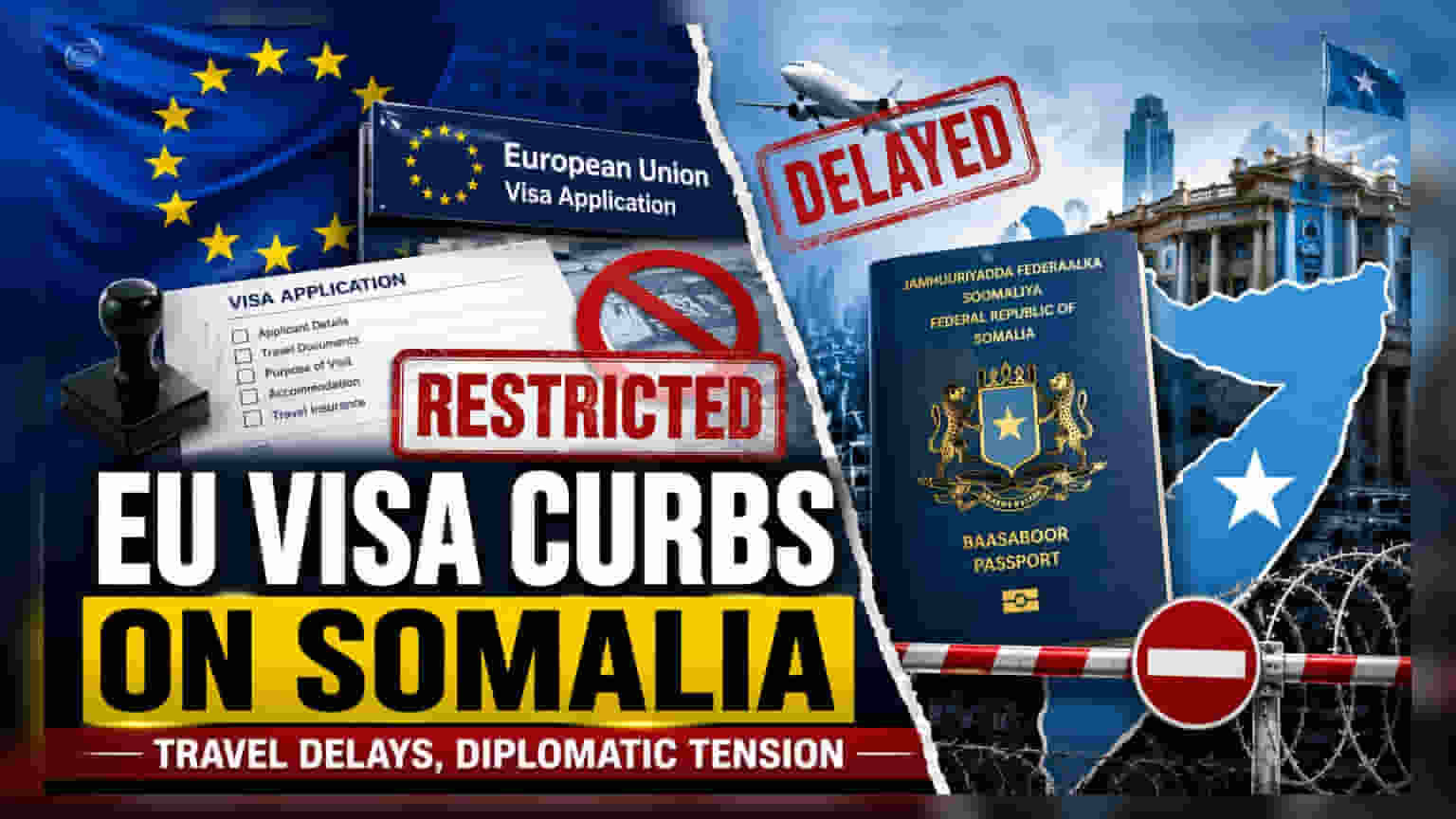
The European Union has restricted visa access for Somali citizens, citing insufficient cooperation on the repatriation of illegal migrants. The new measures include longer processing times and limited entry options, impacting diplomatic and business travel. This move highlights rising tensions over migration control, following a pattern of similar EU policies previously applied to other African nations.
What Happened
The European Union has officially implemented visa restrictions against Somalia. Member states approved the measures following an assessment by the European Commission, which concluded that the Somali government was not cooperating enough in the return of its nationals residing in Europe without legal status. The decision marks an escalation in the ongoing dispute regarding migration control between the two regions.
The Impact on Travel and Diplomacy
The new rules introduce significant hurdles for individuals requiring travel to the EU. The standard processing time for visas has been extended from 15 to 45 days, creating delays for those planning visits. Furthermore, the EU has removed fee waivers for diplomatic passport holders and restricted the issuance of multiple-entry visas. These changes can disrupt diplomatic engagements, international business travel, and formal discussions between Somali representatives and their European counterparts.
Context: The EU's Migration Policy
This move is part of a broader strategy where the EU uses visa policy as leverage in diplomatic negotiations concerning border control and repatriation. The EU has applied similar restrictions in the past to compel countries of origin to fulfill their obligations regarding the return of their citizens. For instance, The Gambia faced comparable curbs in 2021. However, the approach can lead to resolution; the EU lifted visa restrictions on Ethiopia in May 2026 after the country improved its cooperation on readmission processes.
Somalia's Perspective
Somalia’s President, Hassan Sheikh Mohamud, has publicly addressed the standoff. While he emphasized that the government is willing to accept its citizens, he pointed to significant practical challenges. The administration argues that many individuals slated for return may not actually be Somali nationals. President Mohamud highlighted that individuals from across the Horn of Africa can appear similar, and the country has encountered cases where returnees could not speak the Somali language. He indicated that these identity verification issues are central to the delay in cooperation.
What to Watch Next
The primary factor for observers to track is the evolution of diplomatic talks regarding identity verification. The duration of these visa restrictions remains open-ended and will likely depend on whether Mogadishu and EU officials can reach an agreement on the identification process for returnees. Any shift in this policy will be a signal of improved or continued friction in diplomatic relations within the region.