 Whalesbook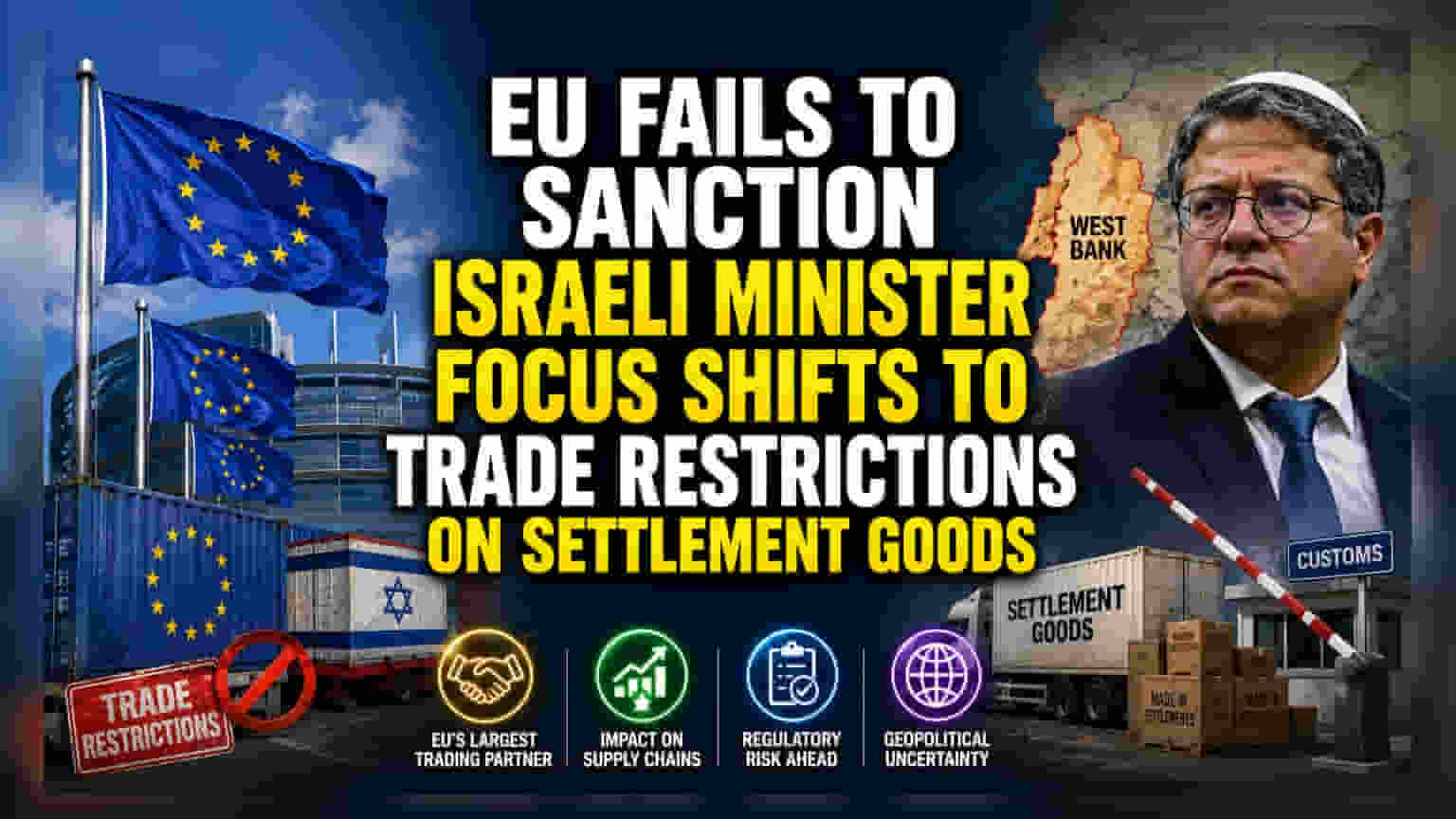


European Union nations could not reach a unanimous decision to impose sanctions on Israel's National Security Minister Itamar Ben-Gvir. The bloc is now weighing options to limit trade with goods from occupied West Bank settlements. This development marks a shift in geopolitical sentiment that businesses and investors with regional trade exposure may need to monitor.
What Happened
European Union member states have failed to secure the necessary unanimous support to impose sanctions on Israeli National Security Minister Itamar Ben-Gvir. The decision was confirmed by the bloc's foreign policy chief, Kaja Kallas, following discussions among EU foreign ministers. While proposals for economic restrictions against the minister were put forward by several nations, these measures did not receive the required approval from all member states to proceed.
Potential Shift in Trade Policy
Beyond the debate over individual sanctions, the focus has shifted toward broader economic measures. A significant number of EU member states have requested that the European Commission prepare a list of options to restrict trade with illegal settlements located in the occupied West Bank. The proposal specifically aims to explore measures to prevent the import of goods originating from these settlements into the European market. This request is scheduled for consideration ahead of the next Foreign Affairs Council meeting.
Why This Matters for Investors
The European Union stands as Israel's largest trading partner, accounting for over 30 percent of the country's global goods trade. Because of this deep economic integration, any change in trade policy or regulatory framework can have direct consequences for supply chains and businesses operating in the region.
For investors and companies with cross-border operations, this development signals a need for increased monitoring of geopolitical risks. The potential for future trade restrictions creates a layer of uncertainty for businesses involved in importing or exporting goods linked to the West Bank. Companies are typically required to ensure their supply chains comply with evolving international regulations, and a shift in EU trade policy could necessitate changes in compliance monitoring or sourcing strategies.
Geopolitical and Business Context
This political development follows previous actions taken by the EU regarding the regional conflict, including economic restrictions placed on specific violent settlers earlier this year. The situation remains fluid, with individual nations also taking independent stances. For example, Italy has taken steps to suspend a bilateral defense agreement, reflecting the broader trend of European nations reassessing their diplomatic and trade relationships with the region due to ongoing instability.
For market participants, geopolitical events of this nature often serve as indicators of shifting diplomatic climates. While there is no immediate impact on major stock indices, the increased regulatory scrutiny on trade imports can affect specialized sectors that rely on clear import-export pathways.
What Investors Should Track
The primary monitorable for investors and stakeholders is the upcoming report from the European Commission regarding the options for limiting trade with settlements. Any concrete decision to restrict specific imports would be a material development for companies involved in regional trade. Investors may also track management commentary from multinational corporations with significant exposure to Israel and the broader Middle East, as these firms often provide guidance on how geopolitical tensions might influence their operations, costs, and supply chain logistics in the coming quarters.