

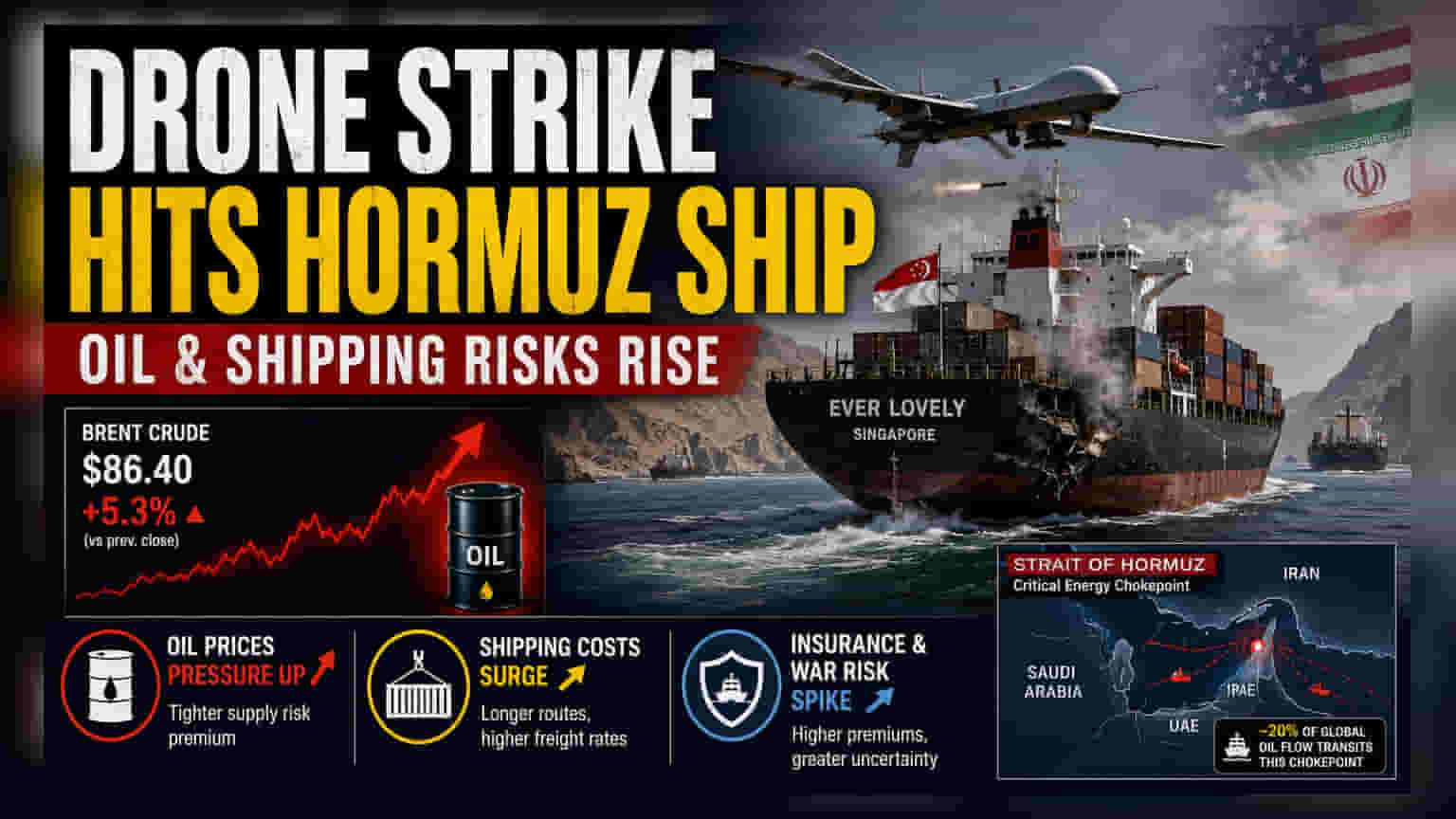
A drone strike on the cargo ship 'Ever Lovely' in the Strait of Hormuz has intensified geopolitical risks. For Indian investors, the development highlights potential volatility in global oil prices and shipping logistics, as the region remains a critical passage for energy supplies and maritime trade.
What Happened
A Singapore-flagged cargo vessel, the 'Ever Lovely', owned by Taiwan-based Evergreen Marine, was hit by a drone strike in the Strait of Hormuz on Thursday. The vessel sustained damage but continued its voyage with no reported injuries to the crew. The United States government, led by President Donald Trump, has condemned the incident as a violation of a recent ceasefire agreement. This event occurred amid ongoing, fragile negotiations between the US and Iran regarding nuclear policies and sanctions relief.
Impact on Oil and Energy Costs
The Strait of Hormuz is a vital "chokepoint" for global energy markets, as a significant portion of the world's daily oil production passes through this narrow waterway. For India, which relies heavily on crude oil imports from the Middle East, any disruption in this region poses a direct risk to energy security. When security concerns rise in the Strait, global crude oil prices often react with volatility. Indian investors typically track Brent Crude prices because higher oil costs can pressure the profit margins of Oil Marketing Companies (OMCs) and contribute to inflationary pressures within the Indian economy.
Shipping and Insurance Risks
The attack has disrupted maritime operations, including efforts by the International Maritime Organization (IMO) to assist stranded vessels in the region. Heightened tension usually leads to increased "war risk" insurance premiums for ships transiting these waters. Higher insurance and operational costs can affect logistics companies and businesses dependent on imports or exports via this route. While the incident specifically involved a vessel owned by a Taiwanese company, the broader environment of maritime instability creates uncertainty for the global shipping sector, including Indian-listed shipping and logistics companies.
The Geopolitical Context
This incident takes place during a critical phase of US-Iran diplomatic talks, with both nations recently having entered a 60-day memorandum of understanding aimed at ensuring free passage through the strait. The strike potentially threatens these efforts. While the Islamic Revolutionary Guard Corps (IRGC) has denied allegations of being involved, the event highlights the fragile nature of the current ceasefire and the ongoing friction regarding maritime authority and navigation rights in the area.
What Investors Should Track Next
Investors should monitor global crude oil price movements, as sustained instability in the Strait of Hormuz often leads to a rise in energy costs. Additionally, updates on diplomatic negotiations between the US and Iran will be important, as any escalation could further impact supply chain reliability. Market participants may also track the performance of Indian energy stocks and logistics sectors, which are the most sensitive to fluctuations in maritime security and global oil prices. Any official updates regarding regional security measures or further incidents in the strait will be key indicators for the immediate future.