

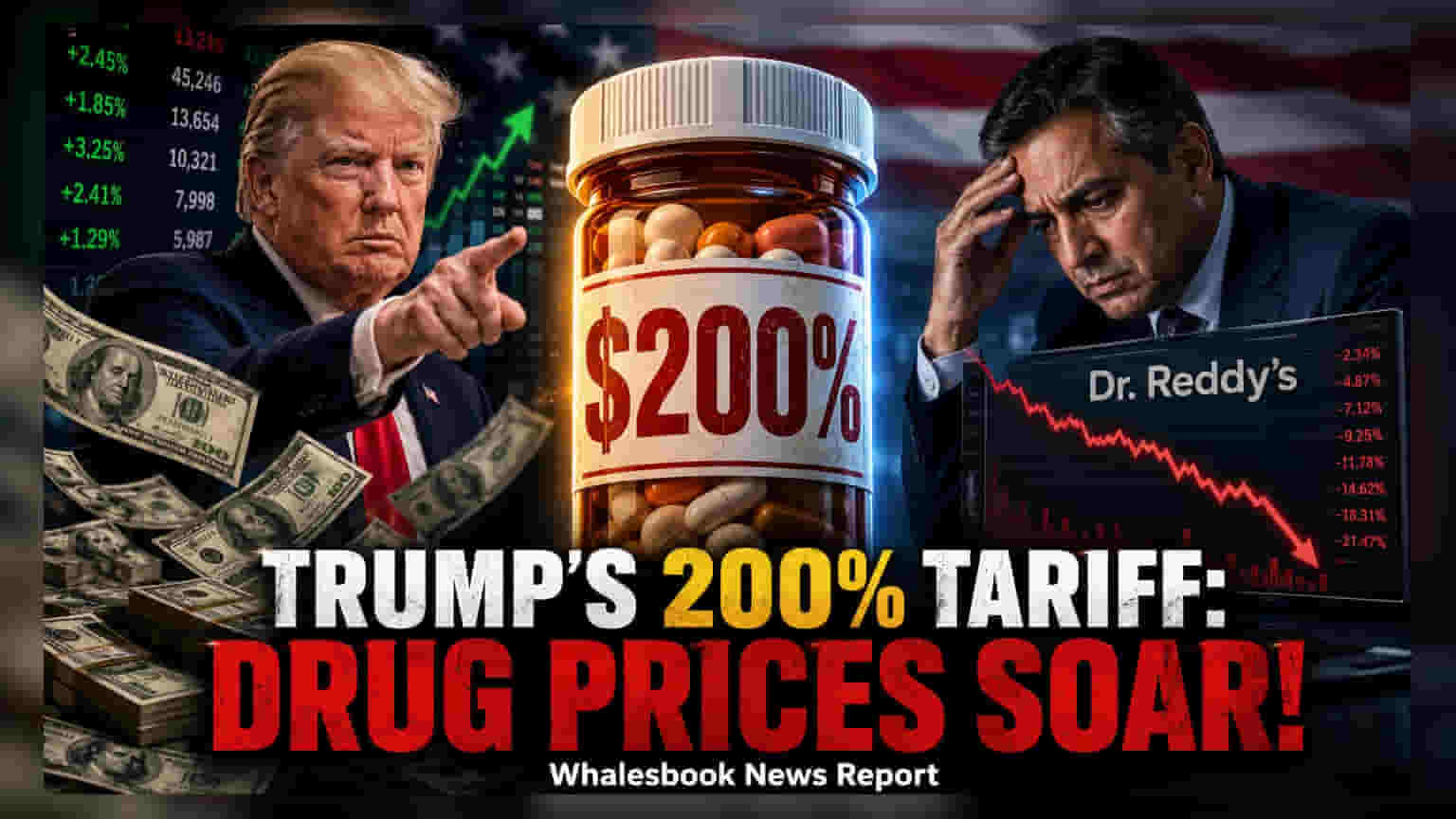
Dr. Reddy's Laboratories has warned that proposed US tariffs of up to 200% on imported generic drugs could force the company to raise medicine prices for American consumers. As a major supplier to the US market, the company noted that shifting manufacturing to the US is currently impractical. Investors should monitor how these trade policies might impact long-term profit margins and export volumes.
Detailed Coverage
The United States administration has unveiled a plan to impose significant tariffs on imported generic medicines, creating uncertainty for pharmaceutical companies with large exports to the US market. According to the policy, imported generic drugs will face no tariffs until August 1, 2028. Following this, the government plans to implement a 100% tariff for one year, which is scheduled to escalate to 200% thereafter.
Impact on Pricing and Manufacturing
Dr. Reddy's Laboratories, a key player in the Indian pharmaceutical sector, has responded to the proposal. During a recent earnings call, CEO Erez Israeli indicated that if these tariffs are implemented as planned, the company would likely be forced to pass on the added costs to consumers by increasing medicine prices in the US. The management also addressed the feasibility of relocating manufacturing operations to the United States to avoid these taxes. The company stated that such a shift is currently impractical due to significant differences in operational costs compared to other manufacturing bases. While the company remains open to exploring partnerships or technology transfers, it emphasized that the tariff structure could create a difficult operating environment.
Exposure for Indian Pharmaceutical Exports
This policy carries meaningful implications for the Indian pharmaceutical industry, which is a leading supplier of generic medicines to the US. Data from the Global Trade Research Initiative (GTRI) indicates that in 2025, the US imported pharmaceutical products worth $213 billion. Within this, finished medicines in retail packs accounted for $94.1 billion. Analysts at GTRI have identified India as having the most significant exposure among all generic medicine exporters to the US market under this new tariff framework. For investors, this creates a scenario where both export volumes and profit margins could come under pressure if the company cannot offset these costs through pricing or supply chain adjustments.
Financial Context and Future Monitorables
Dr. Reddy's and its peers in the Indian pharma sector have historically relied on competitive manufacturing costs to maintain their position in the US market. The proposed tariff structure is designed to incentivize onshoring, or the relocation of manufacturing to domestic US soil. Because the policy includes a grace period until August 2028, the immediate financial impact on the company is limited. However, the market will likely track how these companies adjust their long-term capital spending and global manufacturing footprints. The key monitorable for shareholders will be management commentary regarding future supply chain strategies, potential pricing negotiations in the US, and any updates on diplomatic or trade talks that could alter the implementation of these tariffs.