

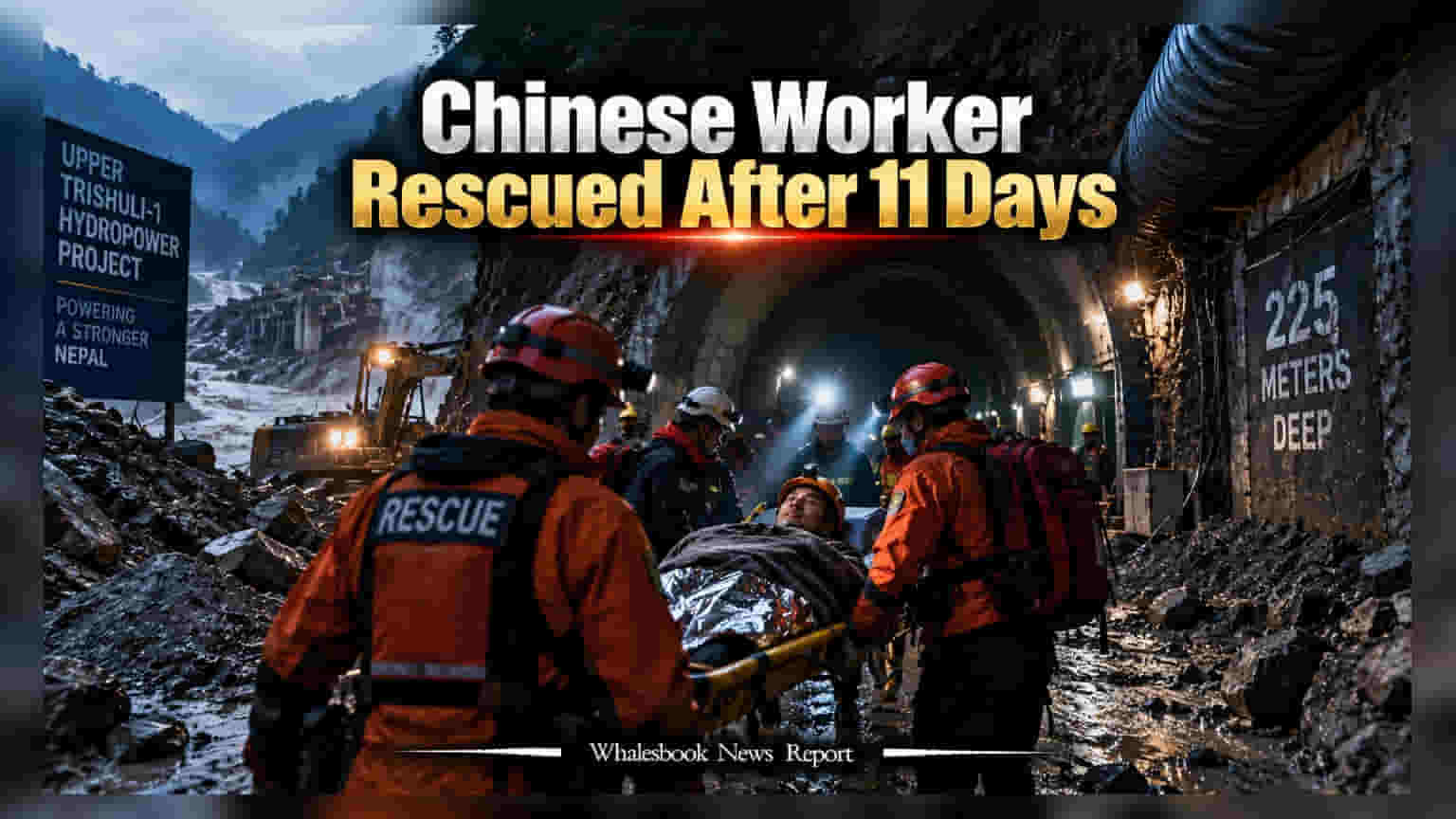
A Chinese national, Luhaitao, was rescued alive from the Upper Trishuli-1 Hydropower Project tunnel on September 5, 2026, marking an 11-day survival following the catastrophic August 26 glacier collapse. The disaster has devastated Nepal’s energy sector, resulting in over 1,300 deaths and severe damage to infrastructure, with roughly 10% of the nation’s power generation capacity currently offline due to flooding and debris.
The rescue of a Chinese national, Luhaitao, from an audit tunnel at the Upper Trishuli-1 Hydropower Project on September 5, 2026, provides a small moment of relief amidst a massive infrastructure catastrophe in Nepal. Found 225 meters deep after 11 days of isolation, his recovery follows the successful rescue of two Nepali workers from the Trishuli 3A plant a day earlier. These events remain rare bright spots in a recovery operation that is battling severe terrain and significant structural damage across Northern and Central Nepal.
Scale of the Hydropower Sector Disaster
The humanitarian and economic impact of the disaster, triggered by a massive ice-rock avalanche and glacier collapse on August 26, is vast. Official reports confirm the death toll has crossed 1,300, with thousands still missing. Of particular concern for the region’s energy sector is the fate of approximately 900 workers who were on-site across a dozen hydropower projects when the flash floods struck. Recovery efforts are complicated by the sheer volume of debris, which has blocked access to underground tunnels where many are still believed to be trapped.
Economic and Infrastructure Impact
The disaster has hit Nepal’s energy infrastructure particularly hard, with preliminary assessments indicating that about 10% of the country’s total power generation capacity is currently offline or damaged. The financial impact is estimated to exceed 200 billion Nepali rupees. Beyond the immediate loss of power output, the destruction of facilities across multiple sites suggests a long and expensive path to restoration.
For the energy and infrastructure sector, this event signals a shift in risk assessment. Industry experts anticipate that future projects in the Himalayan region may face higher costs, as developers incorporate more robust designs to withstand climate-related physical risks like glacial lake outbursts and ice-rock avalanches. Furthermore, the banking and insurance sectors, which provide the capital and risk coverage for these large-scale projects, are likely to face significant claims. Investors and stakeholders in regional infrastructure projects will be tracking the restoration timelines, the potential for insurance write-offs, and the impact of the 10% capacity reduction on the region’s energy stability in the coming months.