

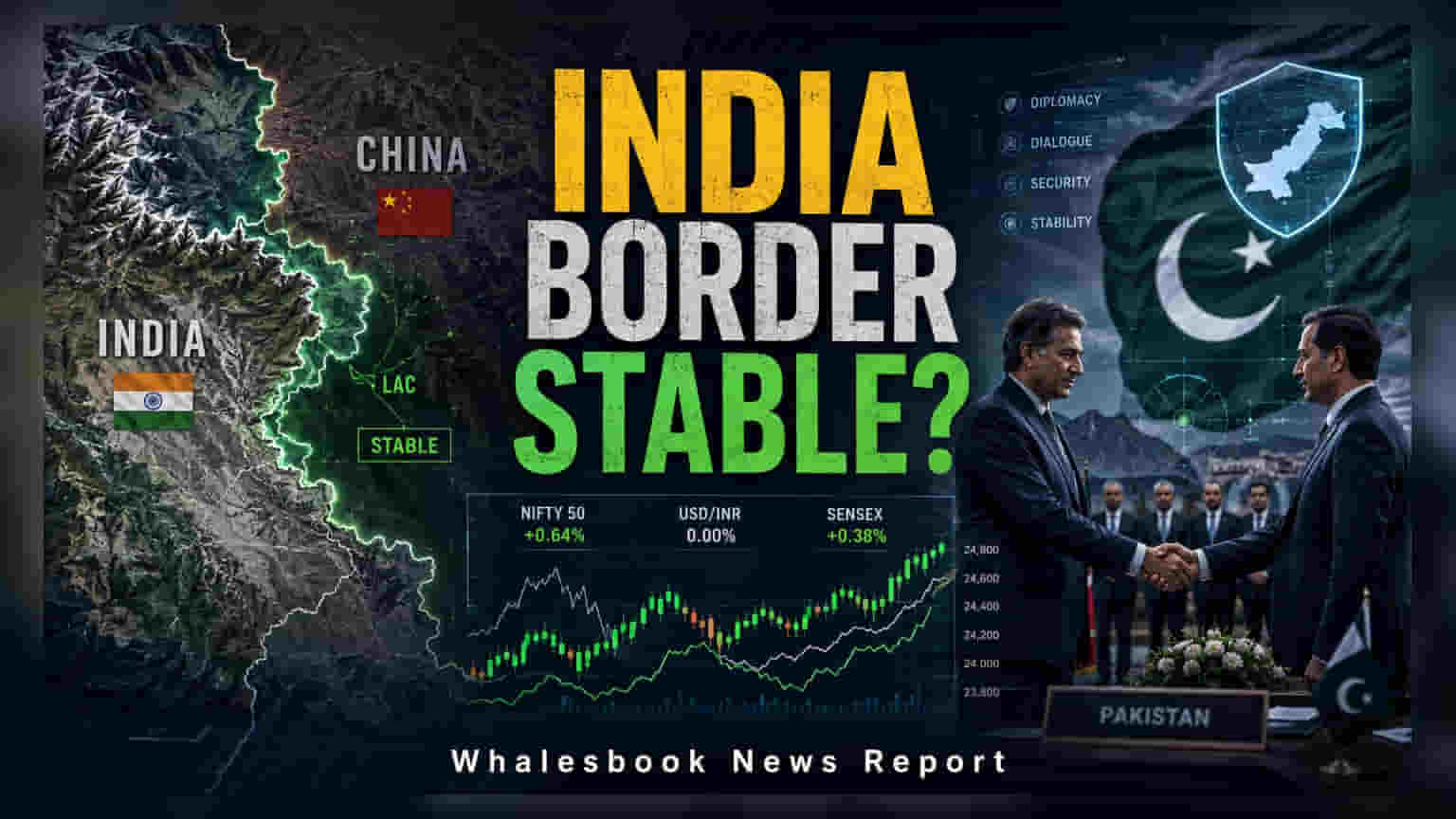
The Chinese Foreign Ministry has described the border situation with India as generally stable. This update is closely followed by institutional investors, as regional stability is a key factor in assessing India's country risk and long-term capital inflow sentiment amidst evolving defense dynamics in South Asia.
The Chinese Foreign Ministry stated on August 12, 2026, that the situation along the Sino-India border is currently generally stable. This official update follows the 36th meeting of the Working Mechanism for Consultation and Coordination on China-India Border Affairs, held on August 6, 2026, where both nations agreed to maintain communication through diplomatic and military channels.
For investors and market analysts, geopolitical stability is a critical factor in risk assessment. India's equity markets are typically influenced by global and regional security environments, as stability helps maintain the confidence of Foreign Institutional Investors (FIIs) who continuously assess the country's risk premium. While equity markets often look past minor geopolitical noise, a stable border environment reduces the risk of sudden capital outflows that can be triggered by regional conflicts or increased defense spending requirements.
In addition to the border update, regional market participants are observing broader security shifts in South Asia. Pakistan has recently affirmed that its trilateral defense pact with Saudi Arabia and Turkiye is purely defensive in nature. While such security realignments are primarily geopolitical, they form part of the broader regional assessment that long-term investors monitor to gauge potential impacts on trade routes, maritime security, and regional economic cooperation.
Historically, Indian markets have shown resilience to geopolitical headlines unless there is a clear, material escalation that disrupts supply chains or threatens economic activity. The market reaction is usually tied to whether such diplomatic updates lead to a reduction in border friction, which theoretically allows capital to remain focused on corporate earnings and macroeconomic indicators rather than external security concerns.
The key monitorable for investors remains the official communication from the Indian Ministry of External Affairs regarding progress in diplomatic discussions and the maintenance of peace along the Line of Actual Control. Stability on the border allows corporate India and the broader economy to operate without the distraction of heightened regional tensions, providing a more predictable environment for long-term capital allocation.