

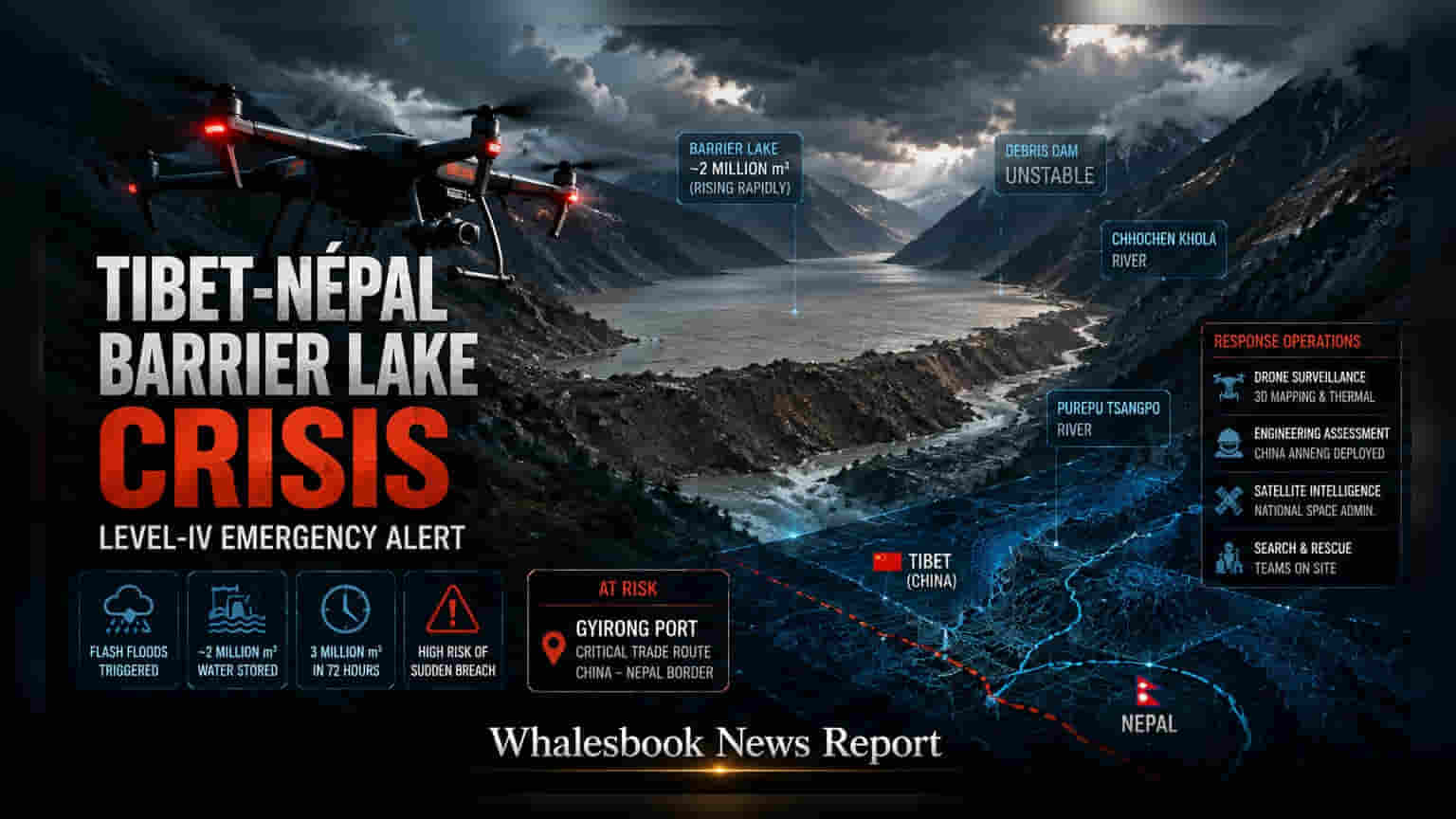
Chinese authorities have declared a Level-IV emergency as a barrier lake near the Tibet-Nepal border threatens downstream regions. The lake currently holds two million cubic meters of water, risking significant infrastructure damage at the vital Gyirong Port trade hub.
Chinese authorities have issued a Level-IV emergency alert following the formation of a dangerous barrier lake near the Tibet-Nepal border. The situation follows severe flash floods in the region, which created a blockage at the confluence of the Chhochen Khola and Purepu Tsangpo rivers. As of late August 2026, the lake holds approximately two million cubic meters of water, and experts project this could rise to three million cubic meters within 72 hours, significantly increasing the risk of a breach.
The primary concern for regional authorities is the potential impact on downstream infrastructure, specifically the Gyirong Port. This location serves as a critical trade and logistics connection between China and Nepal. A sudden release of water could cause extensive damage to roads, border facilities, and local settlements, disrupting trade and movement across the border.
To manage the crisis, the Chinese government has mobilized specialized teams, including state-owned engineering firm China Anneng. The firm is tasked with assessing the site and attempting to stabilize the debris blockage. These operations are proving difficult due to the rugged mountain terrain, thick mud, and dense vegetation, which prevent easy access for ground crews. Rescue teams are currently relying on advanced drone technology to create 3D terrain models and thermal imaging to locate missing individuals in the area.
This incident highlights a recurring risk in the Himalayan region, where rapid climate changes contribute to glacial lake outburst floods. For regional stakeholders, these events underscore the ongoing vulnerability of infrastructure projects situated along major river systems. Beyond the immediate search and rescue operations, the focus has shifted toward preventing a secondary disaster that could cause further destruction to regional infrastructure.
Authorities are coordinating efforts with the People’s Liberation Army Western Theatre Command and the National Space Administration, which is providing critical satellite intelligence. The situation remains highly fluid, and the primary monitorable for the next few days will be the effectiveness of engineering efforts to drain or stabilize the lake before rainfall causes an uncontrolled breach.