

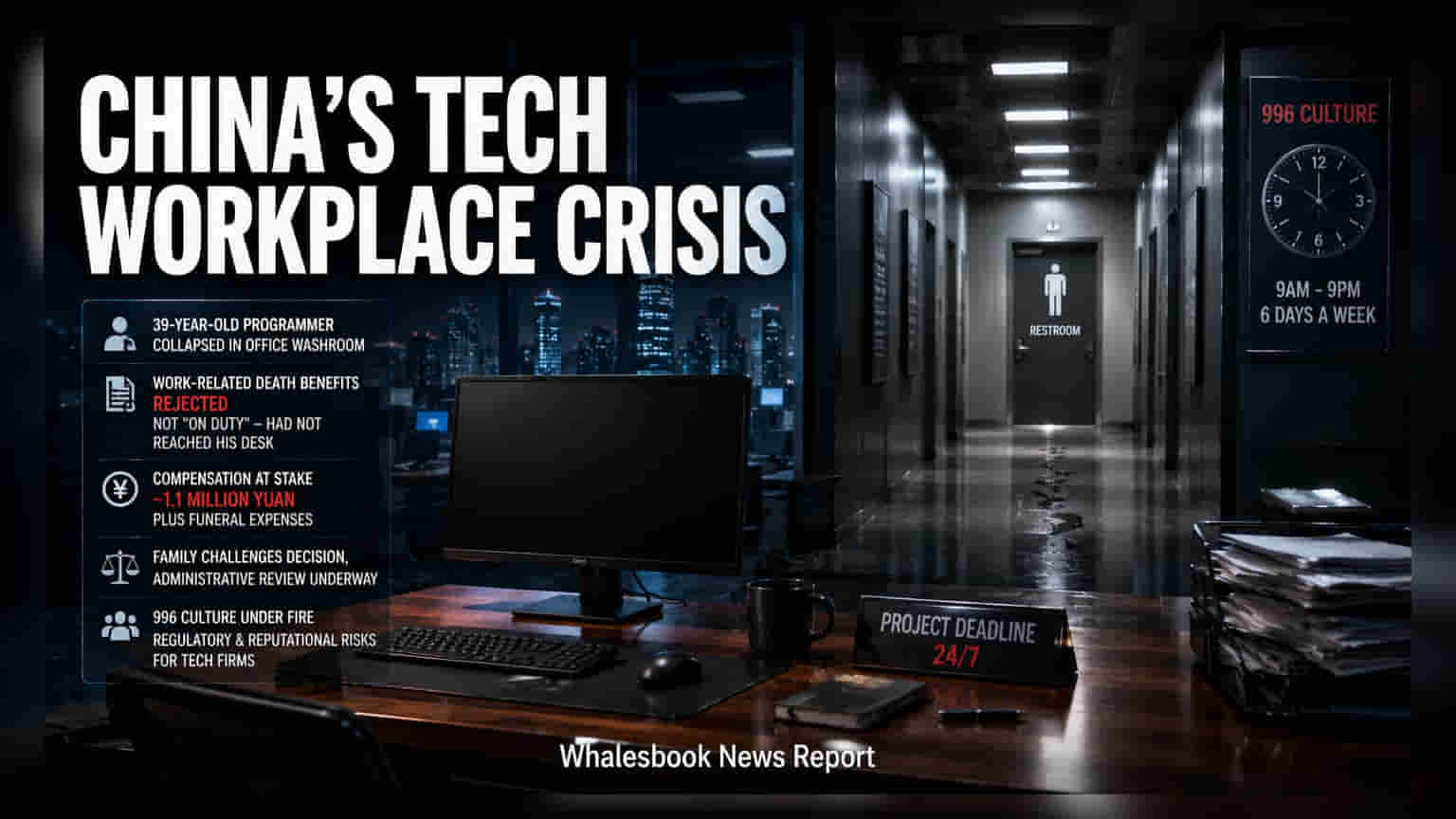
Authorities in Shenzhen have rejected a bid to classify a programmer’s death as work-related, arguing he had not yet reached his desk. The case has intensified scrutiny of the tech industry’s labor practices, highlighting significant reputational and governance risks for companies operating in the sector.
The death of a 39-year-old programmer at a technology firm in Shenzhen has triggered a contentious legal battle, centering on the strict interpretation of work-related death benefits. The incident, which occurred in April 2026, involves a programmer who collapsed in a company washroom shortly after entering the building but before reaching his workstation on the 11th floor.
In July 2026, the Shenzhen Human Resources and Social Security Bureau officially rejected the family's application to have the death classified as work-related. The bureau’s decision rested on a technicality: because the employee had not yet turned on his computer or arrived at his assigned desk, he had not officially reported for duty. This ruling effectively denied the family access to state-mandated survivor benefits, which include a lump-sum compensation of approximately 1.1 million yuan, alongside funeral expenses.
Legal and Financial Dispute
The family of the deceased is now pursuing an administrative review of the decision, arguing that biological necessities, such as using the restroom, are inherently linked to the workday and the professional environment. While the employer reportedly provided some personal support, the legal classification remains the primary hurdle for securing broader dependent benefits. The case has moved into the spotlight as legal experts highlight that previous court precedents in China have often favored employees in similar disputes, suggesting that the bureau’s rigid classification may face significant challenges in the appeals process.
Tech Sector Culture and Investor Risks
Beyond the individual tragedy, the case has become a focal point for long-standing frustrations regarding the intensity of work culture within China’s technology sector. The incident has drawn comparisons to the notorious '996' work schedule—where employees are expected to work from 9 am to 9 pm, six days a week—and the broader trend of demanding extreme hours from staff. For investors, this incident underscores growing risks related to corporate governance, social responsibility, and human capital management.
Heightened public outcry and potential regulatory intervention pose a direct threat to the reputational standing of major tech employers. If legal and public pressure continues to mount, companies in the sector may face increased scrutiny regarding their labor policies, potentially leading to higher compliance costs or the need for significant reforms in workplace environment standards. Investors monitoring the technology space often evaluate these factors as part of broader environmental, social, and governance assessments, as persistent labor unrest can impact employee retention, morale, and operational stability.
The next major update for stakeholders will be the outcome of the administrative review process. The final decision will likely set a tone for how labor authorities interpret workplace duty in the modern, high-pressure tech economy.