

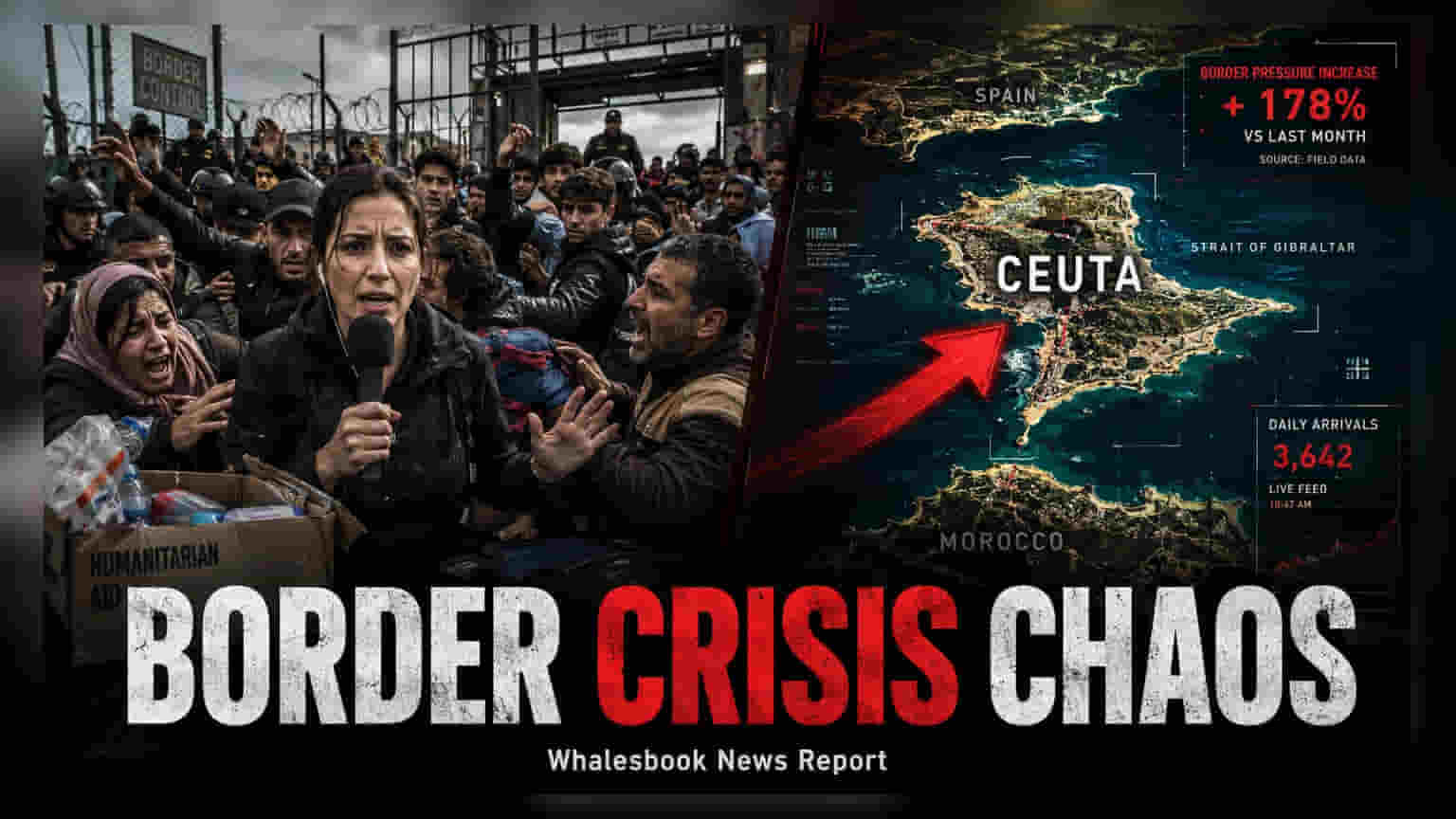
A reporter was harassed while covering the sudden influx of thousands of migrants into Spain's North African enclave of Ceuta on Tuesday. The event underscores the escalating humanitarian crisis and misinformation-driven border challenges. For global observers, the situation highlights significant geopolitical risks and the ongoing strain on regional stability within the European Union.
A tense situation unfolded in Spain’s North African enclave of Ceuta on Tuesday, as a female reporter was surrounded and harassed by a crowd during a live broadcast. The incident occurred while she was documenting the severe humanitarian crisis caused by a massive, sudden surge of migrants crossing from Morocco. Video footage of the event has drawn attention to the volatile conditions currently facing journalists on the ground.
Crisis Strains Local Infrastructure
The enclave is facing an unprecedented influx, with Spanish authorities reporting that thousands of migrants have crossed the border in recent days. Many of these arrivals were reportedly influenced by misinformation suggesting that the border was open. This rapid increase has overwhelmed local facilities, reception centers, and public infrastructure, creating a humanitarian emergency that continues to unfold.
Geopolitical and Macro Implications
The situation in Ceuta has created significant diplomatic and political challenges. Spain is now seeking increased cooperation from its European Union partners to manage the border and the humanitarian impact. Beyond the immediate social concerns, such crises are closely monitored by international observers for their potential to disrupt regional trade, security, and diplomatic relations between Spain and Morocco.
Safety and Operational Risks
The harassment of media personnel has sparked renewed concerns regarding the safety of journalists working in high-risk zones. International press organizations have emphasized that such incidents can hinder the transparent reporting of major global events. From a broader perspective, the incident reflects the operational difficulties organizations and governments face when managing large-scale migration events.
Investors and global analysts typically monitor such developments for potential shifts in border policies, changes in regional security spending, and the broader socio-political stability of the European Union. The key monitorable will be the response from European authorities and how diplomatic channels between Spain and Morocco address the underlying causes of the border surge.