

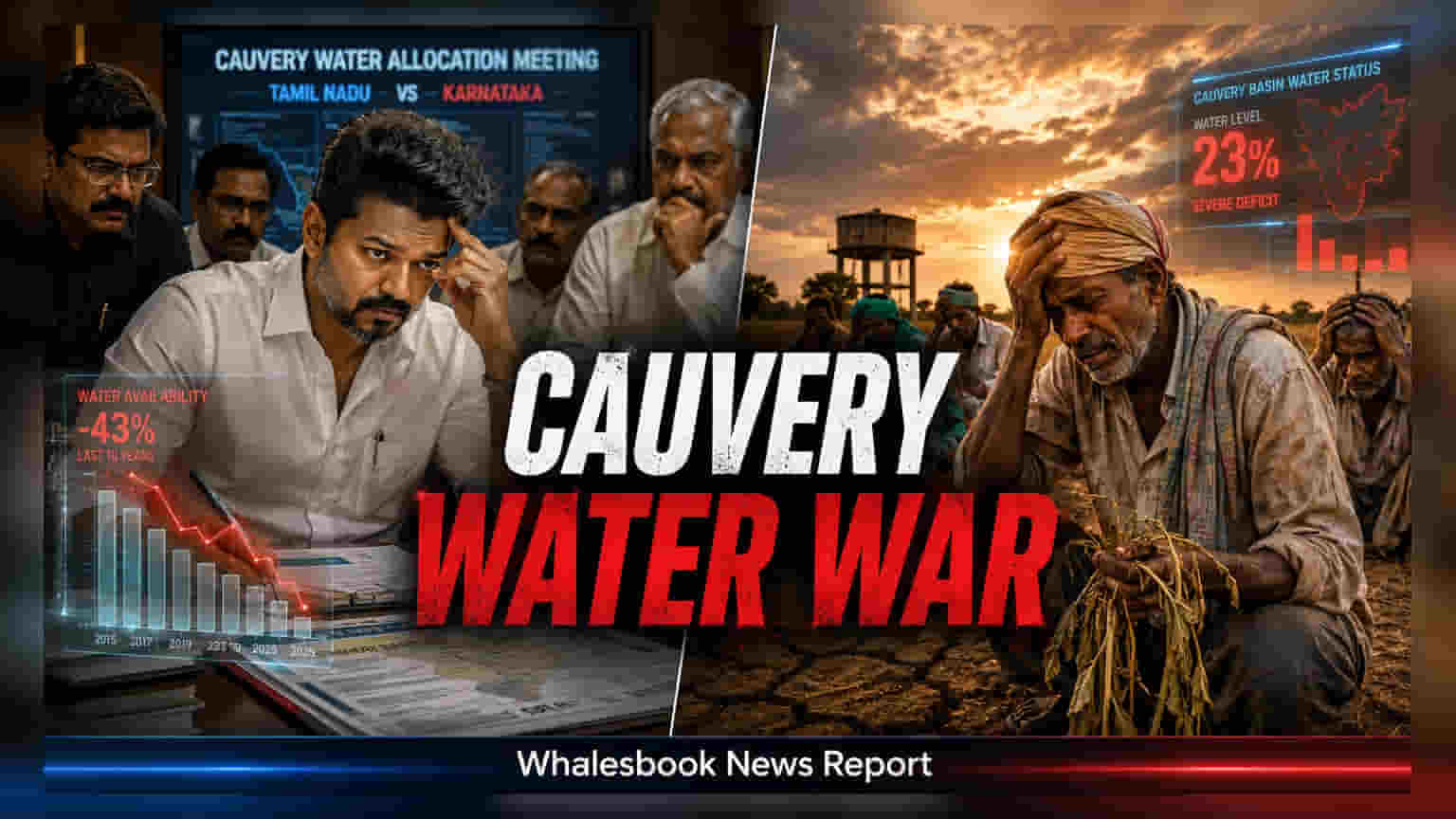
Tamil Nadu Chief Minister C. Joseph Vijay plans bilateral talks with Karnataka to resolve the ongoing Cauvery water sharing dispute. This move faces pushback from farmer groups demanding legal action, as the state reports a significant shortfall in water receipts crucial for the Kuruvai paddy crop.
Detailed Coverage
Tamil Nadu Chief Minister C. Joseph Vijay is seeking a diplomatic resolution to the long-standing Cauvery river water-sharing dispute through bilateral talks with the Karnataka government. This approach, however, has triggered immediate resistance from farmer associations and political opposition, who argue that the state should rely on established legal channels instead of direct negotiations.
Impact on Agriculture and Water Supply
The dispute is creating significant pressure on the agricultural sector in Tamil Nadu, particularly within the Cauvery delta districts. The state’s crucial short-term paddy crop, known as the Kuruvai season, is currently at risk due to inadequate water supply. A primary indicator of this stress is the delayed opening of the Mettur dam, which is traditionally opened on June 12 to support irrigation. The delay is directly linked to the low water levels currently available in the reservoir.
Data indicates that between June 1 and July 22, 2026, Tamil Nadu received approximately 3.5 TMC ft of water, which is substantially lower than the allocated 31 TMC ft for this period. For farmers and businesses dependent on the region's agricultural output, this deficit creates uncertainty regarding crop yields and potential price volatility for essential commodities.
Legal Framework and Mekedatu Project Concerns
The disagreement is further complicated by the status of the Mekedatu balancing reservoir project proposed by Karnataka. While the 2018 Supreme Court judgment established the Cauvery Water Management Authority to oversee distribution, recent developments have added a new layer of tension. A recent statement from the Union Minister of State for Jal Shakti, Raj Bhushan Choudhary, indicated that Karnataka may not require explicit consent from lower riparian states like Tamil Nadu for constructing certain structures, provided they comply with the 2007 Cauvery Water Dispute Tribunal Award.
Farmer associations argue that prioritizing bilateral talks could weaken the state's position in ongoing legal efforts to secure its share of water. They are calling for more aggressive legal measures and the intervention of the dedicated tribunal. The Detailed Project Report for the Mekedatu project is currently under revision, and its progress remains a key monitorable for stakeholders concerned about future water availability.
Investors and observers are tracking how these administrative and legal tensions evolve. The next important developments to monitor include the outcome of the proposed bilateral discussions, any potential legal filings in the Supreme Court, and updates regarding the water levels in the Mettur dam, which will ultimately dictate the success of the current agricultural cycle.