

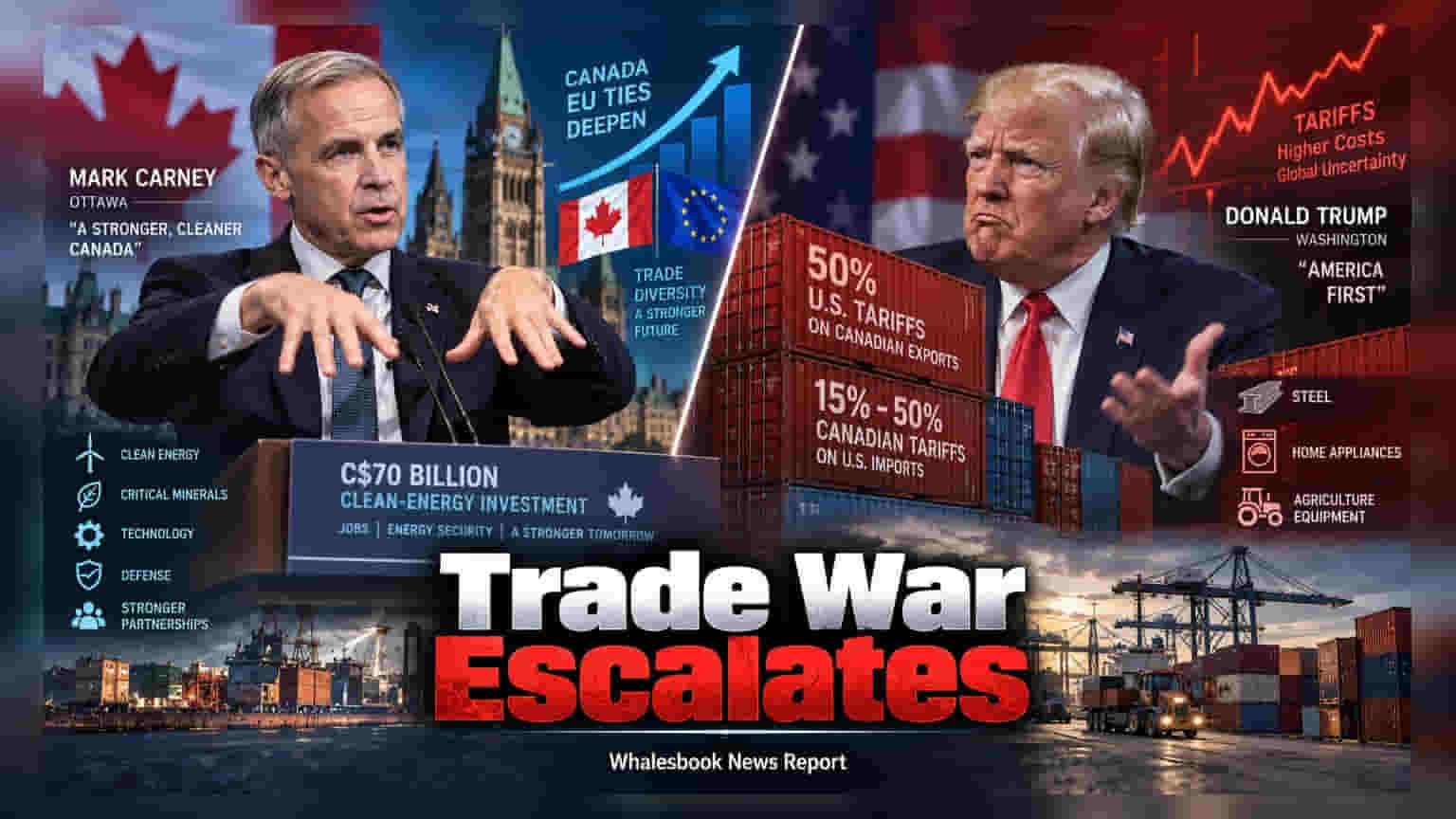
Canadian official Mark Carney recently mocked US leadership during an energy address, reflecting worsening trade hostilities. With 50% tariffs active on $20 billion in trade, investors should watch for potential disruptions in steel, appliance, and agriculture sectors as Canada moves to strengthen ties with the European Union.
Mark Carney, in a recent speech concerning a C$70 billion clean-energy investment, publicly mimicked the hand gestures associated with US President Donald Trump. While the gesture garnered media attention, it underscores the intensifying geopolitical and economic tension between Ottawa and Washington. The situation has moved beyond diplomatic friction into a direct trade conflict that is now impacting major industrial sectors.
This dispute follows the implementation of significant trade barriers that became enforceable on September 8. The United States has imposed a 50% levy on approximately US$20 billion of Canadian exports. In response, the Canadian government has enacted reciprocal tariffs, ranging from 15% to 50%, on a similar volume of US imports. These tariffs are directly affecting companies in the steel, home appliance, and agricultural equipment sectors. For businesses with cross-border operations, these levies are creating uncertainty regarding input costs and logistics.
In response to these trade barriers, Canada is signaling a shift in its economic strategy by seeking closer ties with the European Union. Discussions are currently underway regarding potential associate member status for Canada within the EU, with a specific focus on cooperation in critical minerals, defense, and technology. This strategic pivot has drawn strong opposition from the US administration, adding a layer of geopolitical risk for multinational companies that rely on stable North American trade regulations.
For investors, the situation presents two main risks: increased cost volatility and operational uncertainty. The stability of sectors such as steel and agriculture is closely linked to the duration and intensity of these tariff battles. Additionally, if Canada successfully deepens its economic integration with the European Union, it could lead to structural shifts in supply chains that affect firms currently dependent on US-Canadian trade flows. The market will likely watch for future diplomatic efforts to de-escalate these tensions or further announcements regarding Canadian trade policy with the EU.