

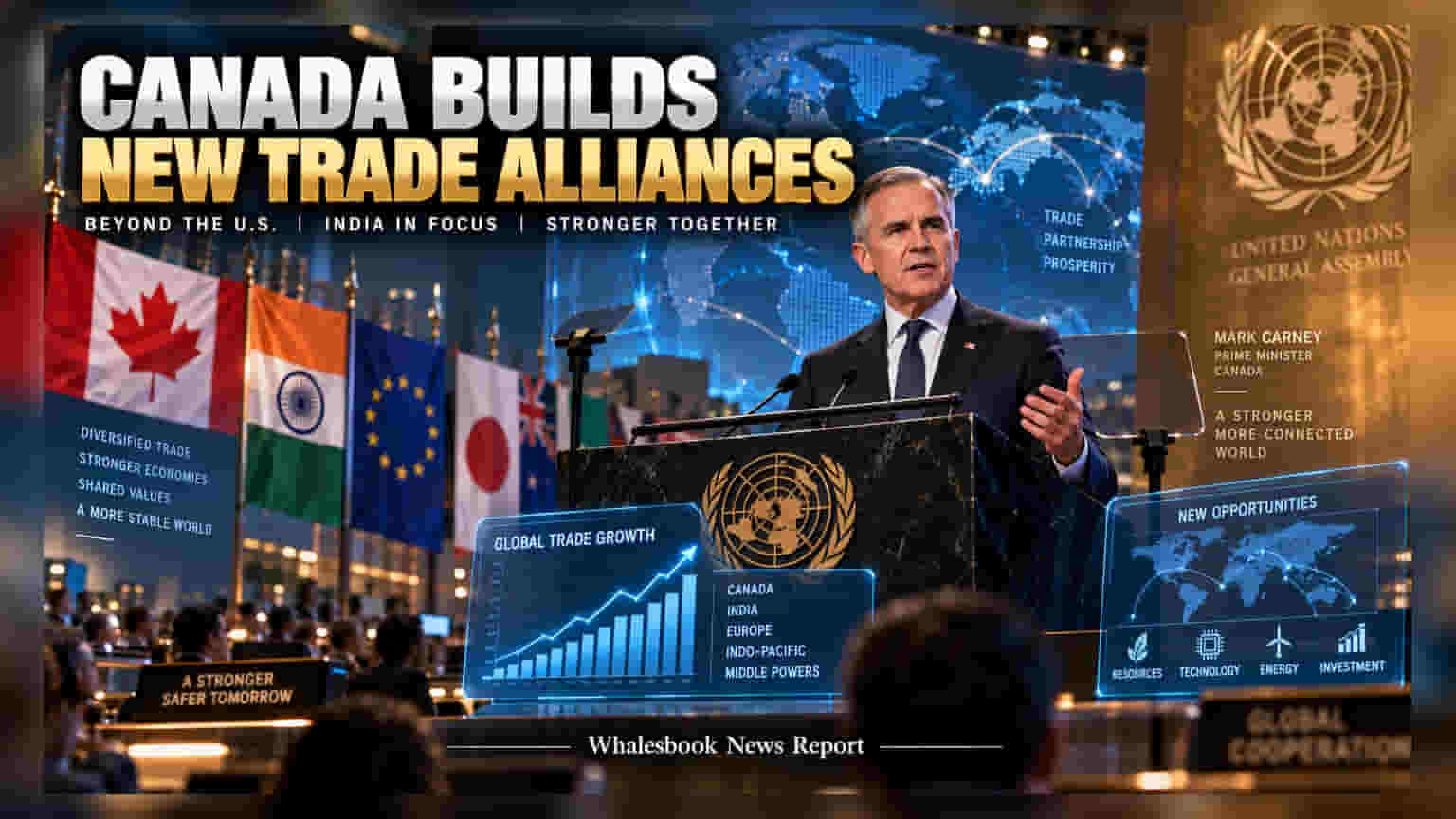
The Canadian government is launching a strategy to reduce trade dependency on the United States by forming a coalition of middle-power nations. A key part of this move includes finalizing a trade deal with India before the end of the year. This shift signals a push for economic diversification that could increase bilateral trade and investment opportunities for Indian firms.
The Canadian government is initiating a significant shift in its foreign and economic policy, aiming to reduce its heavy trade reliance on the United States. As part of a new strategy presented at the United Nations General Assembly, Canada is seeking to form a coalition of middle-power nations to strengthen trade ties and protect its economy from volatile policy changes in Washington. This move follows a period of friction between the two neighbors, which has included disagreements over tariffs and territorial issues.
For Indian investors and businesses, the most relevant aspect of this strategy is the administration's stated goal of securing a comprehensive trade deal with India by the end of the year. Canada has set a long-term target to double its non-US trade volume within the next decade, and India is being positioned as a primary partner in this expansion. If successful, this could open up better market access for Indian goods, increase foreign direct investment flows between the two nations, and encourage closer collaboration in key sectors such as resources, technology, and energy.
To achieve these goals, the Canadian government is adopting what it describes as a 'values-based realism' approach. This involves more direct engagement with diverse global regions, including the European Union and the Pacific Rim, rather than focusing primarily on North American markets. This pragmatic shift is designed to create a more predictable and stable economic environment for the country.
While the plan aims to build economic resilience, it also highlights the complexities of managing global trade relationships. The Canadian government is trying to balance these new, calibrated alliances while continuing to manage the fallout from trade disputes with its largest neighbor. For investors, the success of this strategy will depend on the actual signing of new trade agreements and the government's ability to execute its diversification roadmap without disrupting existing trade flows.
The most important monitorable for investors in the coming months will be the progress of the proposed trade negotiations with India. Any updates on official trade targets, tariff reductions, or specific sectors to be included in the deal will provide clarity on the potential impact for Indian companies. Market observers will also track how Canada balances its push for new partnerships with the management of its long-standing economic ties with the United States.