

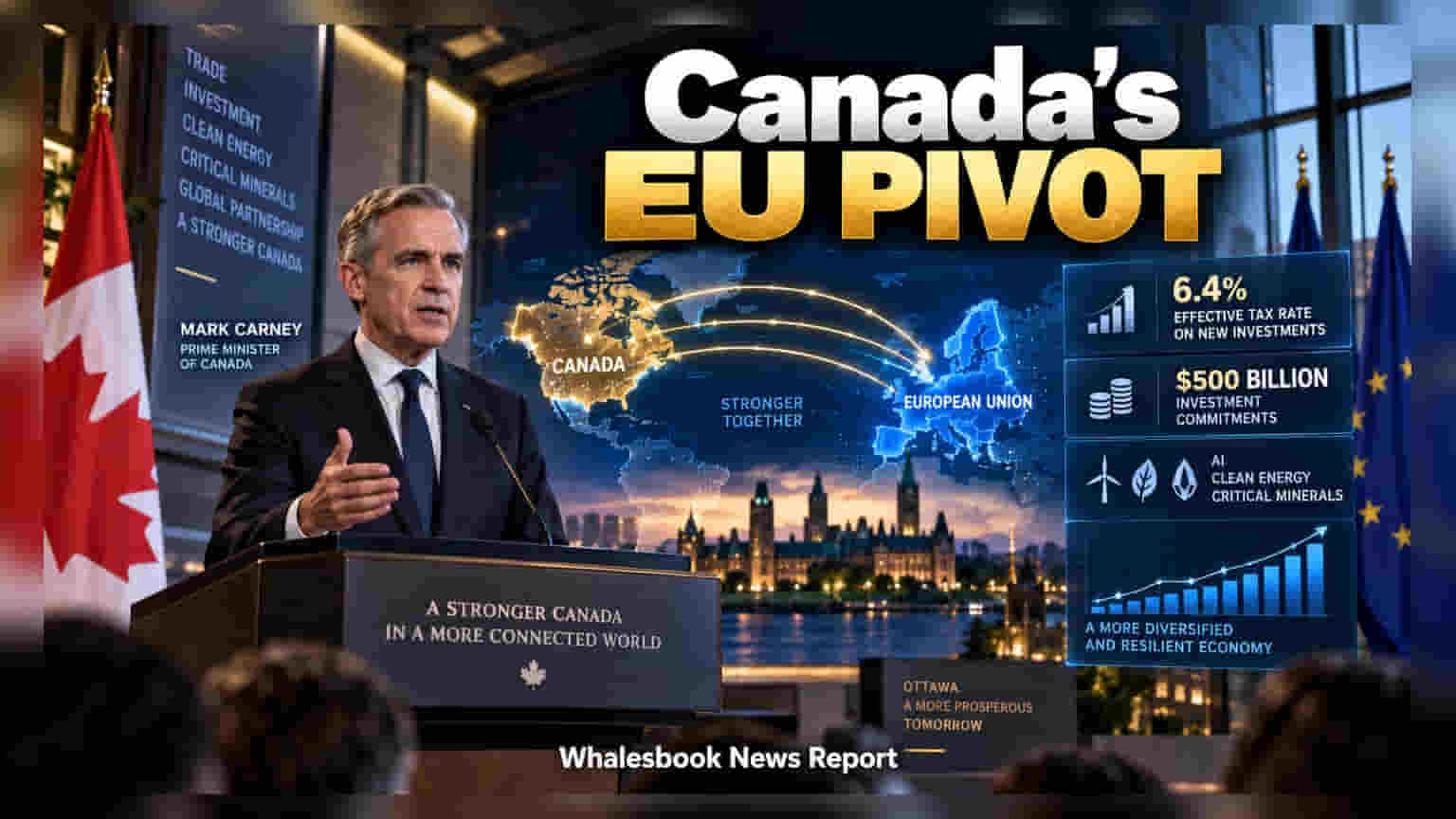
Prime Minister Mark Carney is realigning Canada’s economic strategy toward the European Union, aiming to reduce reliance on the US. Ottawa has introduced a 6.4% tax rate on new investments and secured $500 billion in commitments for AI, energy, and minerals to bolster its fiscal appeal.
Prime Minister Mark Carney has announced a major shift in Canada's international trade and economic policy. The government is moving to distance the nation from its long-standing dependency on the United States and is instead seeking to establish a formal, robust alliance with the European Union. In a recent address in Ottawa, Carney proposed that Canada aim to become an associate member of the EU to secure greater market stability and protect national sovereignty.
New Tax Incentives and Fiscal Strategy
A key pillar of this shift is the Canada Investment Summit, where the government unveiled a new tax initiative designed to make the country more attractive to global investors. By setting an effective tax rate of 6.4 per cent on new investments, Canada is positioning itself as a more competitive destination for global capital. Government officials have contrasted this with the current fiscal environment in the United States, pointing to lower domestic borrowing costs as a sign of financial stability.
This fiscal push is already showing results, with nearly half a trillion dollars in investment commitments secured. These funds are earmarked for high-growth areas, including artificial intelligence, clean energy, and critical minerals. For global investors, the policy represents a deliberate attempt to create a secure financial environment at a time when other major markets are experiencing higher volatility and trade policy uncertainty.
Moving Beyond Trade Tensions
The pivot arrives after a series of difficult diplomatic interactions between Ottawa and Washington. Trade negotiations with the United States remain suspended, driven by repeated threats of tariffs and conflicting economic policies. By diversifying its partnerships, Canada intends to reduce the risk of any single country having excessive influence over its strategic industrial sectors. The government's goal is to ensure that its domestic businesses have reliable access to international markets, regardless of the policy environment in its southern neighbor.
What Investors Should Track Next
Market participants will be watching the upcoming Canada-EU summit, scheduled to take place in Montreal in late October. This meeting will be the next critical test for the proposed alliance, as specific terms regarding the associate membership and deeper economic cooperation are expected to be finalized. Investors should monitor how the 6.4% tax rate affects foreign direct investment inflows in the coming quarters and whether these commitments to AI and clean energy translate into long-term infrastructure and production capacity.