

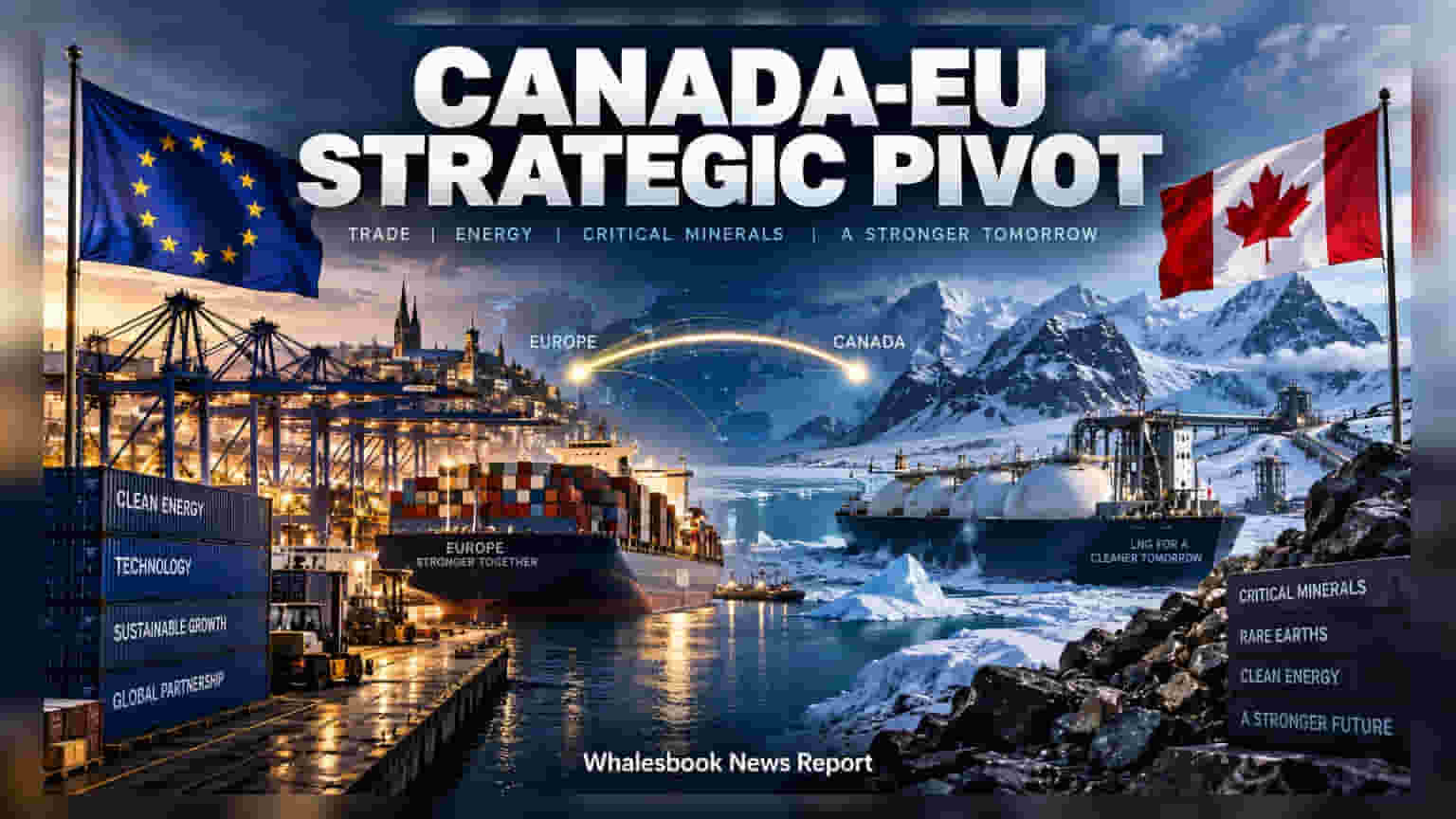
Canada is moving toward becoming the European Union's first associate member to reduce its economic dependence on the United States. This potential alignment focuses on critical minerals, liquefied natural gas (LNG), and advanced technology sectors. For investors, this shift represents a move toward diversifying global trade, which could influence commodity prices and supply chain stability across North America and Europe.
The Canadian government has initiated plans to become the European Union’s first associate member. This proposal aims to strengthen economic ties between Ottawa and Brussels as Canada seeks to diversify its trade relations beyond the North American market. The move is largely driven by concerns over U.S. trade protectionism and the potential for renewed tariffs that could impact the Canadian economy.
At the core of this potential agreement is a push for increased cooperation in energy and critical minerals. With global supply chains facing pressure, Canada offers a significant source of raw materials, including rare earth elements, which are essential for manufacturing high-tech goods and batteries. Additionally, the partnership seeks to boost the supply of liquefied natural gas (LNG) to Europe, helping to provide an alternative energy source for the continent as it moves to reduce dependence on other global suppliers.
The collaboration is also expected to extend into high-tech infrastructure. Plans include coordinating research and development in quantum computing, satellite technology, and supercomputing capabilities. By aligning these sectors with European partners, Canada aims to create a more resilient economic foundation that is less tethered to the integrated supply chains of North America.
For investors, this development signals a shift in how trade alliances are being structured to counter geopolitical volatility. The move reflects a broader trend where nations are looking to secure access to critical commodities through non-traditional partnerships. As this proposal moves forward, monitoring the impact on commodity prices and supply chain logistics will be important. Any shifts in trade policy between Canada and the EU could have ripple effects on global market prices for energy and minerals, as well as on companies that rely on cross-Atlantic supply lines.
While the prospect of associate membership offers potential for economic stability, it also introduces uncertainty. Investors should watch for further details regarding the specific terms of the partnership, the timelines for implementation, and how the U.S. government responds to this realignment. The final economic benefit will depend on the ability of both regions to successfully integrate their infrastructure and harmonize regulatory frameworks in the coming years.