

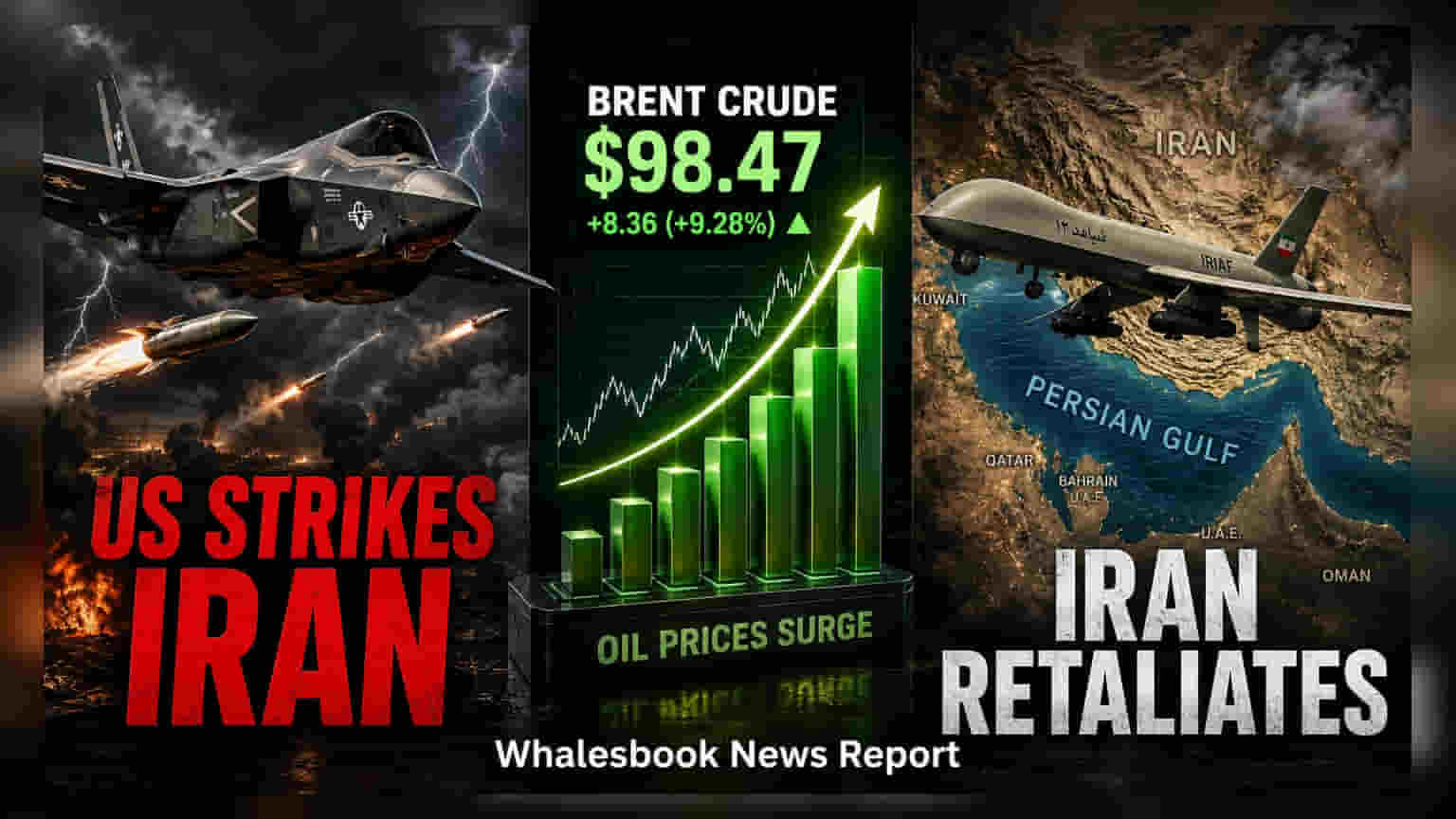
Global oil prices have jumped past $88 per barrel as renewed hostilities between the US and Iran threaten key shipping lanes in the Strait of Hormuz. Investors are monitoring the situation closely, as the escalation impacts energy supply routes and risks sustained upward pressure on global commodity prices.
Detailed Coverage
Global energy markets are reacting to a significant rise in geopolitical tension following an escalation in military activity between the United States and Iran. Brent crude prices surged above $88 a barrel on Monday as reports confirmed that shipping through the critical Strait of Hormuz is facing major disruptions. The maritime chokepoint is essential for global oil transport, and any prolonged blockage often leads to immediate price volatility in energy markets.
The current unrest stems from a series of US military airstrikes targeting Iranian infrastructure, including command centers and missile sites, following the death of American service members. Iran has retaliated with strikes against US allies in the region, including Kuwait, Jordan, and Bahrain. These events have created a high-risk environment for commercial vessels, with multiple reports of attacks on tankers near the United Arab Emirates and Oman. As ships avoid the Strait of Hormuz, the threat of additional supply bottlenecks in the Red Sea—where Iranian-backed groups have signaled potential embargoes on Saudi exports—has further intensified market anxiety.
For investors, the primary concern lies in how these supply chain disruptions affect the cost of energy and, by extension, inflation trends. The uncertainty surrounding the stability of the Middle East acts as a risk factor for companies heavily dependent on global oil and gas prices. While Iranian officials have engaged in mediation talks in Pakistan, the collapse of recent ceasefire efforts suggests that volatility may remain elevated in the near term.
Energy-intensive sectors, including transportation, manufacturing, and chemicals, often face increased operating costs during periods of high crude prices. Furthermore, the global trade environment could remain strained as long as maritime routes are contested. Investors may continue to track developments regarding the status of the Strait of Hormuz, the success of diplomatic efforts in Islamabad, and any further updates from energy-exporting nations regarding their production and export capacities. The ability of the market to absorb these shocks will largely depend on the duration of the current military activity and the availability of alternative supply routes.