

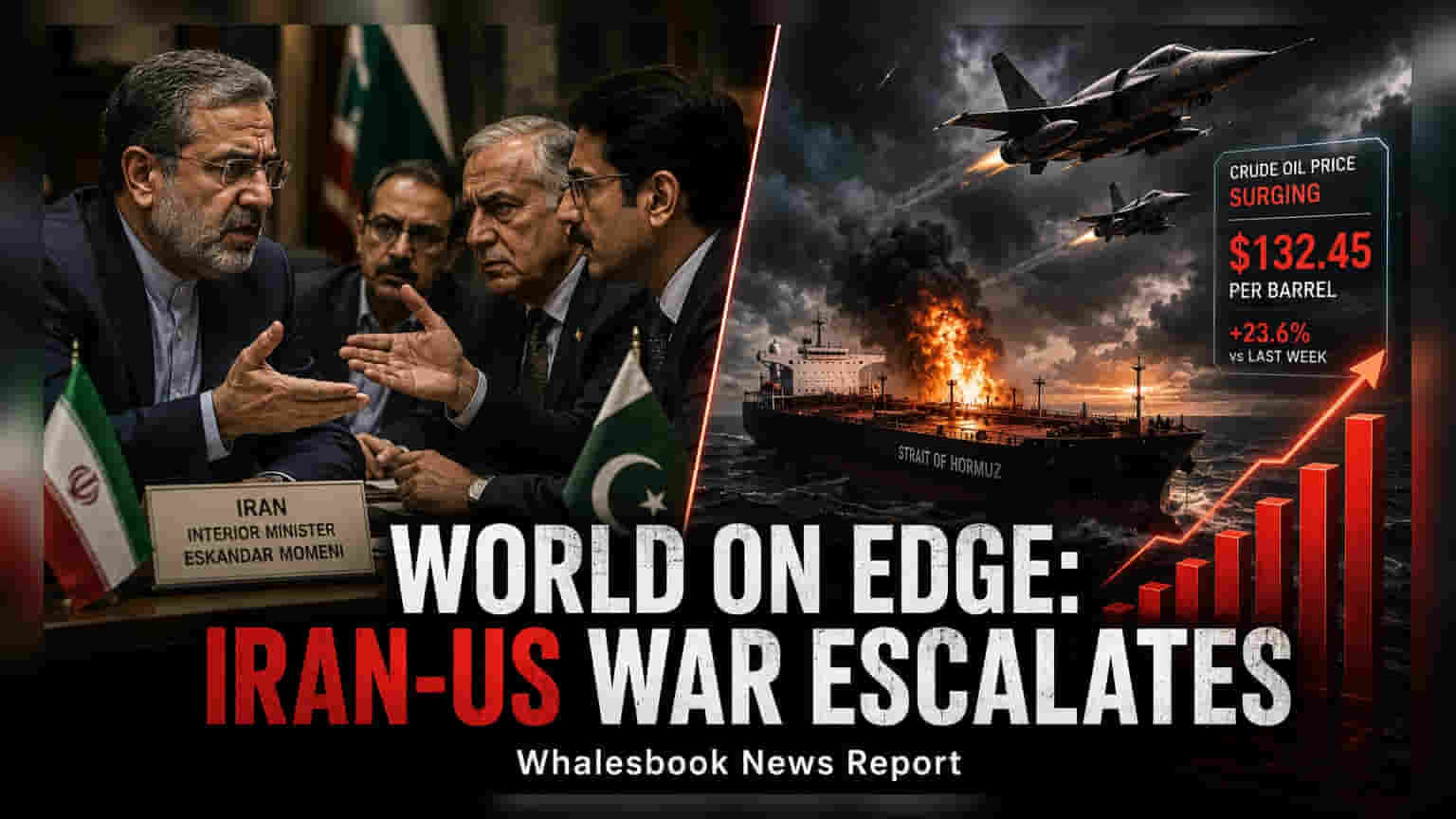
Brent crude prices rose to near $90 a barrel today as geopolitical tensions between the US and Iran entered their tenth day. The conflict has severely impacted shipping through the Strait of Hormuz, a key global energy chokepoint. Investors are monitoring energy supply risks and diplomatic mediation efforts in Pakistan as the regional instability intensifies.
Detailed Coverage
Global energy markets are reacting to heightened geopolitical instability as the United States and Iran continue a ten-day period of escalating military exchanges. On Tuesday, Brent crude traded near $90 per barrel, reflecting concerns over potential supply disruptions in the Middle East. The conflict has centered around the Strait of Hormuz, one of the world's most critical maritime routes for oil and natural gas transit, which has seen a significant drop in vessel traffic.
Impact on Energy Shipping Routes
The Strait of Hormuz serves as a vital corridor for a large portion of global oil exports. Reports indicate that maritime activity through this channel has declined sharply, with Lloyd's List Intelligence noting that only three vessels successfully transited the area on Sunday. The situation worsened Tuesday following an attack on a tanker that forced the crew to abandon the vessel. This disruption is particularly sensitive for global energy markets, as any sustained blockage of this chokepoint could restrict oil flow from major Gulf producers, potentially keeping upward pressure on commodity prices.
Military Escalation and Diplomatic Efforts
The US Central Command has confirmed ongoing airstrikes against Iranian military infrastructure, including command centers, missile sites, and air defense systems, following Iranian attacks on tankers and neighboring nations. In response to the regional instability, Iranian Interior Minister Eskandar Momeni has arrived in Pakistan for discussions with local officials, including Prime Minister Shehbaz Sharif and Army Chief Field Marshal Asim Munir. Pakistan, which has historically played a mediator role, is attempting to revive a June memorandum of understanding between the two nations.
Broader Economic Implications
Beyond global oil benchmarks, the conflict is impacting domestic markets in the United States, where gasoline prices have risen to an average of $4 per gallon. The situation remains fluid as both nations maintain assertive military postures. While US Secretary of State Marco Rubio has publicly stated that the US remains open to negotiations, the feasibility of a breakthrough remains tied to the willingness of both sides to commit to substantive concessions.
For investors, the immediate monitorable is the stability of shipping through the Strait of Hormuz. Any further escalation that results in prolonged port closures or heightened maritime insurance premiums could lead to increased volatility in global energy costs. Market participants will also be watching the progress of diplomatic mediation in Pakistan for any signs of a de-escalation that could stabilize oil prices, though the current focus remains on the immediate impact of the ongoing military exchanges on supply chain reliability.