

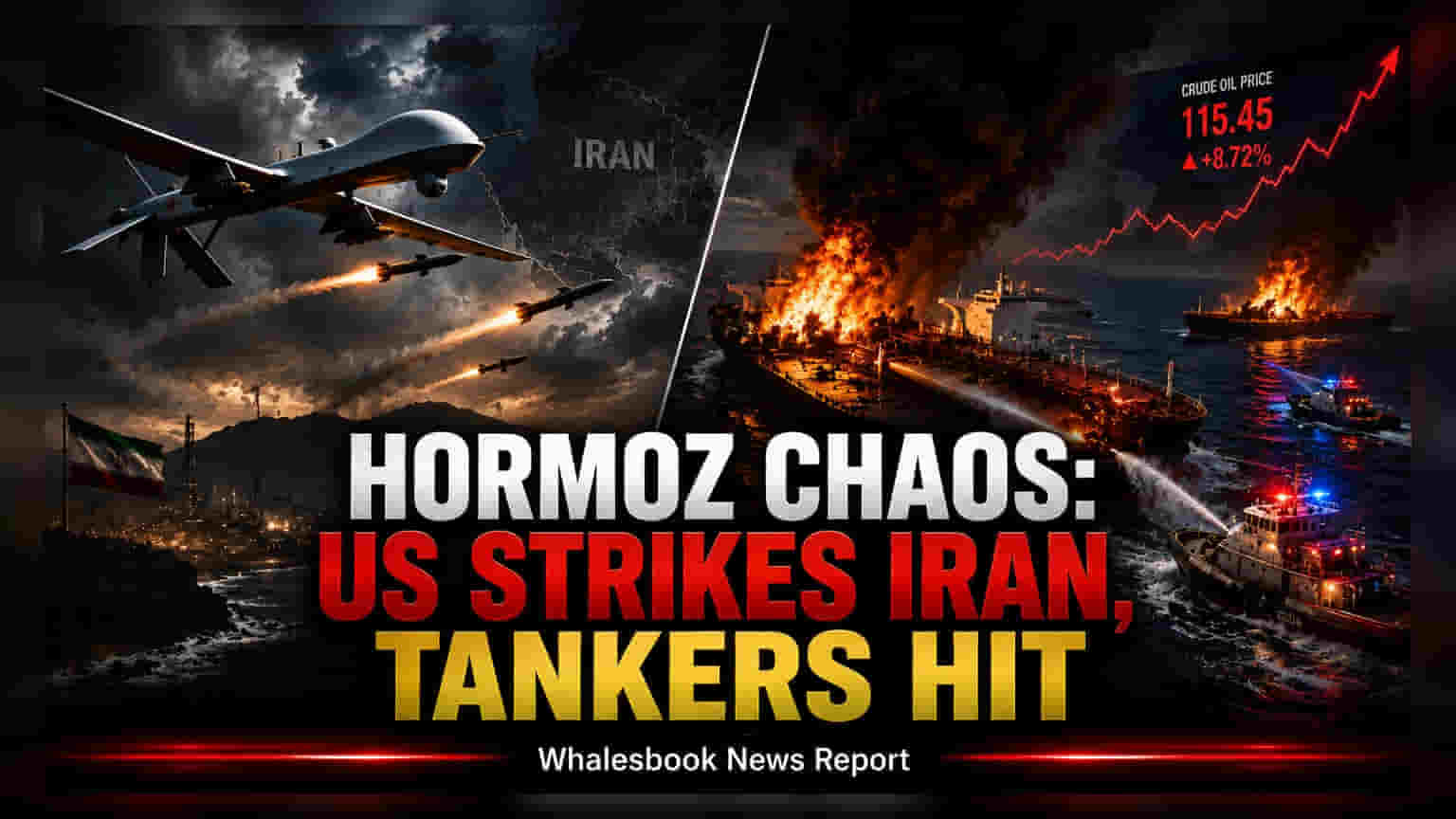
Brent crude prices jumped above $87 per barrel following US military strikes on Iranian defense sites. This escalation follows a new US blockade on Iranian ports in the Strait of Hormuz, a critical route for nearly 20% of global oil and gas. Investors are watching energy markets closely as regional conflicts intensify and threaten global supply chains.
Global energy markets are responding to a sharp increase in geopolitical tensions in the Middle East following United States military strikes against Iranian infrastructure. On Tuesday, the U.S. Central Command confirmed operations targeting Iranian coastal defense systems, missile sites, and maritime capabilities. This action comes after President Donald Trump announced the reinstatement of a blockade on Iranian ports and the imposition of transit fees for vessels navigating the Strait of Hormuz.
The strategic waterway is one of the world’s most important energy corridors, facilitating the transport of approximately 20% of the globe’s traded crude oil and natural gas. Any disruption or heightened risk in this region directly impacts global supply chains, often leading to immediate volatility in commodity prices. Following the news, Brent crude oil prices rose to a one-month high, trading above $87 per barrel. While this is a notable move, market prices remain significantly lower than the $120 levels observed during previous periods of severe regional instability.
Impact on Regional Stability and Trade
The situation has become more complex following retaliatory attacks by Iranian forces targeting vessels in the region, including oil tankers. Reports indicate damage to ships linked to the United Arab Emirates and an attack on the Stolt Magnesium, an oil tanker operated by Stolt Tankers, which suffered an engine room fire. These incidents underscore the physical risks to maritime commerce and personnel in the vicinity of the strait.
Beyond shipping, the regional tensions have drawn a response from international aviation authorities. The European Union Aviation Safety Agency has issued guidance for commercial airlines to avoid the airspace over Bahrain, Kuwait, Qatar, and the United Arab Emirates, reflecting concerns about the unpredictability of military operations in these areas.
The recent developments have put significant strain on ongoing diplomatic efforts. A previously established interim peace deal, which sought to de-escalate fighting and maintain open shipping lanes, is now under severe pressure. With the 60-day negotiation window for a final accord at its midpoint, the sudden shift in US policy toward the blockade creates a new hurdle for international mediators, including Pakistan, who are working to prevent a broader conflict.
Investors monitoring these events should focus on the stability of energy supply routes and the potential for extended volatility in oil markets. The next critical update will involve whether diplomatic channels in locations like Rome can maintain the dialogue between regional delegations or if the conflict continues to disrupt transit through the Strait of Hormuz.