

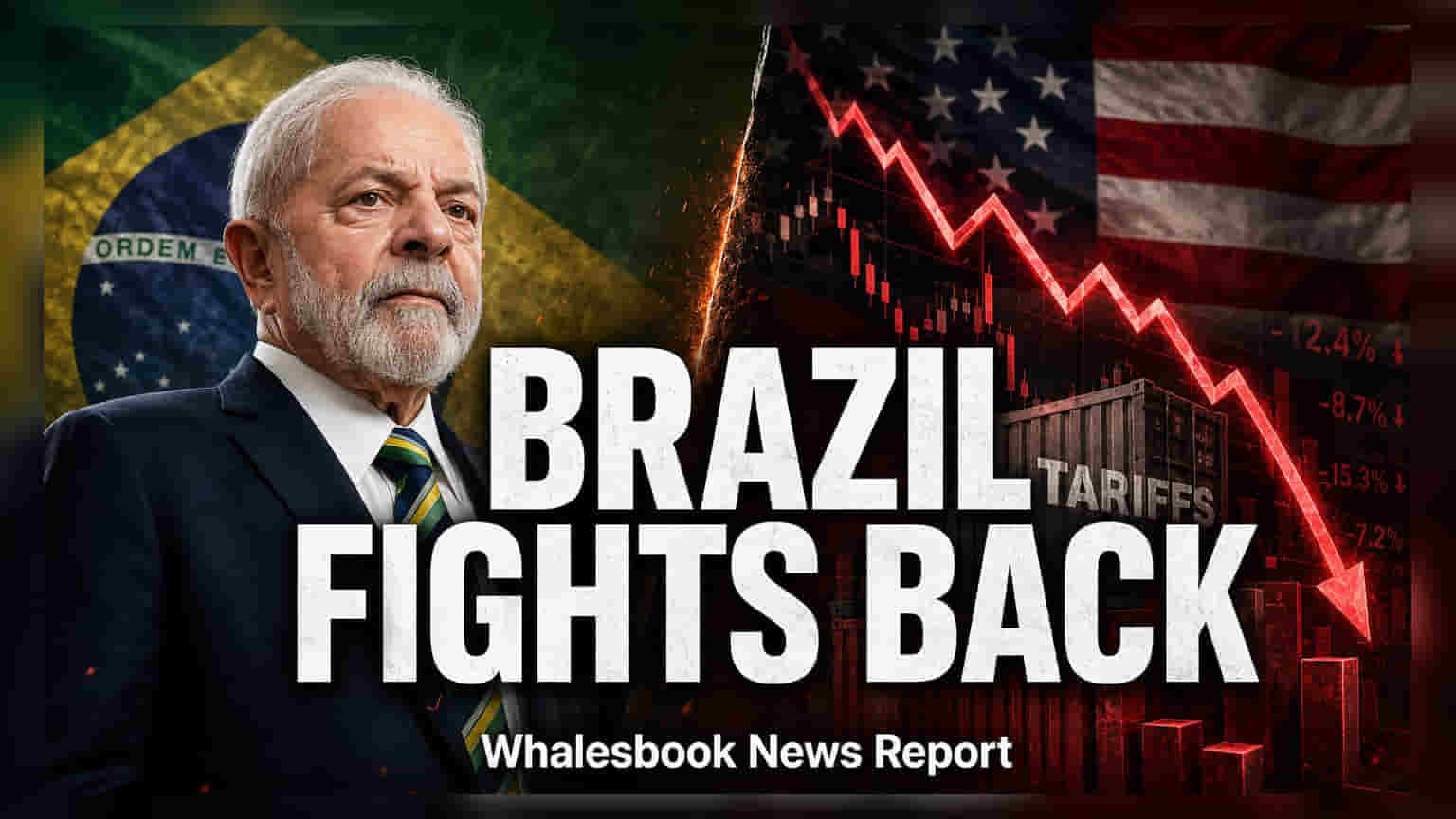
Brazil has activated its Economic Reciprocity Law in response to new U.S. tariffs, signaling rising trade tensions. While the move is currently a formal process rather than immediate retaliation, investors are tracking the situation for potential impacts on global commodity prices and emerging market sentiment.
Brazil has officially initiated a process under its Economic Reciprocity Law following the imposition of new tariffs by the United States. President Luiz Inácio Lula da Silva announced the decision on August 14, 2026, framing the move as a necessary step to demand respect in international trade relations. This development comes as the two nations face heightened diplomatic friction ahead of Brazil's national elections scheduled for October.
The trade dispute centers on recent U.S. measures, which include a 25% tariff on several Brazilian imports and an additional 12.5% duty linked to allegations concerning labor practices. President Lula has publicly denied these claims, describing them as politically motivated. The activation of the reciprocity law marks a formal escalation, though it does not yet constitute an immediate implementation of retaliatory trade barriers.
For investors, this situation carries implications for global market sentiment. Brazil is a significant player in the global export of commodities, including agricultural products and metals. Any sustained escalation in trade barriers between Brazil and the U.S. could lead to increased volatility in these commodity prices. While the impact on Indian markets may be indirect, investors often watch such disputes because they can disrupt global supply chains and affect the risk appetite for emerging markets.
The Brazilian government has concurrently requested diplomatic consultations with Washington, indicating a clear preference for negotiation over an immediate trade war. This dual approach—defending domestic interests through legal mechanisms while keeping doors open for dialogue—suggests that the current focus remains on finding a diplomatic solution.
The key monitorable for the market will be the progress of these upcoming diplomatic talks. If negotiations fail to resolve the tariff issue, any move toward actual retaliatory measures could heighten risks for sectors directly exposed to Brazil-U.S. trade, such as pharmaceuticals, agriculture, and manufacturing. Until a clearer path is established, the situation remains a point of uncertainty that could influence broader international trade dynamics.