

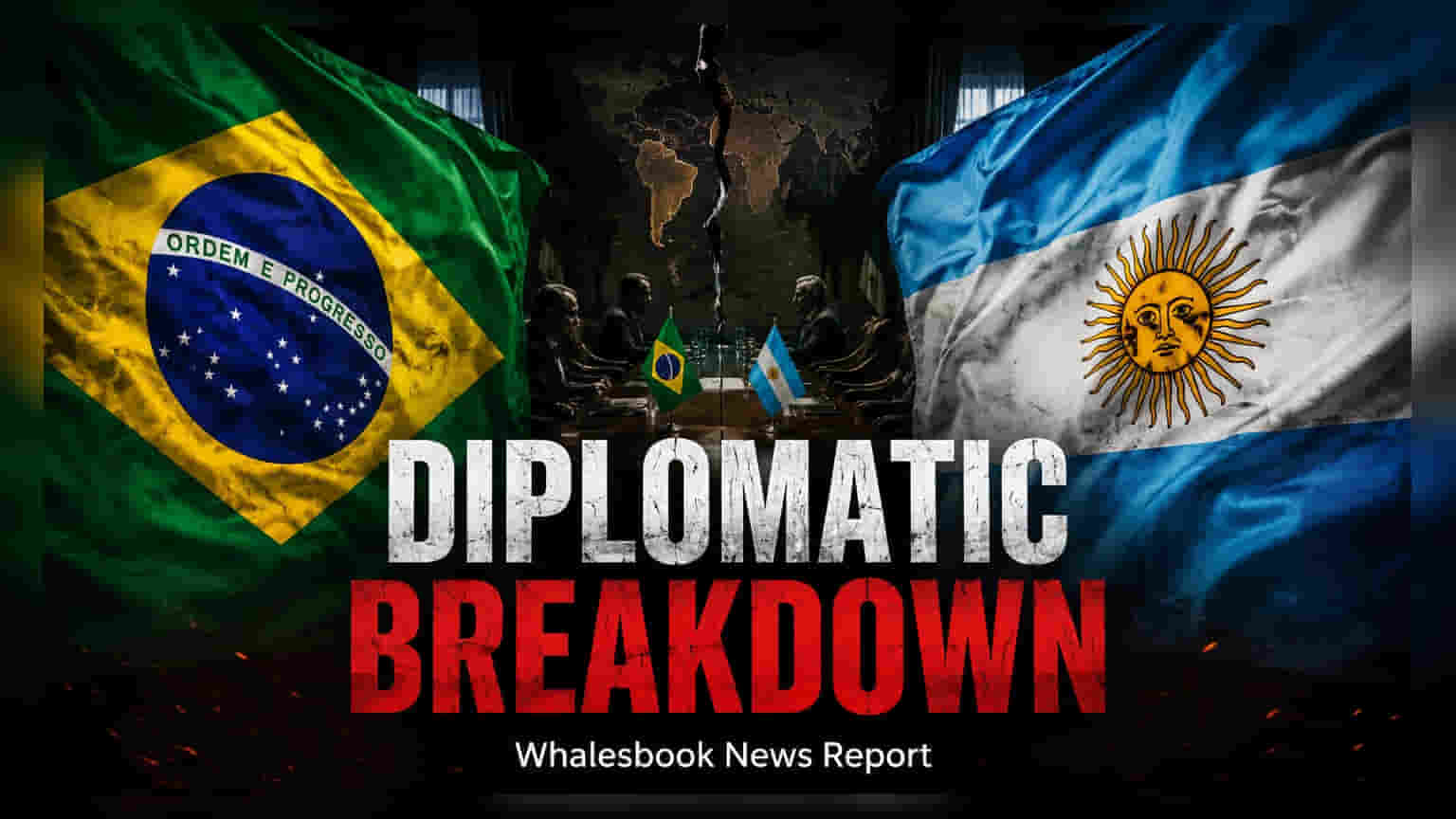
Brazil has formally downgraded its diplomatic relations with Argentina to a 'chargé d'affaires' level due to ongoing friction between leaders. While bilateral trade remains operational, the political standoff creates long-term uncertainty for the Mercosur trade bloc. Investors are tracking whether this regional instability could impact future trade agreements and economic cooperation.
Brazil has formally downgraded its diplomatic presence in Argentina, moving the relationship to the level of 'chargé d'affaires' as of early August 2026. This administrative change effectively means that Brazil’s ambassador, Julio Bitelli, will remain recalled and will not return to Buenos Aires under the current conditions. The decision follows a period of intense and repeated verbal exchanges between Argentine President Javier Milei and Brazilian President Luiz Inácio Lula da Silva.
For investors and market participants, the primary concern lies in the potential ripple effects on regional stability. While both nations have confirmed that there are no government-mandated restrictions on bilateral trade, the prolonged political cooling introduces an element of unpredictability for businesses operating across South American borders.
Economic and Trade Context
Brazil and Argentina share a deep economic partnership. Bilateral goods trade between the two neighbors reached over $31 billion in 2025. Argentina is a significant market for Brazilian industrial and capital goods, while Brazil is a key destination for various Argentine exports. Because both nations are core members of the Mercosur trade bloc, their diplomatic health is often tied to the efficiency of regional trade policies.
At present, business operations and supply chains appear to be functioning normally. However, historical precedents in the region suggest that sustained political friction can sometimes lead to delays in policy coordination or challenges in passing new trade agreements within the bloc. If the rhetoric continues to escalate, it could weigh on investor sentiment regarding the broader Mercosur region, as uncertainty often makes it harder for companies to plan long-term capital expansion or cross-border investments.
Monitoring Regional Stability
The risk for market observers is not necessarily an immediate collapse in trade, but rather the potential for long-term economic strain. If the diplomatic impasse prevents leaders from addressing shared economic goals, it could indirectly impact the financial flexibility of companies that rely heavily on cross-border trade. Additionally, analysts are watching to see if this diplomatic standoff complicates Argentina’s path in meeting its international financial obligations, as regional cooperation often supports broader economic stability.
Investors may track official statements regarding trade policies rather than focusing solely on the political exchanges between the two leaders. The key monitorable will be whether both governments maintain the current separation between their diplomatic disputes and their operational trade policies. Any signs of trade barriers or regulatory hurdles being introduced in the future would be a significant development for companies with high exposure to the South American market.