

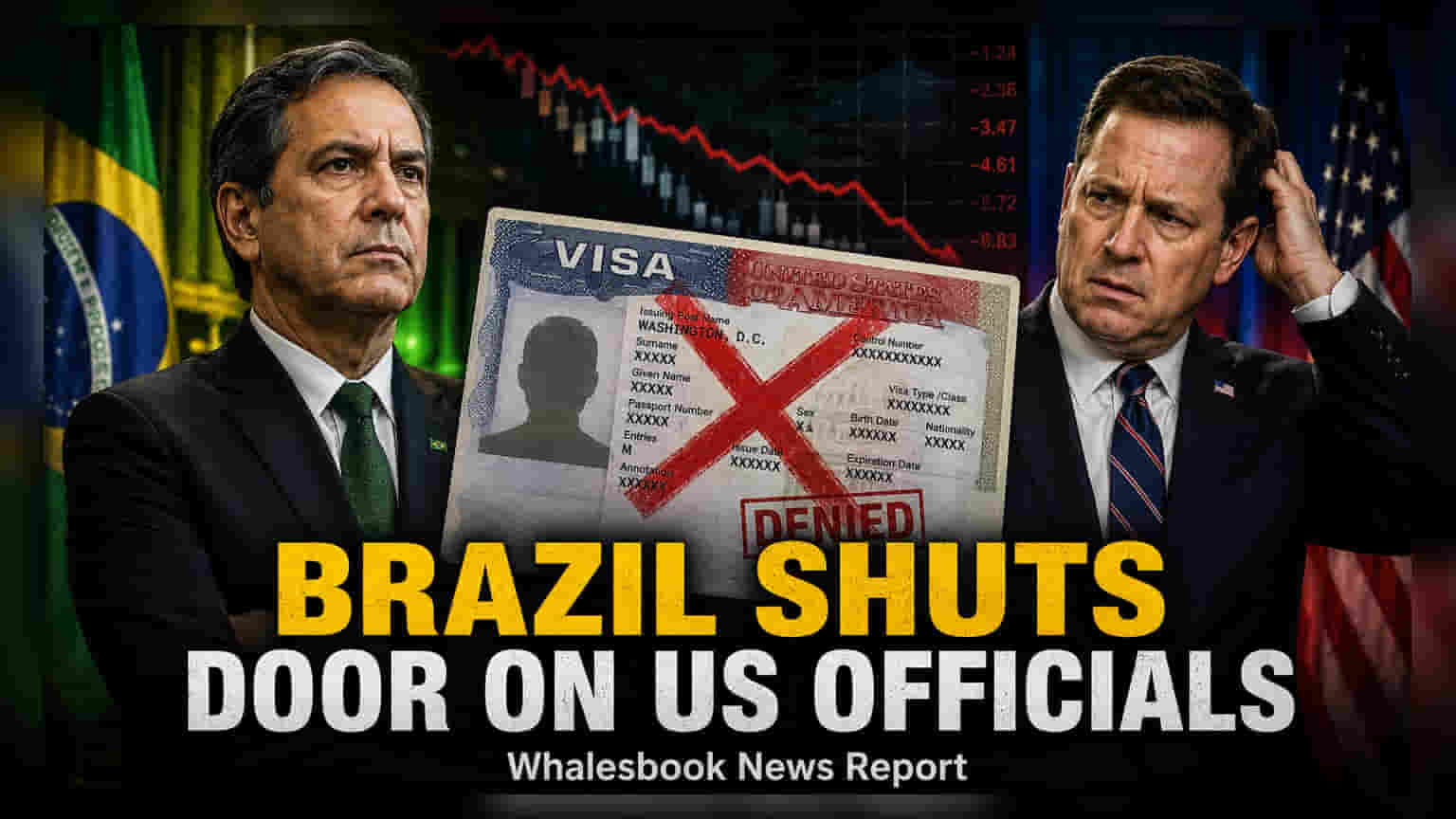
Brazil has denied entry visas to two U.S. State Department officials, citing concerns over potential interference in the upcoming October elections. This decision follows the introduction of new U.S. tariffs on Brazilian goods, which have increased by up to 37.5%. Investors should watch how these rising geopolitical and trade frictions impact cross-border commerce and export-oriented sectors.
Detailed Coverage
The Brazilian government has refused to grant entry visas to two U.S. State Department officials, Riley M Barnes and Samuel Samson, who were scheduled to visit Brasilia between July 27 and July 30. The Foreign Ministry indicated that the decision was taken due to concerns that the visit might undermine the perceived integrity of Brazil’s national elections scheduled for October.
This diplomatic move marks a significant escalation in tensions between the two nations. The relationship has been strained by a series of disagreements, including a recent decision by the United States to impose new tariffs on thousands of Brazilian exports. These tariffs, which took effect on July 24, have increased costs for Brazilian exporters by as much as 37.5%. The U.S. cited concerns regarding unfair trade practices and labor standards as the primary drivers for these measures, while the Brazilian administration has characterized the move as an attempt to influence local political outcomes.
Impact on Trade and Policy
The economic implications of these measures are becoming a focal point for market observers. Brazilian exports, particularly in sectors that rely heavily on the U.S. market, may face significant pressure due to the steep increase in tariff rates. The friction is further complicated by disagreements over internal security policy. The U.S. recently classified two major Brazilian groups, First Command Capital and Red Command, as foreign terrorist organizations—a designation that President Luiz Inácio Lula da Silva has formally opposed.
These events are unfolding as Brazil approaches a critical election period. The current political climate includes ongoing debates regarding the security of the country's electronic voting system, a topic previously raised by former President Jair Bolsonaro. While the U.S. State Department has described the denied visit as a routine effort to discuss election integrity and human rights, the Brazilian government’s rejection highlights a deep-seated suspicion regarding foreign involvement in domestic political processes.
Investors and businesses with exposure to Brazil-U.S. trade routes should monitor whether these diplomatic barriers lead to further retaliatory trade actions. The primary monitorable in the coming weeks will be the impact of these tariffs on the profit margins of Brazilian export companies and whether the rhetoric between the two governments results in more restrictive trade or investment policies.