

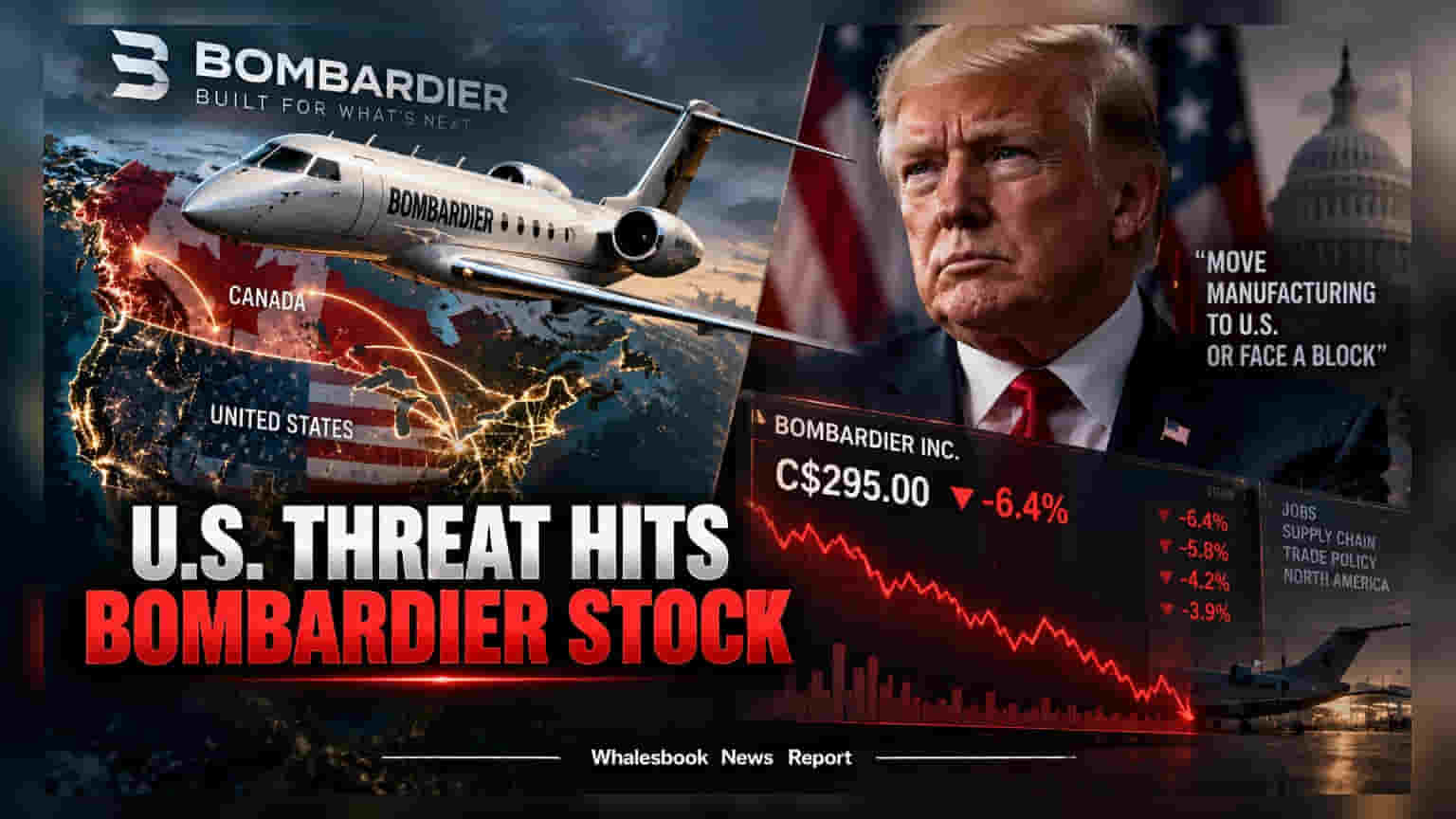
Bombardier shares declined 6.4% to C$295.00 on September 8 following a warning from President Donald Trump regarding the company's U.S. aircraft sales. The potential trade restriction creates uncertainty for investors, given that over half of the company's revenue currently comes from the United States market.
Bombardier Inc. shares faced selling pressure on Tuesday, falling 6.4% to C$295.00 in trading. The decline follows a statement issued on September 7, 2026, by U.S. President Donald Trump, who suggested a potential block on the Canadian aerospace firm’s aircraft sales in the United States unless the company shifts its manufacturing operations to the U.S.
The market reaction reflects the significant reliance Bombardier has on the American market. Recent data indicates that over 50% of the company's total revenue is generated through U.S. sales, making any regulatory shift or trade barrier a meaningful risk for the manufacturer’s financial performance. Investors are currently weighing the impact of this political rhetoric against the company's established operational footprint in the region.
Despite the threat, Bombardier maintains a significant industrial presence within the United States. The company works with approximately 2,800 American vendors across 47 states and operates manufacturing facilities in regions including Texas and California. This established supply chain integration has historically been a point of stability for the company, and management may emphasize these contributions as trade discussions evolve.
From a financial perspective, the company has shown signs of improved stability in recent quarters. As of mid-2026, Bombardier reported a healthy backlog of $21.8 billion, which provides some clarity on future order execution. Additionally, the company has managed its debt profile effectively, with no major debt maturities scheduled until November 2030, and it has maintained a positive trend in free cash flow.
Investors may now watch for any official regulatory filings or government policy shifts regarding trade between Canada and the United States. The primary monitorables will include management commentary on potential manufacturing adjustments, any updates on U.S. supply chain status, and broader developments in North American trade policy. While the strong order book offers support, political friction remains a factor that could influence short-term volatility in the stock price.