

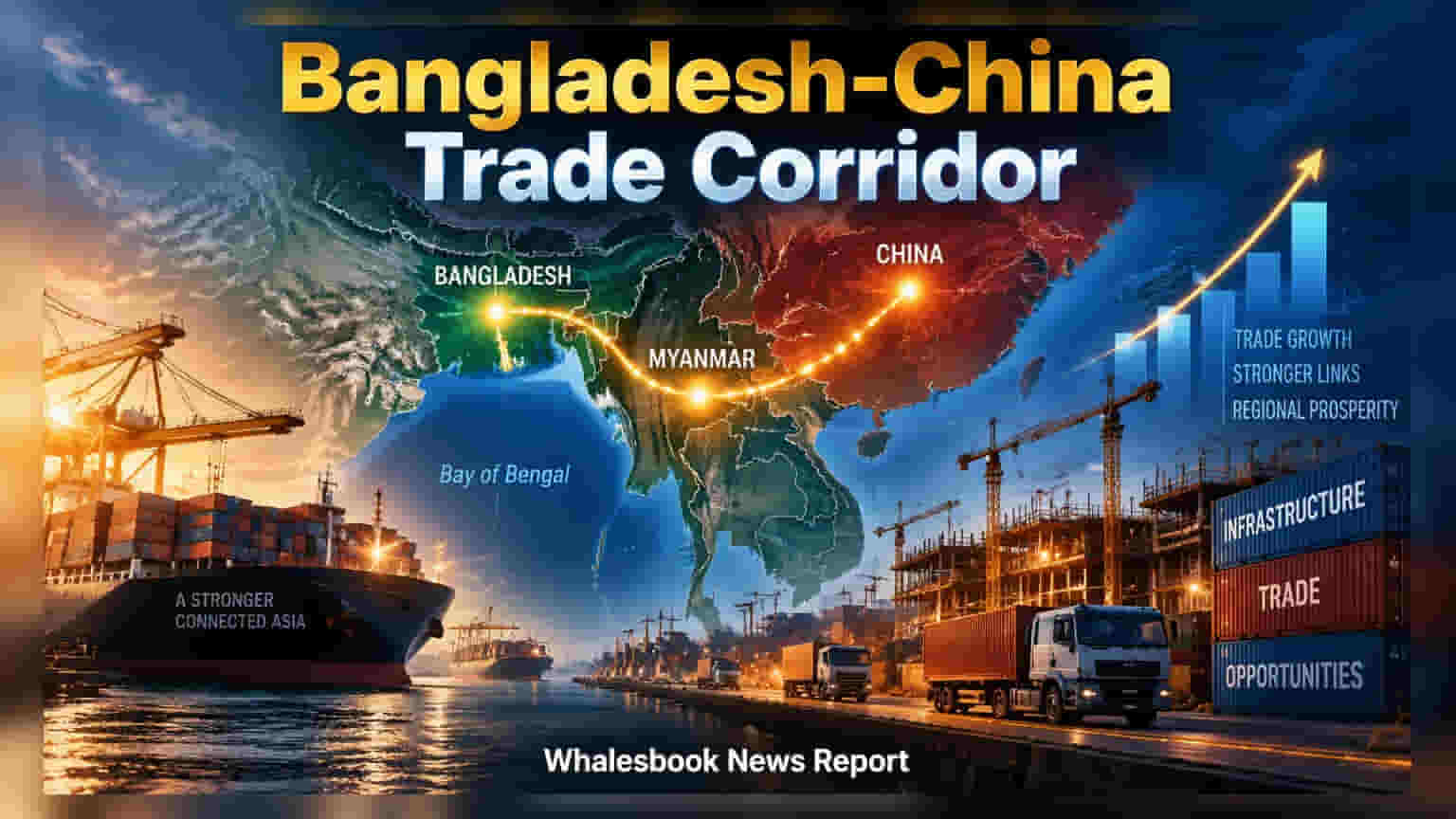
Bangladesh and China are negotiating a new trade corridor via Myanmar, shifting focus toward the Bay of Bengal and Mongla Port development. This proposal, discussed in recent bilateral talks, aims to improve regional connectivity under China’s Belt and Road Initiative, though it faces significant execution and geopolitical hurdles.
Recent diplomatic discussions between Bangladesh and China have brought forward a proposal for a new connectivity corridor linking the two nations through Myanmar. The initiative, discussed by Junior Foreign Minister Shama Obaed Islam and Chinese Ambassador Yao Wen on September 14–15, 2026, marks a fresh attempt to enhance regional trade routes outside of previous, stalled frameworks like the older Bangladesh-China-India-Myanmar (BCIM) corridor.
The core objective of this project, often referred to as the Bangladesh-China-Myanmar Economic Corridor, is to provide southwestern China with direct trade access to the Bay of Bengal. By focusing on the modernization of Mongla Port and the potential establishment of Chinese Economic Zones within Bangladesh, the initiative intends to streamline logistics and energy cooperation. For China, this is a strategic move to diversify trade routes and reduce long-term dependence on the Strait of Malacca, which is a major chokepoint for global shipping.
Regional Execution and Strategic Risks
Investors and policy analysts are closely watching the project’s viability due to several major concerns. First, the ongoing political instability and internal conflict within Myanmar present a severe risk to any cross-border infrastructure project. Building and securing a corridor through such a volatile region involves high costs, potential security issues, and the high probability of delays.
Furthermore, similar large-scale infrastructure projects across Asia have previously raised concerns about debt sustainability. Observers are monitoring whether this initiative could lead to increased financial leverage for Bangladesh. There is always a risk of potential long-term fiscal pressure if such massive infrastructure projects do not generate immediate trade returns or if the financing terms prove burdensome.
Geopolitical Implications for the Region
The project also holds significant geopolitical sensitivity. India has traditionally maintained a cautious stance on Chinese infrastructure expansion in its immediate neighborhood, particularly near its eastern border. Any significant increase in Chinese economic or logistical presence in the Bay of Bengal region via Myanmar is viewed as a shift in regional power dynamics. Market participants are tracking how this evolves, as any resulting diplomatic or trade tensions could indirectly influence regional trade policies or the operating environment for firms in the logistics and port infrastructure sectors.
The next critical updates to track include the finalization of the proposed project route, the nature of the financing agreements, and any further official statements regarding the timeline for the Mongla Port modernization. Given the complexity of navigating multi-nation infrastructure deals in a volatile zone, the feasibility of implementation remains the primary monitorable for assessing the project's long-term regional impact.