

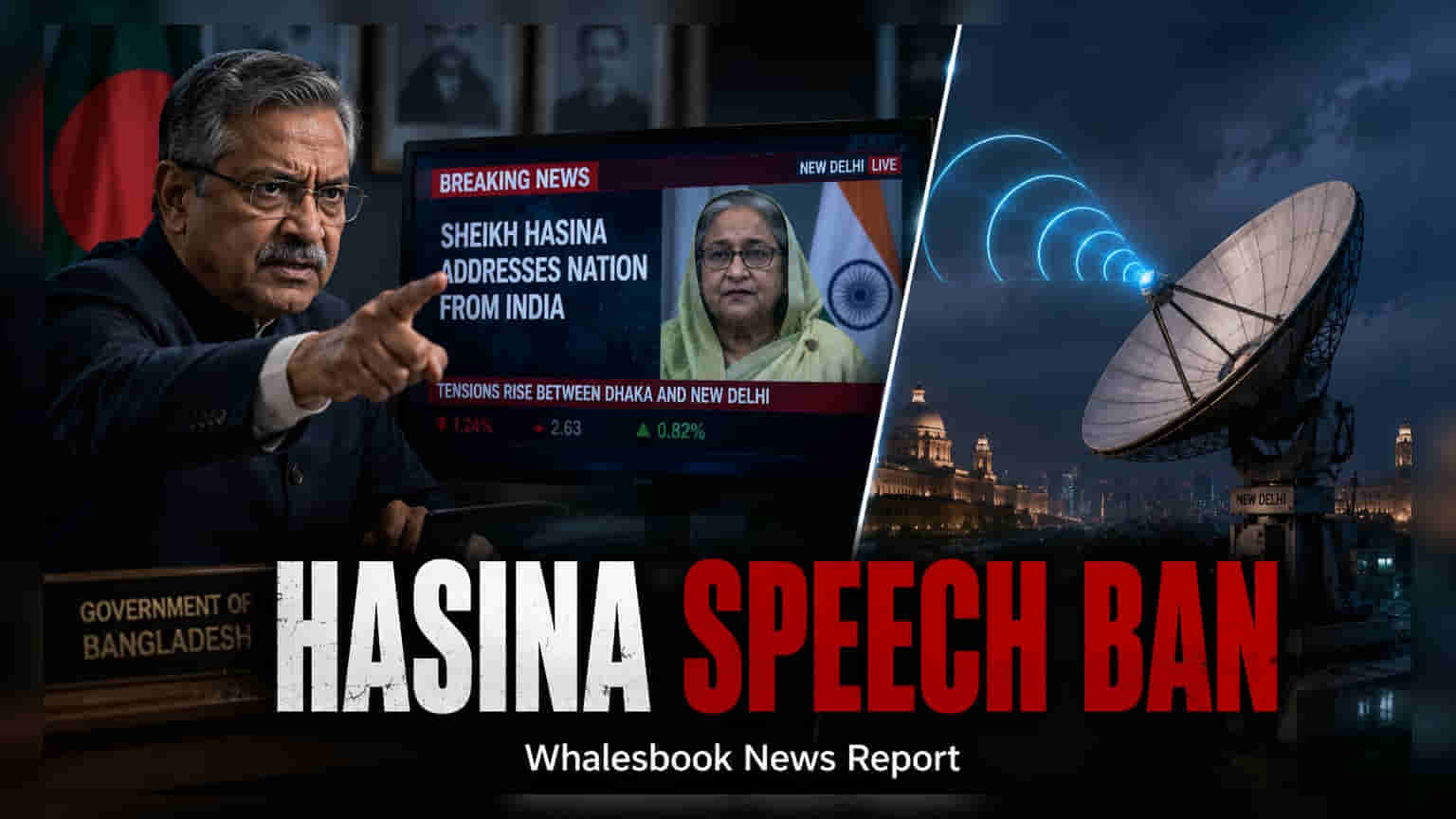
Bangladesh authorities have barred local media from covering a scheduled virtual address by former Prime Minister Sheikh Hasina from New Delhi. The directive follows heightened diplomatic tensions on the second anniversary of her 2024 exit. For investors and businesses, this development highlights potential friction in India-Bangladesh bilateral relations, which may affect the broader regional trade and investment climate.
The government of Bangladesh has issued a formal directive prohibiting local media outlets from broadcasting or publicizing statements made by former Prime Minister Sheikh Hasina during an upcoming virtual address. The speech, scheduled to be hosted by the Foreign Correspondents' Club of South Asia in New Delhi, coincides with the second anniversary of the 2024 student-led uprising that resulted in Hasina’s departure from office. Authorities in Dhaka cited a tribunal order, framing the prohibition as a necessary step to maintain internal stability and prevent the dissemination of content from a figure currently facing serious legal charges.
The event has drawn attention to the evolving diplomatic landscape between New Delhi and Dhaka. In response to the situation, India’s Ministry of External Affairs has clarified that the event is being organized by a private media entity. The ministry emphasized that the Indian government has no involvement in the event and does not endorse the views expressed by participants. Despite this, Dhaka has formally requested that India restrict the use of its territory for political activities by Hasina and other members of the Awami League, citing concerns that such activities could negatively impact bilateral ties.
For investors and market observers, this situation serves as a reminder of the geopolitical risks inherent in cross-border operations. Relations between India and Bangladesh are critical for the stability of trade in the South Asian region, particularly for sectors like textiles, power, and logistics. Any prolonged diplomatic friction or instability can create uncertainty for Indian companies with significant exposure to the Bangladeshi market. While trade continues, businesses often monitor such developments as they can influence policy decisions, border movement, and the general ease of doing business across the region.
The key monitorable for market participants will be the evolution of bilateral diplomatic engagements. Investors with exposure to the region generally track these developments to assess the stability of trade agreements, cross-border infrastructure projects, and regulatory environments. As the situation remains fluid, the upcoming weeks will likely provide clarity on how both nations navigate these tensions while maintaining essential economic cooperation.