

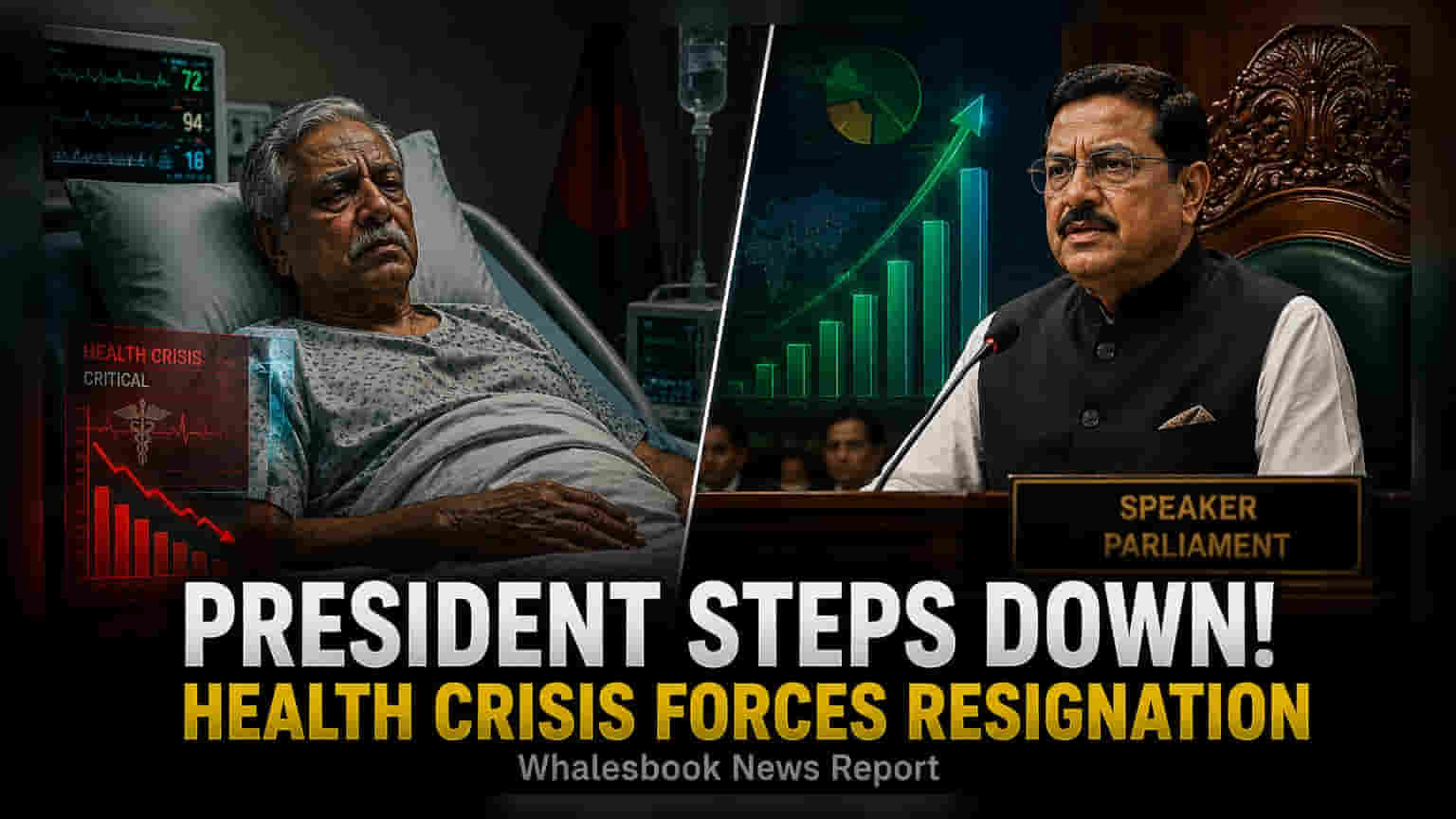
Bangladesh President Mohammed Shahabuddin has resigned citing severe health complications. Parliament Speaker Hafiz Uddin Ahmed has assumed the role of Acting President, with constitutional provisions requiring a new election within 90 days. This transition comes amid ongoing political developments in the country following the 2024 government change.
Detailed Coverage
Bangladesh President Mohammed Shahabuddin has stepped down from his office, citing significant health concerns. The 76-year-old leader, who had two years remaining in his five-year term, officially resigned after reporting that he is no longer able to carry out the responsibilities of the role. Following this development, Parliament Speaker Hafiz Uddin Ahmed has taken charge as Acting President, as outlined by the nation’s constitutional mandate.
Transition of Power and Constitutional Process
Under Article 54 of the Constitution of Bangladesh, the Speaker of Parliament is designated to assume presidential duties when the office becomes vacant. Hafiz Uddin Ahmed, 80, accepted the resignation and has assumed the responsibilities of the office. The constitution requires that a new presidential election must be conducted within 90 days. This period is expected to be a key focus for observers, as the country navigates the process of selecting a successor to fill the ceremonial role.
Health Factors and Recent Context
In his resignation documentation, Shahabuddin detailed a series of chronic health conditions, including heart disease, diabetes, and kidney-related ailments. He specifically noted a diagnosis of Autonomic Neuropathy, which he stated has led to episodes of unconsciousness, making it difficult for him to perform official functions. While the president’s role in Bangladesh is primarily ceremonial—with primary executive authority held by the head of government—the position has been a point of interest during recent political shifts.
Shahabuddin was elected in April 2023. His departure occurs against the backdrop of significant changes in the country’s leadership, notably following the events of July and August 2024, which resulted in the exit of the previous administration. In the months since that period, the political environment has remained sensitive, with various stakeholders monitoring the stability and function of constitutional offices.
Market and Investor Impact
For investors and market participants with interests in Bangladesh, the stability of the transition and the eventual election of a new president will be the main monitorables. While the presidency is largely symbolic, the appointment of a successor and the adherence to the 90-day election timeline are important for political continuity. Investors generally look for stable governance and clear processes in neighboring economies to assess long-term policy predictability. The next important step for the country will be the official commencement of the election process to finalize the new presidential appointment.