

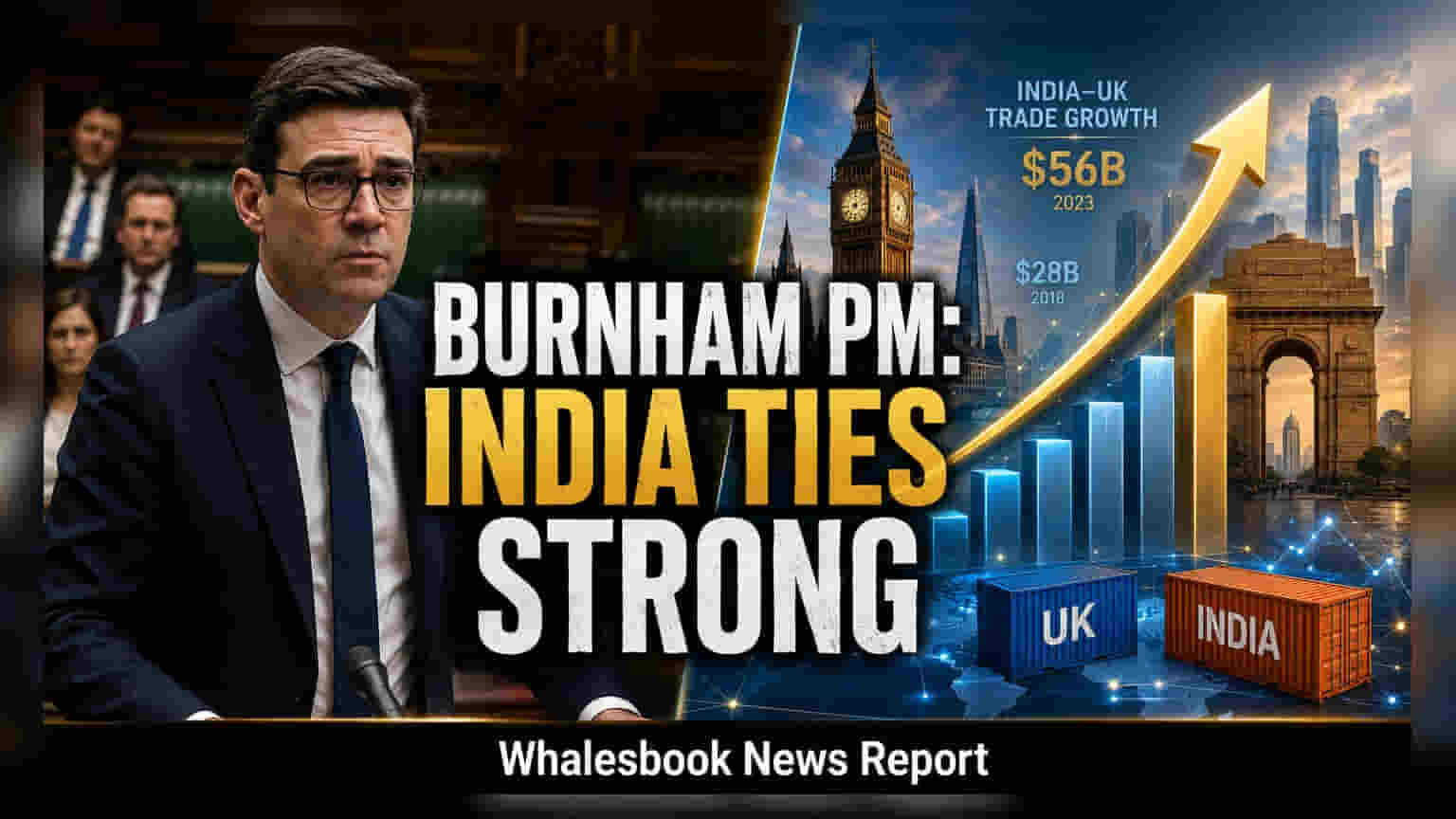
Newly elected UK Prime Minister Andy Burnham is expected to maintain stable trade and diplomatic ties with India. Investors should track progress on the ongoing trade agreement and future investments in sectors like digital technology and advanced manufacturing.
Andy Burnham has assumed the office of British Prime Minister following his leadership victory in the Labour Party. For Indian investors and the broader business community, the leadership change is viewed as a signal of continuity in the bilateral relationship between India and the United Kingdom.
Focus on Trade and Strategic Sectors
Under his previous tenure as the Mayor of Greater Manchester, Burnham frequently prioritized international partnerships, with a specific focus on India. His administration identified key growth areas including digital technology, advanced manufacturing, and engineering. Analysts suggest that this regional focus may now translate into national policy, potentially opening new channels for cooperation between UK regions and Indian states.
One of the most critical monitorables for businesses is the status of the ongoing trade agreement. While Burnham is expected to prioritize domestic policy goals during his early months in office, industry leaders such as Lord Karan Bilimoria have expressed optimism regarding the ambitious goal of doubling bilateral trade to £100 billion by 2030. Achieving this target will likely depend on how effectively the two nations resolve pending trade barriers and encourage cross-border investment flows.
Investor Monitorables and Policy Outlook
While the political transition signals stability, the tangible economic impact will depend on the implementation of specific trade policies. Business groups and think tanks, including The 1928 Institute, have suggested that appointing a dedicated trade envoy or forming a formal India Task Force could be necessary to maintain the momentum of trade negotiations.
For investors, the key area to track is the development of specific research and export partnerships in the technology and manufacturing sectors. Although the diplomatic relationship remains warm, investors should remain aware that changes in UK domestic policy, such as shifts in visa regulations or regional economic incentives, could indirectly influence Indian companies operating in the UK or those reliant on exports to the British market. The effectiveness of future bilateral summits and the speed of finalizing trade-related agreements will be the primary indicators of the new administration’s success in deepening economic ties.