

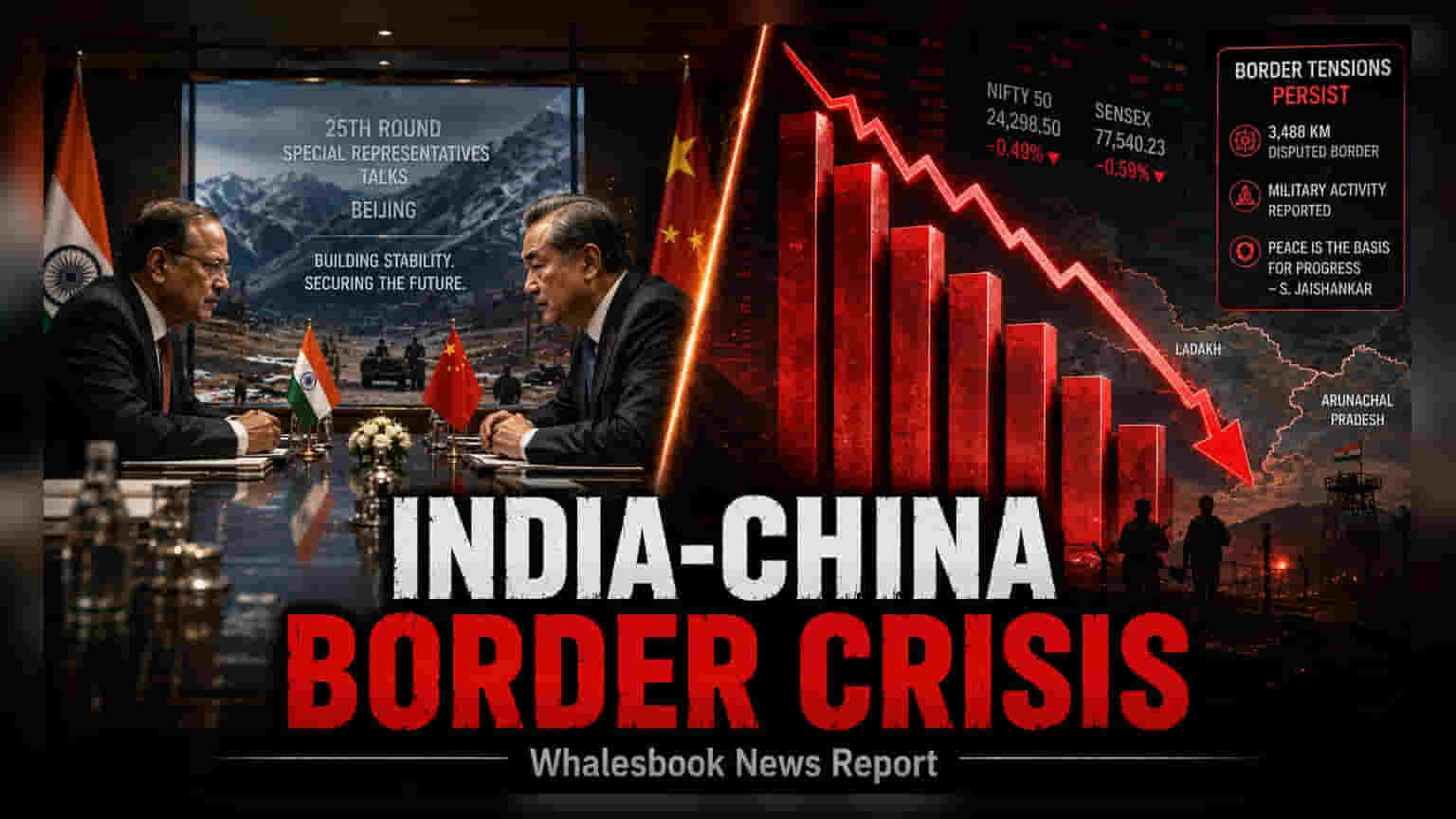
National Security Advisor Ajit Doval has initiated the 25th round of Special Representatives talks with Chinese Foreign Minister Wang Yi. This high-level dialogue in Beijing aims to address border stability ahead of the BRICS summit in New Delhi, influencing the current diplomatic and economic climate.
National Security Advisor Ajit Doval is in Beijing to lead the 25th round of Special Representatives talks on the India-China boundary issue, meeting with Chinese Foreign Minister Wang Yi. This dialogue is central to managing the 3,488-kilometer frontier, a long-standing point of friction that has frequently influenced bilateral relations and market sentiment.
The timing of these discussions is significant, occurring as India prepares to host the 18th BRICS Leaders' Summit in New Delhi on September 12-13, 2026. Diplomatic observers note that these talks serve as a necessary step to manage border tensions, which could set the tone for broader engagement between Prime Minister Narendra Modi and President Xi Jinping on the sidelines of the upcoming summit.
For investors, these diplomatic efforts are closely linked to recent shifts in economic policy. The Indian government recently eased foreign direct investment (FDI) norms for countries sharing a land border, allowing an automatic approval route for companies with up to 10% Chinese shareholding. Furthermore, border trade at key mountain passes like Nathu La, Lipulekh, and Shipki La resumed on August 1, 2026, after a six-year suspension. These developments suggest a pragmatic move toward resuming limited economic cooperation, provided the border remains stable.
Despite these positive steps, the security situation remains a point of caution. Reports of military assertiveness in regions like Arunachal Pradesh’s Upper Subansiri district serve as a reminder of the volatility that can still impact strategic sectors. External Affairs Minister S. Jaishankar has repeatedly stated that peace and tranquility along the border are foundational requirements for stable bilateral relations, a sentiment that continues to guide India’s diplomatic and economic strategy.
The outcome of these meetings is highly anticipated, as it will likely determine the level of cooperation seen during the BRICS summit. Investors often monitor these developments, as geopolitical stability directly impacts trade policies, defense-linked stocks, and cross-border commercial sentiment. The key monitorable for the coming weeks will be the joint statements or policy shifts emerging from both the Special Representatives meeting and the subsequent BRICS summit in New Delhi.