 Whalesbook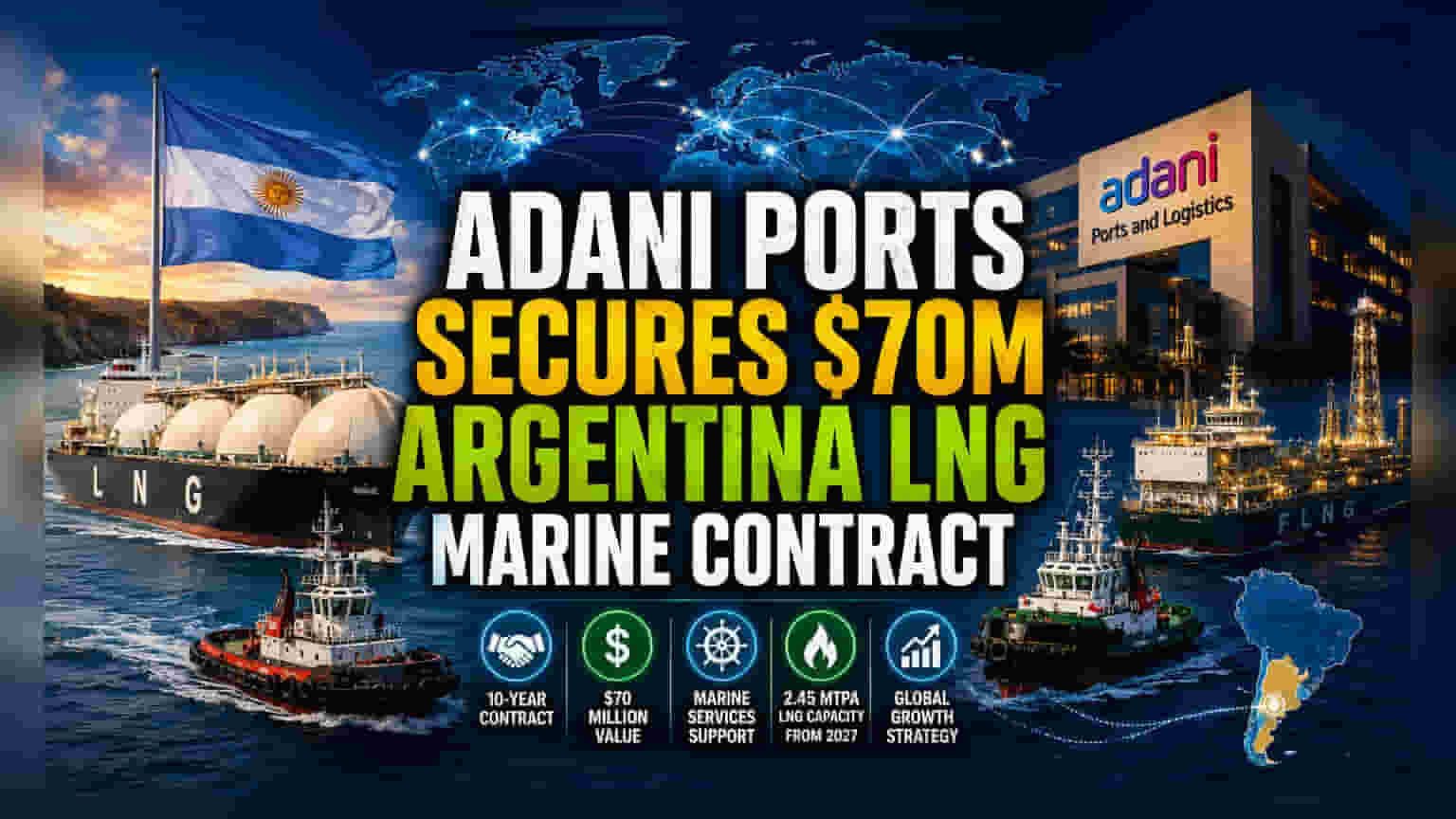


A Strategic Foothold in South America
Adani Ports & Special Economic Zone (APSEZ) is deepening its global footprint by securing a 10-year marine services contract for Argentina's first liquefied natural gas (LNG) export initiative. The agreement, valued at approximately $70 million, positions the Indian infrastructure conglomerate as a critical logistics partner for the Southern Energy FLNG project. Managed through Adani Harbour International FZCO—a step-down subsidiary of APSEZ—the contract involves a joint venture, Meridian Transportes Maritimos S.A., where APSEZ holds a 51% controlling interest alongside its local partner, Meridian Group.
The Operational Scope
The consortium is tasked with providing comprehensive marine support to facilitate the export of LNG from Argentina’s resource-rich Vaca Muerta shale fields. Operations will be centered at the Golfo San Matías in Río Negro province. To ensure execution efficiency, the group will deploy a specialized fleet featuring four high-end tugboats, an anchor handling tug supply vessel, and a dedicated crew boat. The project, which targets an initial annual production capacity of 2.45 million tonnes of LNG, is a vital component of Argentina's effort to become a significant global energy exporter starting in 2027.
The Analytical Deep Dive: Sector Context
This move aligns with APSEZ’s broader strategy to transition from a domestic port operator into a global integrated logistics utility. By capturing the marine services value chain, the company mitigates its reliance on pure cargo-handling volumes in India. While domestic growth remains strong—evidenced by a 16% year-on-year cargo volume increase in May 2026—international ventures serve to hedge against regional economic concentration. The company's current market valuation remains robust, with a P/E ratio hovering around 30-33, reflecting investor confidence in its ability to execute high-value projects despite global market volatility and foreign institutional selling pressures.
Risk Factors and Competitive Realities
Investors should weigh the growth potential against inherent operational risks. International expansion into South America exposes APSEZ to geopolitical shifts and regulatory variables within Argentina’s evolving energy sector. Unlike established competitors such as JSW Infrastructure, which maintains a more concentrated focus on the Indian subcontinent, APSEZ’s aggressive global acquisition strategy requires stringent capital allocation. Furthermore, the company faces historical scrutiny regarding environmental and governance practices in past international projects. Maintaining operational excellence in a new jurisdiction with different labor and maritime regulations will be a test of the management’s ability to scale its 'Mundra playbook' internationally. Success hinges on the timely commissioning of the FLNG infrastructure and the ability to maintain profitability in an asset-heavy environment.