

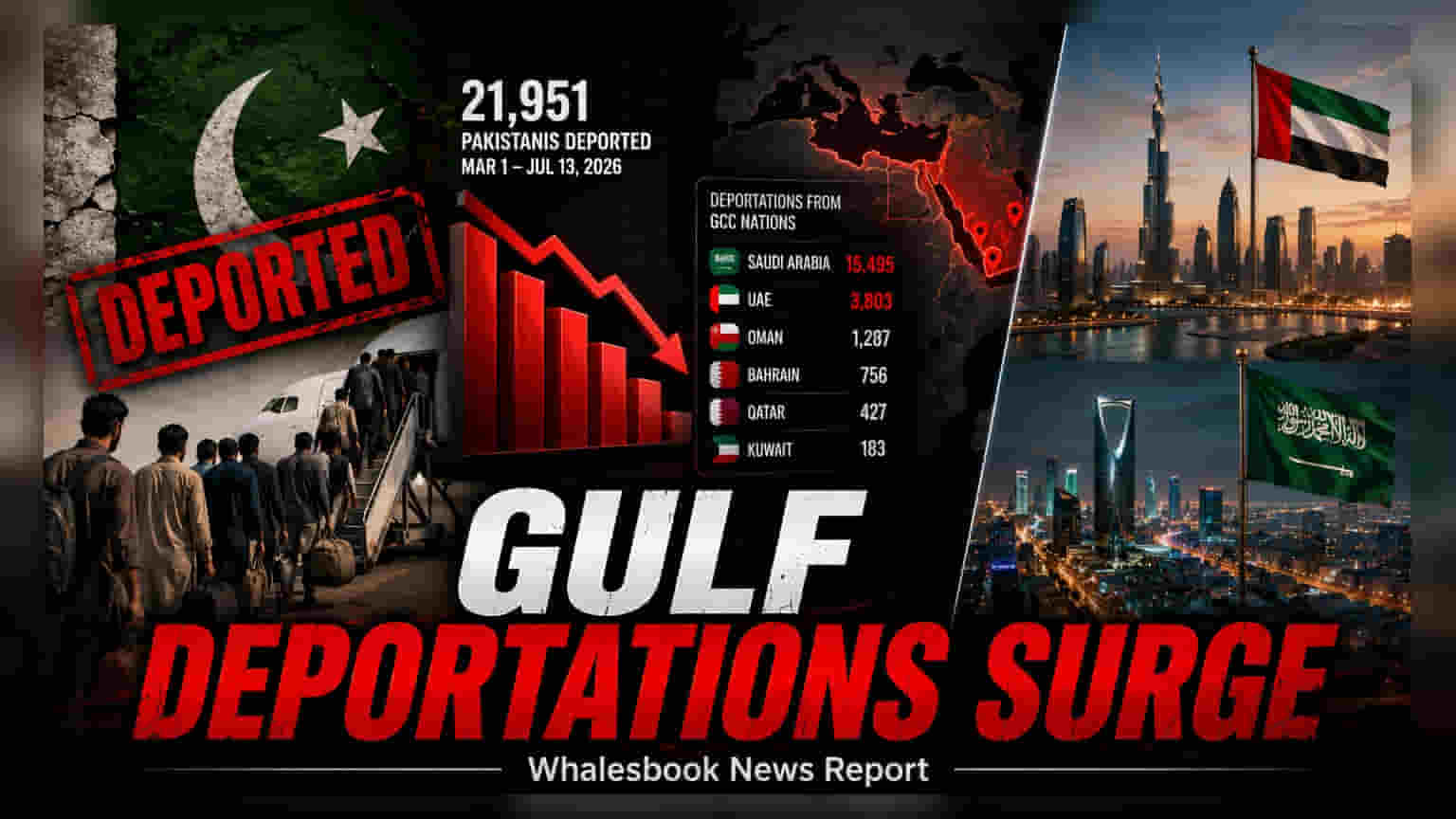
Official data confirms 21,951 Pakistani nationals were deported from Gulf countries between March and July 2026, with Saudi Arabia and the UAE reporting the highest figures. This trend poses risks to Pakistan’s economic stability, specifically regarding remittance inflows which are a vital source of foreign exchange. The crackdown, driven by visa violations and security concerns, may also increase pressure on the domestic labor market.
Official data released in Pakistan's National Assembly indicates that 21,951 Pakistani citizens were deported from Gulf Cooperation Council (GCC) nations between March 1 and July 13, 2026. Saudi Arabia and the United Arab Emirates recorded the highest numbers, with Saudi Arabia alone accounting for approximately 15,495 of these cases, followed by 3,803 from the UAE. Other GCC members, including Oman, Bahrain, Qatar, and Kuwait, also reported significant deportations.
The Pakistani government attributed these removals to a variety of factors, including the expiration of visas, residency violations, involvement in illegal activities, and security concerns. Beyond standard regulatory enforcement, the report highlighted that authorities in some Gulf states have intensified scrutiny following instances where individuals were detained for filming or sharing unauthorized content related to regional conflicts. This heightened vigilance in the region marks a shift in immigration enforcement that directly impacts expatriate populations.
For investors and economic observers, the primary concern lies in the potential impact on remittances. Money sent home by citizens working in Gulf nations remains a critical pillar of Pakistan's foreign exchange reserves and economic balance. A sustained trend of mass deportations could lead to a decline in these inflows, putting further pressure on the country's external account and potentially affecting liquidity. Furthermore, the sudden return of thousands of individuals creates immediate stress on the domestic job market, as the local economy must absorb a large number of returning workers who may have lost their primary source of income and assets.
While officials have clarified that these actions represent the enforcement of local labor and residency laws, the scale of the deportations underscores a risk factor for the economy. The reliance on external capital, including remittances, makes the country vulnerable to fluctuations in migration policies and diplomatic relations with key GCC partners.
Looking ahead, market participants and economic analysts will likely monitor future remittance data and bilateral diplomatic updates. The stability of financial inflows will depend on whether this wave of deportations remains an isolated enforcement cycle or signals a more permanent change in the regional approach to foreign labor and security, which could alter the long-term economic relationship between Pakistan and the Gulf states.