

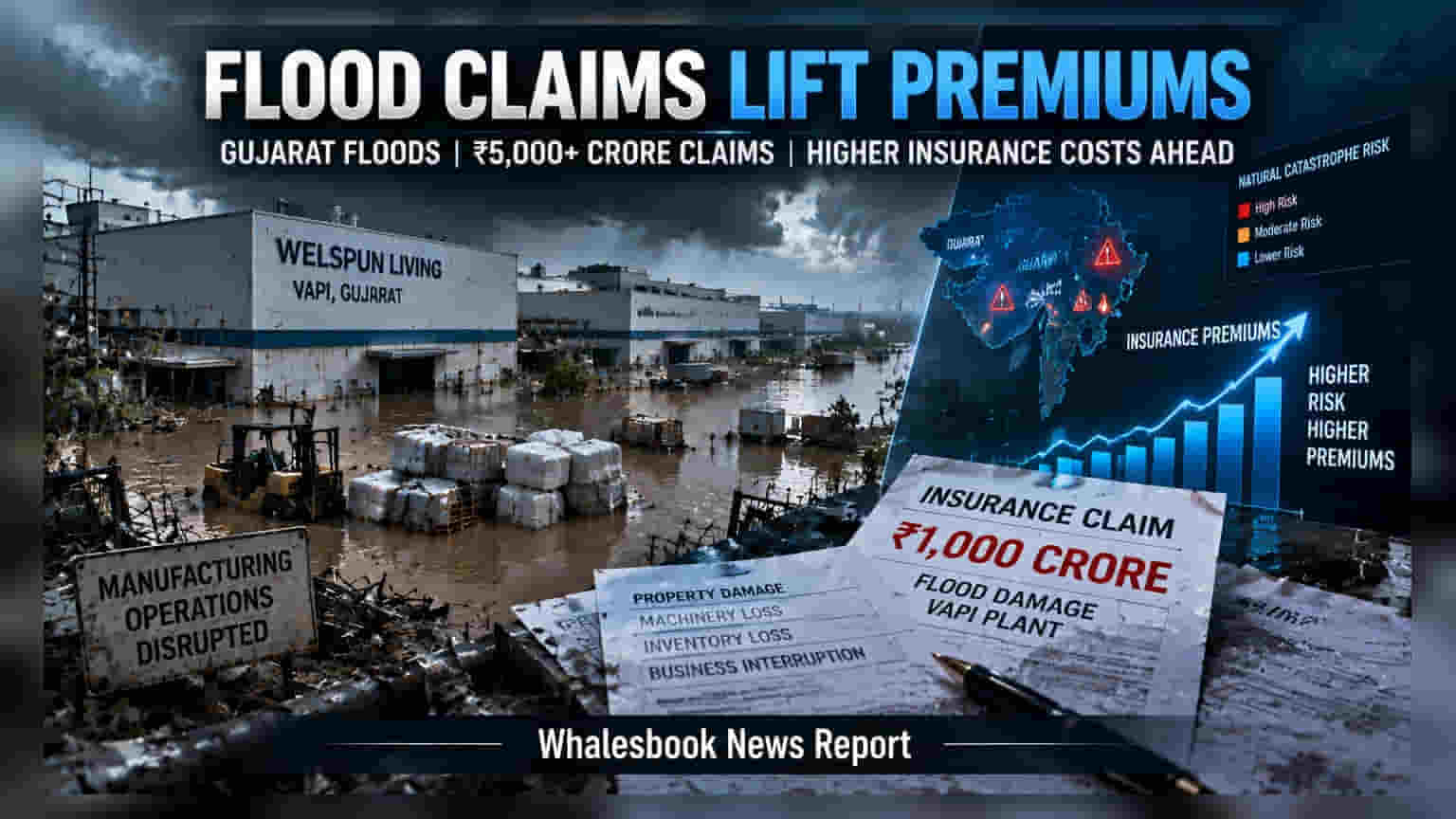
Welspun Living has reportedly filed a ₹1,000 crore insurance claim following flood damage at its Vapi plant. With total industry claims from Gujarat's floods expected to top ₹5,000 crore, insurers are now moving to tighten pricing for industrial fire and property policies. This could lead to higher insurance costs for companies in catastrophe-prone regions.
Welspun Living has reportedly filed an insurance claim of approximately ₹1,000 crore following significant flood-related damage at its manufacturing plant in Vapi, Gujarat. This claim is part of a larger trend in the industrial insurance sector, where total claims stemming from the recent floods in Gujarat are estimated to exceed ₹5,000 crore.
Operations at the company's Vapi unit faced disruptions starting July 23 due to the flooding. The filed claim pertains to the damage caused to insured assets, machinery, and materials at the facility. For Welspun Living, the focus remains on the financial impact of these damages and the timing of the eventual insurance payout, which can influence the company's operational recovery and financial reporting.
The scale of these flood-related losses is prompting a broader shift in the industrial insurance market. In recent years, companies often benefited from competitive and aggressive pricing for large property and fire insurance policies. However, insurers are now re-evaluating this approach. There is a growing emphasis on more rigorous, location-specific risk assessments, including flood history and catastrophe exposure, when setting premiums for industrial assets.
A critical factor in this industry-wide adjustment is the role of global reinsurers, which provide the essential underwriting capacity for domestic insurers to cover large industrial risks in India. If global reinsurers increase their pricing or tighten the terms of coverage, domestic insurers are likely to pass these higher costs on to their corporate customers. This transition may shift the market toward more disciplined, risk-based premium pricing.
For investors in listed industrial companies, this could lead to higher insurance expenses, which might act as an additional operating cost in the coming periods. HDFC ERGO, which is reported as the lead insurer on the Welspun Living policy with about 30% of the insured limit, may face a substantial payout, highlighting the scale of the claims burden in this insurance cycle.
Moving forward, the primary items for investors to track include how insurers adjust premiums during future contract renewals and whether these higher costs become a persistent burden for companies operating in regions prone to natural catastrophes. Investors may also look for updates from companies regarding the settlement status of these large claims and any potential impact on quarterly financial results.