 Whalesbook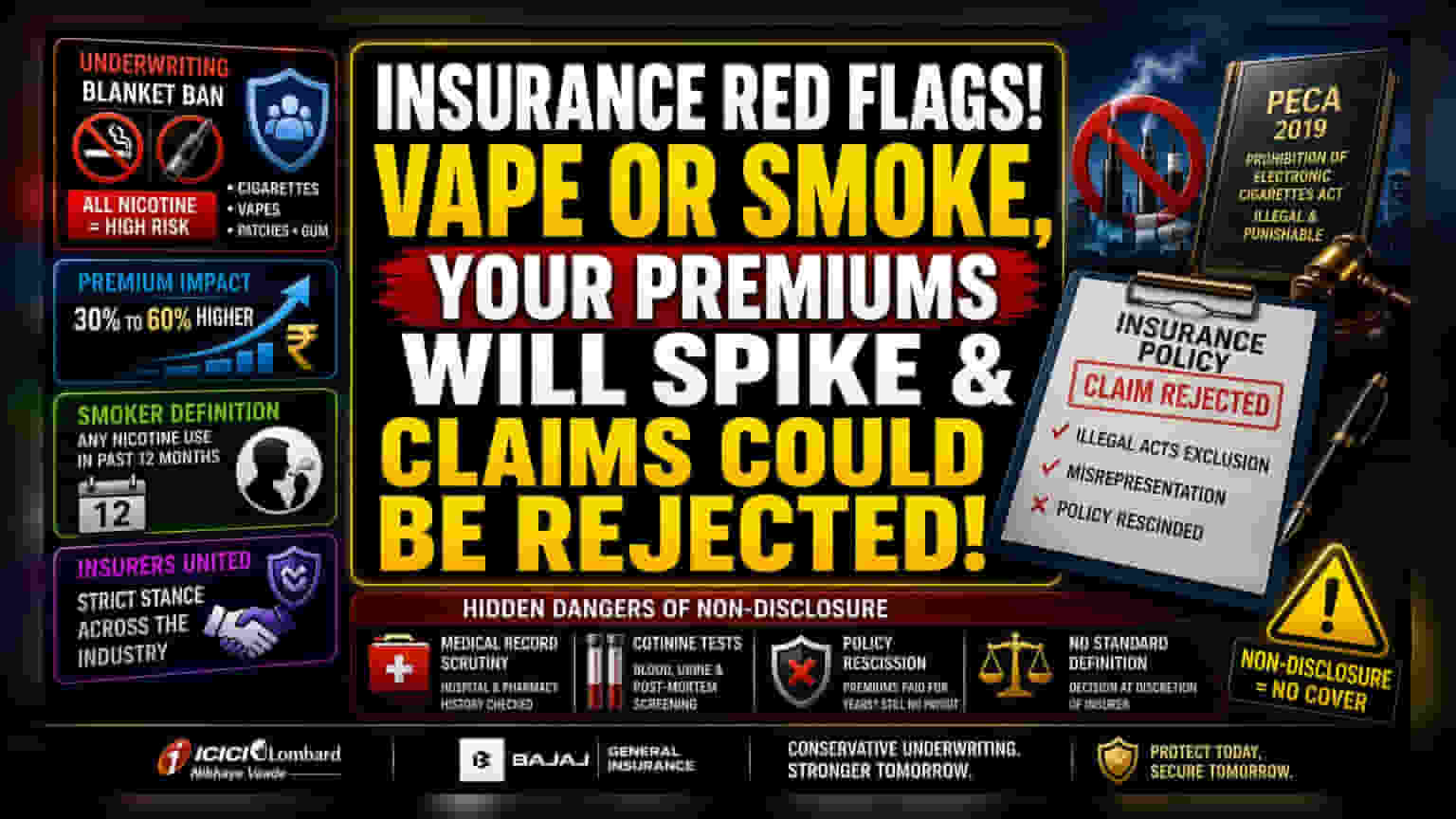


The Underwriting Blanket Ban
Insurance providers in India have largely abandoned any distinction between combustible cigarettes and electronic nicotine delivery systems. Underwriting departments now treat any form of nicotine intake—whether through vapes, patches, or traditional tobacco—as a uniform indicator of high-risk behavior. This isn't merely an arbitrary pricing strategy; it is a defensive reaction to systemic uncertainty. With the Prohibition of Electronic Cigarettes Act (PECA) of 2019 effectively outlawing the storage and sale of these devices, many insurers now leverage 'Illegal Acts' exclusion clauses. This provides a legal basis to deny claims outright if lung-related complications are traced back to vaping, regardless of how many years a policyholder has been paying their premiums.
The Financial Consequences of Disclosure
For consumers, the economic impact is immediate and significant. Being categorized as a 'smoker' generally results in a premium increase of 30% to 60% compared to non-smoker rates. Industry standard definitions are broad, encompassing any nicotine usage within the preceding 12 months. Even the occasional 'social' user is captured by this net. While some consumers attempt to challenge these classifications by providing evidence of low cotinine levels, such efforts often prove futile against the actuarial reality: insurers have concluded that the health risk profile of a vaper is indistinguishable from that of a traditional smoker.
The Forensic Bear Case: Non-Disclosure Risks
The most significant threat to policyholders is not just the elevated premium, but the catastrophic risk of claim repudiation. Because insurance contracts are built on the principle of utmost good faith, any omission regarding vaping habits can be classified as misrepresentation. During the claims settlement process, insurers are increasingly reviewing comprehensive medical records, pharmacy purchase histories, and conducting post-mortem blood or urine screenings for cotinine. If a gap is identified between the declared status and medical reality, the insurer can rescind the policy entirely, leaving beneficiaries with nothing. This risk is compounded by the fact that there is no industry-wide, standardized definition for a 'smoker,' leaving the final interpretation to the discretion of the insurance company's underwriting committee.
Sector Dynamics and Competitive Positioning
Market leaders such as ICICI Lombard and Bajaj General Insurance operate within a landscape where managing loss ratios through strict risk segmentation is critical for maintaining solvency margins. While competition between private insurers remains intense, the underwriting stance on nicotine remains remarkably consistent across the sector. Investors monitoring the insurance space should note that while premium revenue might see a marginal boost from these higher smoker rates, the long-term profitability of these products depends heavily on accurate risk assessment and the continued enforcement of tobacco-control laws. Forward-looking guidance from major insurers continues to emphasize conservative underwriting as a necessary buffer against rising healthcare costs and the unquantified long-term respiratory impacts of nicotine delivery devices.