 Whalesbook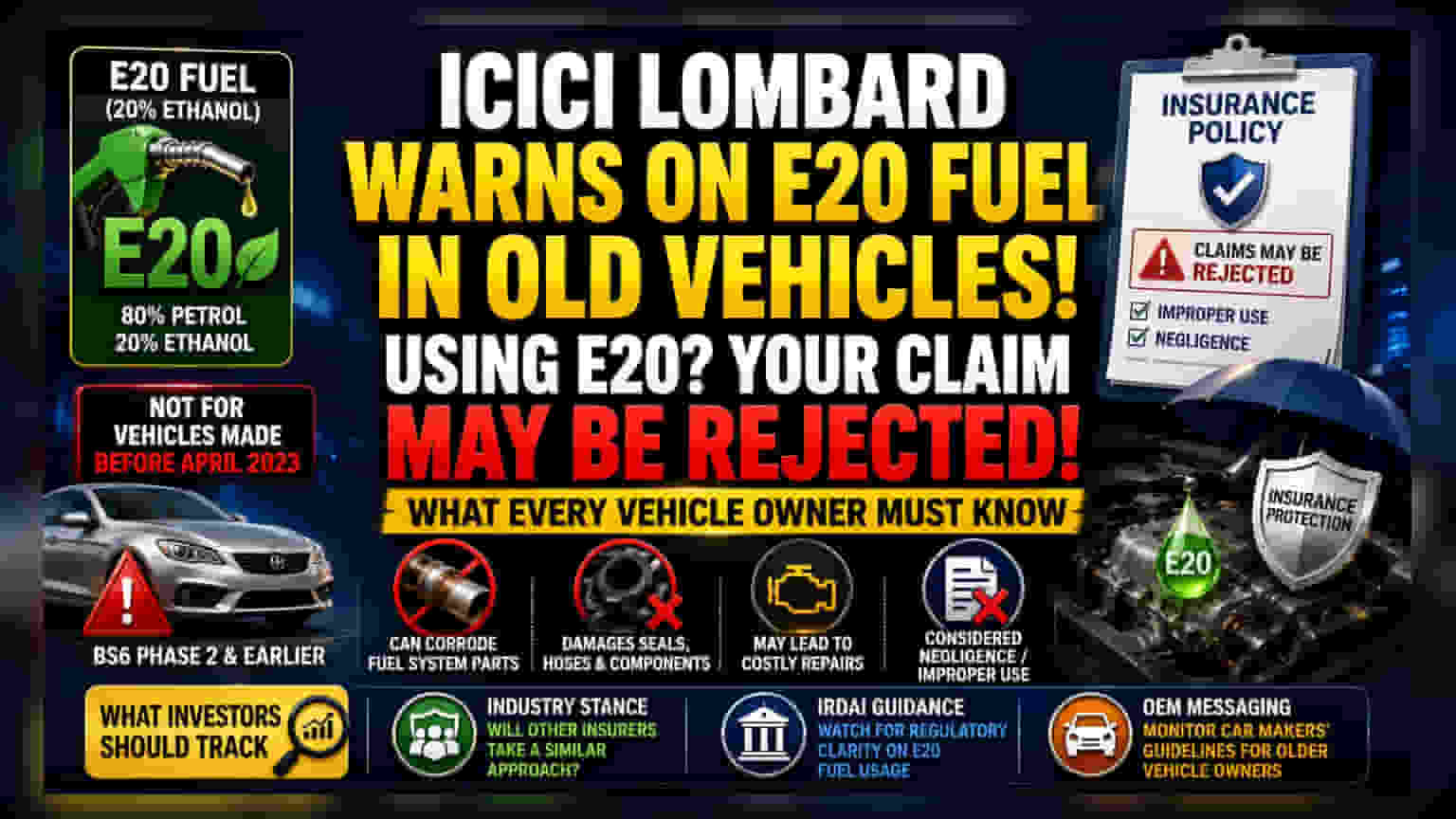


ICICI Lombard has warned that insurance claims for older vehicles may be rejected if the car suffers damage from E20 fuel, which may be classified as 'improper use.' As India transitions toward higher ethanol blending, owners of vehicles manufactured before April 2023 face potential repair costs for ethanol-related engine or component degradation. This update highlights how general insurers are clarifying liability terms regarding vehicle compatibility and the 'negligence' clause in insurance contracts.
What Happened
ICICI Lombard has issued a cautionary note regarding the use of E20 fuel—a blend of 80% petrol and 20% ethanol—in older vehicles. The insurer clarified that using fuel that a vehicle was not designed for could be interpreted as 'negligence' or 'improper use.' Consequently, claims for damages arising from such fuel usage may be rejected. This warning serves as a notice to vehicle owners that insurance policies are contracts based on the correct operation and maintenance of the insured asset, and using incompatible fuel falls outside those terms.
The Technical Compatibility Issue
To understand why this is a concern, one must look at the mechanical differences in engines. Ethanol has different chemical properties compared to pure petrol. It acts as a solvent and can be corrosive to materials that were not designed to handle high alcohol concentrations. Vehicles manufactured before April 2023, which align with the BS6 Phase 2 emission standards, were generally not built with the reinforced rubber seals, fuel lines, or specific fuel system components required to withstand a 20% ethanol blend. Over time, E20 fuel can lead to the gradual degradation of these parts. If these components fail, the resulting damage could be substantial and costly to repair.
The Role of the Negligence Clause
Insurance contracts typically exclude damage caused by the improper use of the vehicle. If a vehicle manufacturer explicitly states that a model is not E20-compliant, an insurer may argue that the owner was aware, or should have been aware, of this limitation. By using the fuel anyway, the owner may be seen as having caused the damage through avoidable actions. This clause is a standard feature in many insurance policies, intended to prevent payouts for preventable maintenance issues or misuse of the insured product.
Why This Matters for Investors
For general insurance companies like ICICI Lombard, managing liability is a critical part of maintaining healthy loss ratios. As the government continues to push for higher ethanol blending across the country, insurers face the risk of a surge in claims related to fuel system damages. By proactively clarifying these exclusions, the company is setting expectations for policyholders and potentially mitigating future disputes. This move reflects a broader trend in the insurance sector where companies are becoming more precise about the boundary between 'accidental loss' and 'preventable damage,' which directly impacts how they price risk and manage claims.
What Investors Should Track
Investors may want to monitor a few key areas regarding this development. First, keep an eye on how other insurance providers handle this issue; if the industry moves toward a uniform stance on E20-related claims, it could reduce the potential for varied claim settlement experiences. Second, watch for any guidance or standard operating procedures from the Insurance Regulatory and Development Authority of India (IRDAI) regarding E20 fuel, as regulatory clarity would reduce ambiguity for both insurers and customers. Finally, observe the messaging from automobile manufacturers regarding older vehicle maintenance in the age of E20, as clear manufacturer guidelines will remain the primary reference point for settling any insurance disputes related to fuel compatibility.