 Whalesbook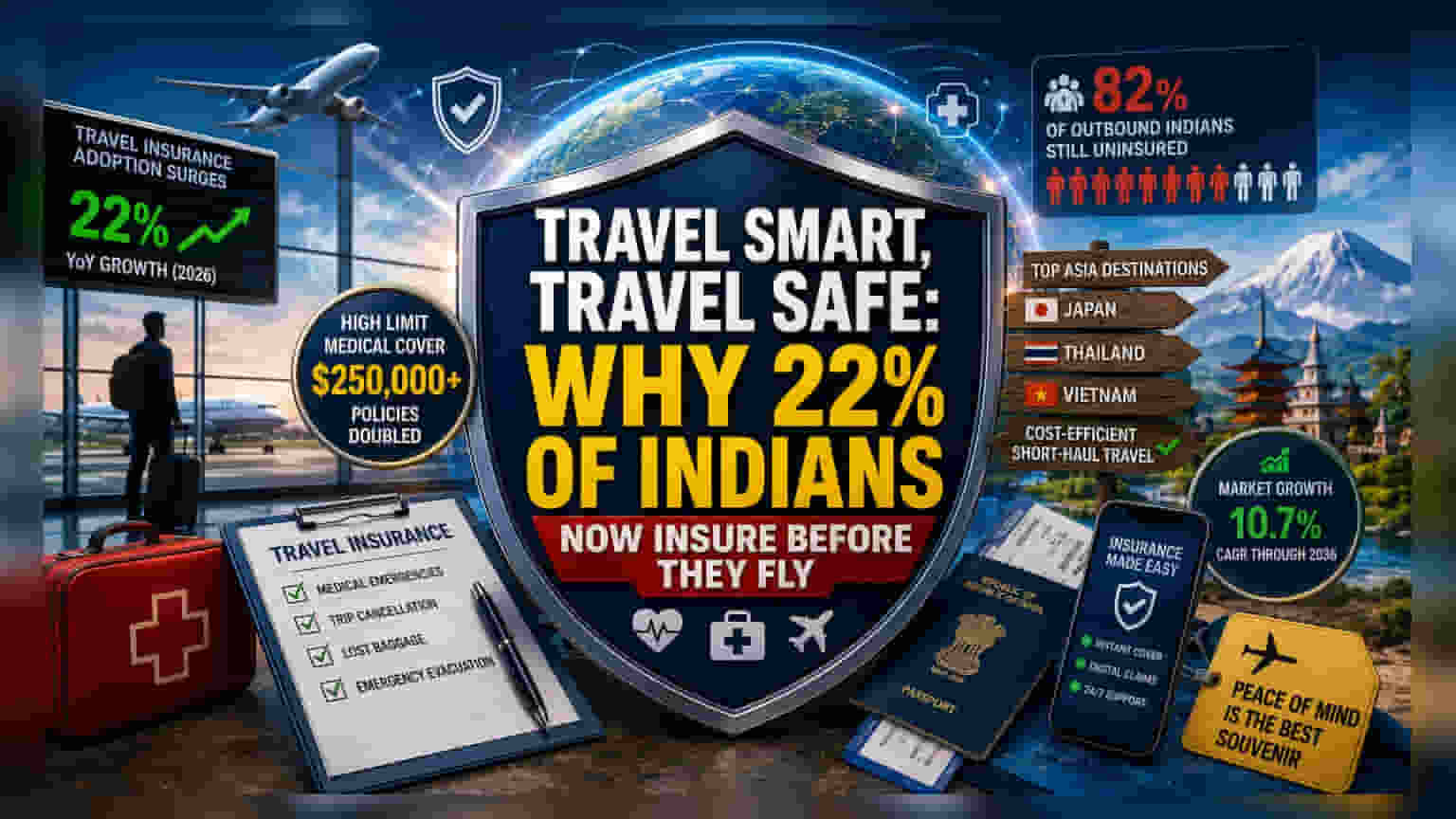


The Shift Toward Risk Mitigation
The 22% year-on-year surge in travel insurance adoption marks a distinct behavioral pivot for the Indian traveler. Market data from 2026 indicates that this increase is not merely a product of rising travel volumes but a tactical response to a more volatile global environment. Travelers are increasingly prioritizing high-limit medical coverage, with the number of policies providing protection above $250,000 doubling compared to previous years. This move is largely fueled by concerns over medical inflation abroad and the potential for costly emergency evacuations, which have become a focal point of risk management for frequent travelers.
Competitive Dynamics and Market Reality
While platforms like Policybazaar command a massive share of the digital insurance marketplace, the broader industry is contending with a persistent under-insurance challenge. Despite the growth in policy issuance, approximately 82% of Indian outbound travelers remain uninsured for non-mandatory trips. This creates a significant structural opportunity for insurers to penetrate deeper into the market, particularly as Indian travel patterns shift from geopolitically sensitive long-haul destinations to short-haul, cost-efficient hubs in the Asia-Pacific region, such as Japan, Thailand, and Vietnam.
The Forensic Bear Case: Structural Risks
Investors looking at the travel insurance segment must acknowledge the fragility of current growth trends. The segment remains highly sensitive to geopolitical shifts; for instance, the sharp decline in travel to the Middle East—down over 70% in some projections—illustrates how quickly regional instability can prune a core market. Furthermore, many standard travel insurance products contain "War Exclusion" clauses that effectively render the policies toothless in the event of major geopolitical conflicts or government-mandated travel bans. While sophisticated travelers are beginning to seek custom add-ons for "political risk evacuation," the mass market remains largely exposed to these exclusions, creating potential for reputational risk for insurers if claims are denied during large-scale travel disruptions.
Future Outlook: Growth Beyond the Bounce
Long-term projections remain optimistic, with the broader Indian insurance market expected to grow at a 10.7% annual rate through 2036. As digital platforms continue to integrate embedded insurance at the point of booking, the barrier to entry for the average consumer will likely lower. The industry's pivot toward providing comprehensive, high-value coverage rather than basic, low-premium plans is expected to improve unit economics. However, the path to sustained growth depends on the industry's ability to bridge the significant awareness gap that currently leaves the vast majority of international travelers without a financial safety net.