

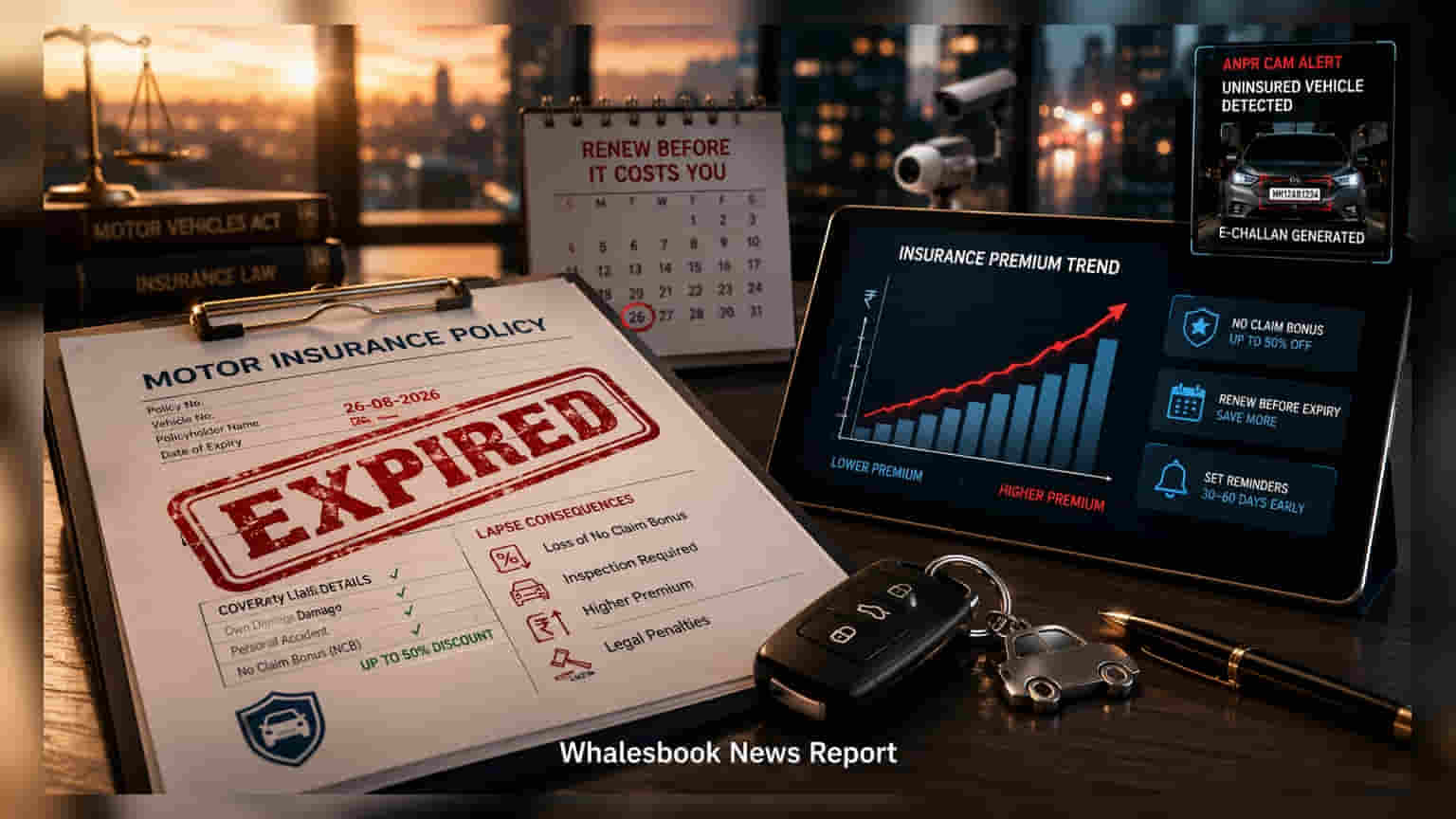
Missing a motor insurance renewal deadline creates immediate financial and legal risks for vehicle owners. Policies that lapse beyond 90 days typically result in the permanent forfeiture of accumulated No Claim Bonus (NCB) benefits, while insurers may also mandate a physical vehicle inspection before issuing new coverage.
For many vehicle owners, an expired motor insurance policy is often viewed as a simple administrative oversight. However, in the current regulatory and financial environment, allowing a policy to lapse creates immediate exposure to higher costs and potential legal penalties. When a policy expires without renewal, the protection it offers ceases entirely, leaving the owner solely responsible for any liabilities arising from accidents during the gap period.
The Financial Impact of NCB Forfeiture
One of the most significant financial consequences of an insurance lapse is the potential loss of the No Claim Bonus (NCB). This reward is a discount offered to policyholders for every year they do not file a claim, and it can reduce the cost of the 'Own Damage' portion of the insurance premium by up to 50 percent over time. While the NCB is portable and stays with the policyholder rather than the vehicle, it is not permanent if the policy remains inactive. If a policyholder allows their insurance to lapse beyond 90 days, they typically lose all accumulated NCB benefits. This reset effectively forces the owner to start over, leading to significantly higher premiums when they eventually purchase a new policy.
Inspection Mandates and Operational Hurdles
Beyond the loss of discounts, the process of reinstating a lapsed policy has become more stringent. Insurers generally require a physical inspection of the vehicle before issuing a new comprehensive policy once the previous one has expired. This measure is designed to prevent fraudulent claims for pre-existing damage that might have occurred during the period the vehicle was uninsured. For the owner, this adds a layer of operational complexity, as they must coordinate with the insurer to have the vehicle assessed. If the inspection reveals significant pre-existing issues, it could lead to difficulties in securing coverage or potentially higher premiums, adding further uncertainty to the renewal process.
Regulatory Pressure and Enforcement Risks
Operating a vehicle without valid third-party insurance is a direct violation of the Motor Vehicles Act. Beyond the risk of fines, enforcement mechanisms are becoming increasingly sophisticated. Regulatory authorities, supported by judicial directives, are aggressively targeting uninsured vehicles using advanced technology, such as Automated Number Plate Recognition (ANPR) cameras. This digital monitoring infrastructure allows authorities to identify and penalize owners of uninsured vehicles in real-time, sometimes leading to e-challans or more severe legal consequences. For vehicle owners, the best defense against these financial and administrative risks remains proactive management. Keeping track of renewal dates through digital alerts and initiating the renewal process well before the expiration date—ideally at least 30 to 60 days in advance—is the most effective way to protect accumulated bonuses and ensure continuous coverage without the need for additional inspections.