 Whalesbook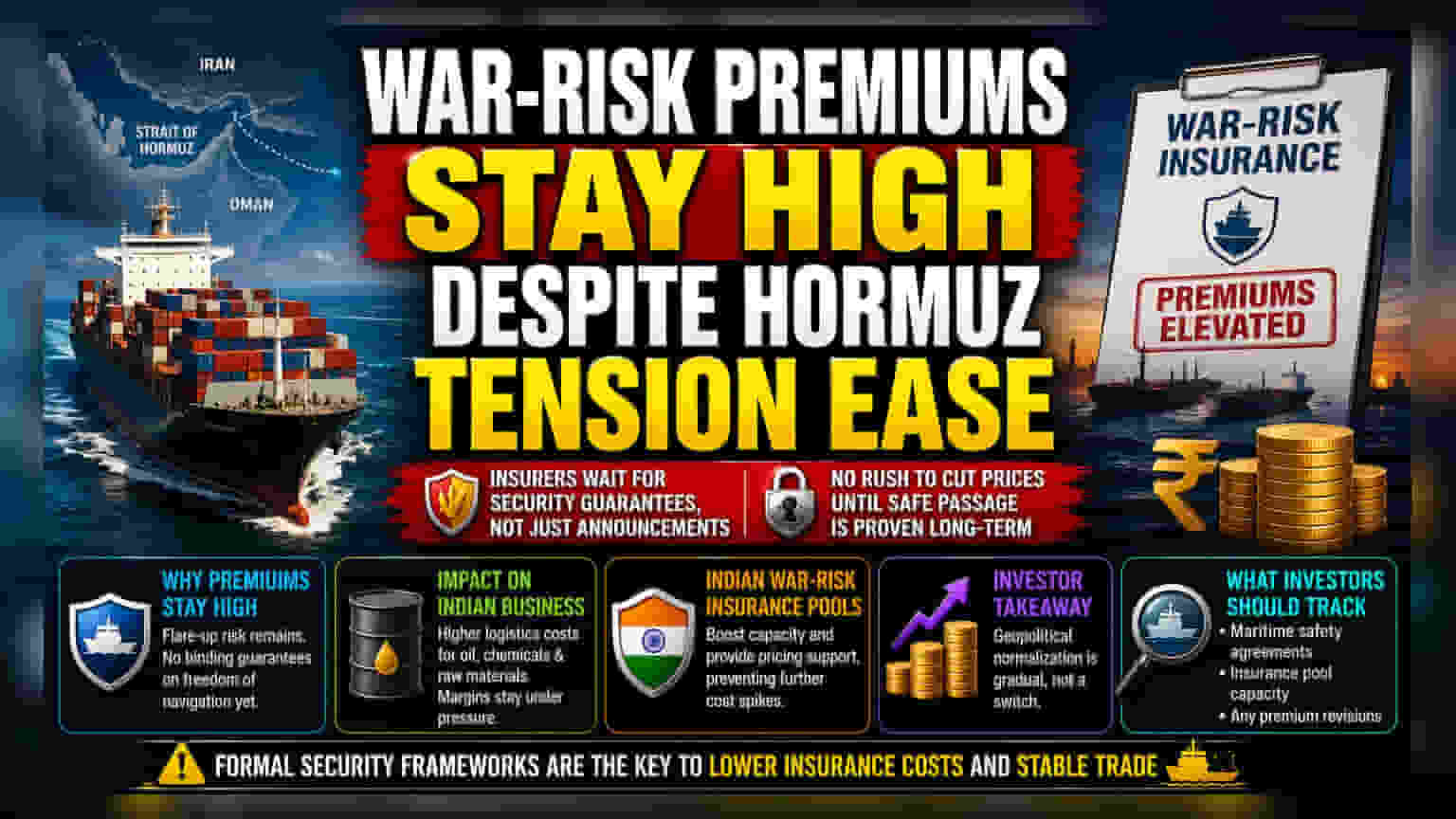


Despite signs of easing tensions in the Strait of Hormuz, marine war-risk insurance premiums are not expected to drop immediately. Insurers are holding rates steady, waiting for formal security guarantees before revising prices. This indicates that shipping and logistical costs for Indian importers may remain elevated in the near term, keeping pressure on input costs for industries dependent on these trade routes.
What Happened
Marine insurers are keeping war-risk premiums elevated for vessels moving through the Strait of Hormuz, despite recent reports suggesting a de-escalation of regional tensions. Even with talk of the shipping route potentially reopening fully following discussions between international stakeholders, insurance companies are not rushing to cut prices. The industry is currently in a wait-and-see mode, requiring formal, long-term security agreements rather than just announcements before they adjust their pricing models.
Why Insurance Costs Stay High
War-risk insurance is a specific surcharge added to standard maritime insurance policies when ships traverse volatile zones. For insurers, the primary concern is not just the current absence of conflict, but the potential for sudden flare-ups. Without clear, legally binding guarantees on freedom of navigation, underwriters view the operational risk as unchanged. Insurers calculate premiums based on long-term risk visibility and historical data, not daily headlines. As a result, until a sustained period of safe transit is proven, premiums are likely to stay where they are.
Impact on Indian Business
The persistence of high insurance costs has a direct impact on India’s supply chain. Many Indian industries, particularly those importing crude oil, chemicals, and other industrial raw materials from West Asia, face higher logistics costs when shipping rates include heavy war-risk surcharges. If these premiums remain elevated, the cost of imported goods stays higher, which can squeeze profit margins for companies that cannot easily pass these costs on to customers. However, the domestic market has seen some stability; mechanisms like the Indian war-risk insurance pools have helped increase capacity and provided a level of pricing support, which has prevented costs from spiking further even when external geopolitical risks persist.
How Investors May Read This
For investors, the key takeaway is that geopolitical normalization is a gradual process, not a switch. While the easing of tensions is a positive sign for global trade, it does not immediately translate into cost relief for shipping companies or importers. Investors tracking sectors like shipping, logistics, and major import-heavy industries should monitor the status of formal navigation agreements. If these agreements remain unsigned, the current level of shipping expenses is likely to persist.
What Investors Should Track
Moving forward, the primary factor for the market is the development of formal security frameworks. Investors should track official announcements regarding maritime safety guarantees in the region, as these will be the key triggers for any downward revision in insurance premiums. Additionally, watching how global and local insurance pools manage capacity will provide insight into whether competitive pressures can force premiums down even in the absence of a major geopolitical resolution. Until then, businesses relying on this trade route may continue to experience pressure on their operational budgets.