

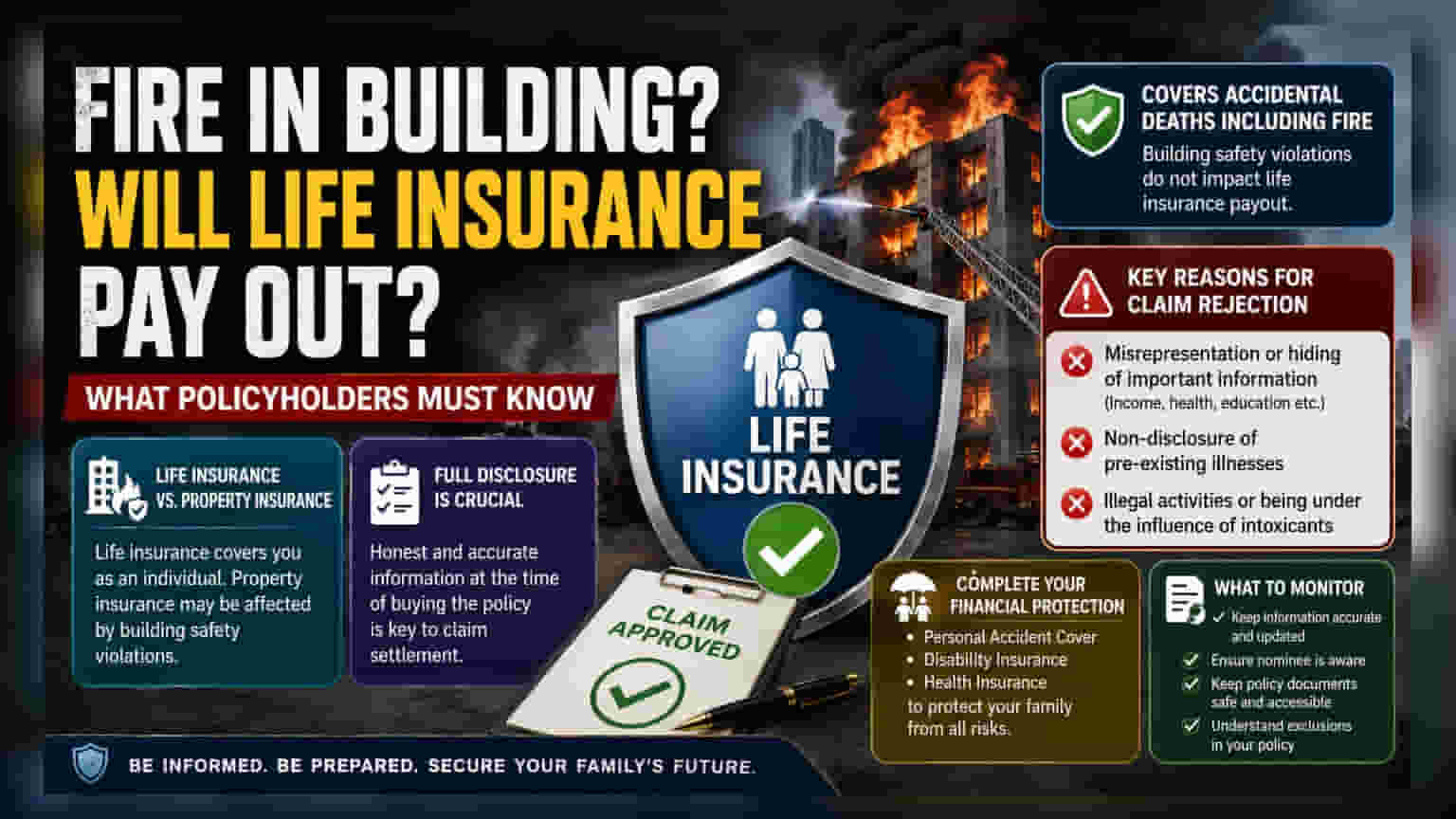
Standard term life insurance policies typically cover accidental deaths, including those caused by fire. While building safety lapses do not invalidate your personal life cover, the payout depends entirely on whether you made a full and honest disclosure of your health and income when you first bought the policy.
What Happened
Recent fire incidents have led to concerns among policyholders about whether their life insurance would pay out if a death occurs in a building with safety violations. Insurance experts have clarified that personal life insurance policies, such as term plans, generally cover accidental deaths, including those caused by fire. The condition of the building or the owner's compliance with fire safety rules usually does not impact the payout of a personal life insurance claim.
The Importance of Full Disclosure
While death by fire is considered an accident and is covered by standard term policies, claim rejection is not determined by the cause of death alone. The most significant factor that can lead to a rejected claim is the accuracy of the information provided at the time of purchasing the policy. Under Section 45 of the Insurance Act, 1938, insurers have the right to question a claim if they find that important details—such as income, educational qualifications, or pre-existing health conditions—were misrepresented or hidden during the application process.
Life Insurance vs. Property Insurance
It is vital to distinguish between personal life insurance and general insurance policies. General insurance (such as property or fire insurance for a building) may have specific clauses tied to safety standards and building regulations. If a building fails to meet safety norms, it could impact a property insurance claim. However, life insurance is a contract between the individual and the insurer. The primary requirement is that the policyholder adheres to the terms of the contract and provides truthful information during inception.
Exclusions You Should Know
While life insurance covers accidental deaths, all policies come with specific exclusions. Claims can be rightfully denied if the insured individual was engaged in illegal activities or was under the influence of intoxicating substances at the time of the incident. These clauses are standard across the industry and are designed to protect the insurer against high-risk or prohibited behaviors, rather than accidents caused by external infrastructure failures.
Why Financial Planning Matters
Beyond basic term insurance, financial planners often suggest a holistic approach to risk management. A standard term life policy provides a lump sum upon death, but it does not cover medical costs incurred from non-fatal accidents. Families may consider personal accident riders or disability insurance, which provide coverage for permanent or temporary disability. Additionally, a comprehensive health insurance policy is often recommended to manage hospitalization expenses, ensuring that family savings are not exhausted during medical emergencies.
What To Monitor
Policyholders should ensure that all information submitted during the application phase remains accurate and updated. It is equally important to keep nominees informed about the policy details and documentation required to process a claim. Ensuring that the nominee has access to the original policy documents and understanding the specific exclusions listed in the policy contract can help prevent disputes during the claim settlement process.