

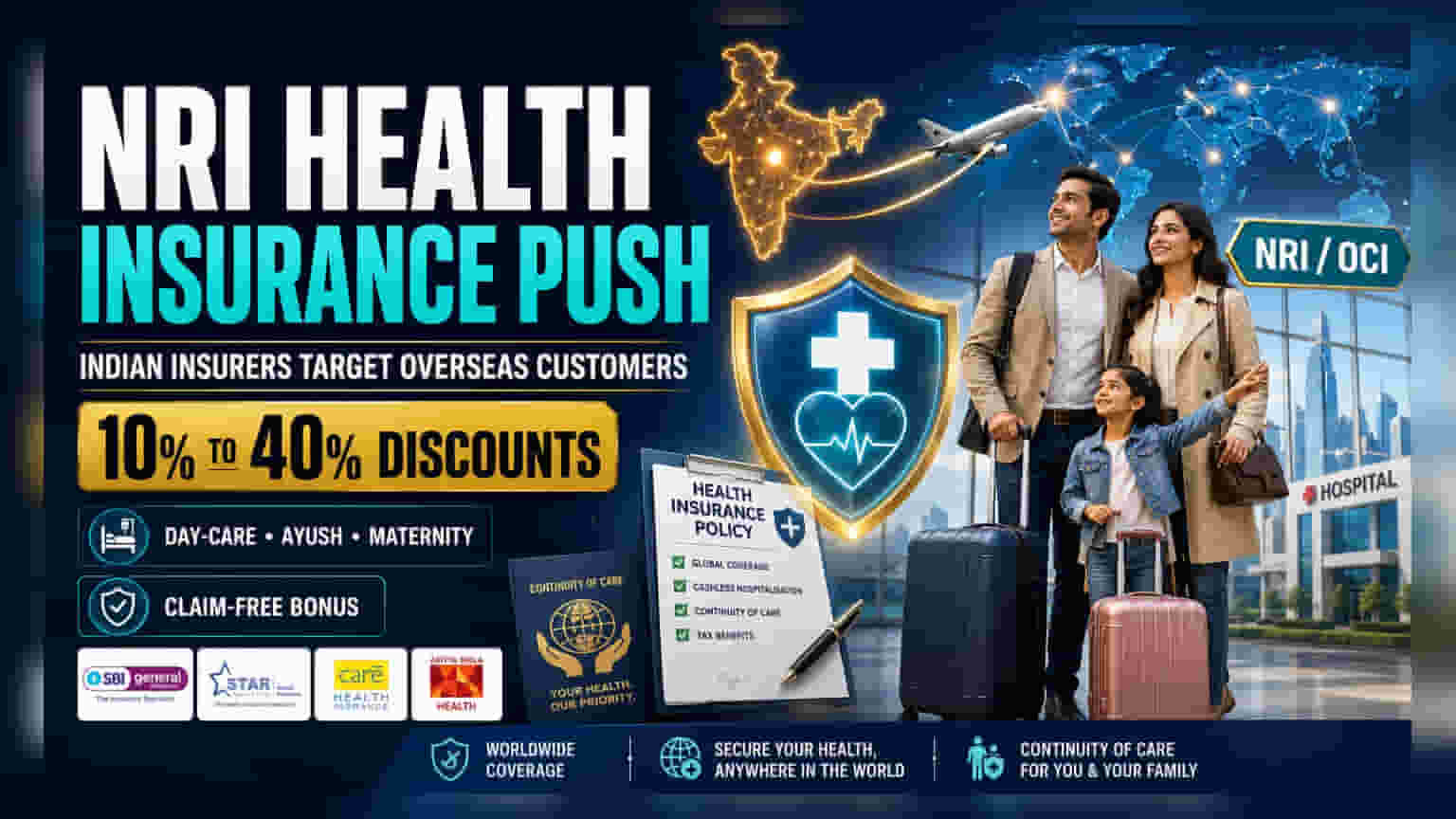
Indian insurance companies are rolling out customized health plans for Non-Resident Indians (NRIs) and Overseas Citizens of India (OCIs), featuring discounts of up to 40% for good claim records. This move is part of a strategy to capture high-value customers and expand market share, though investors will likely watch whether these new policies can maintain healthy profit margins amidst rising competition.
What Happened
Indian insurance companies are actively launching health insurance products tailored specifically for Non-Resident Indians (NRIs) and Overseas Citizens of India (OCIs). These plans are designed to mirror domestic policies but come with added features to suit the diaspora, including coverage for day-care procedures, AYUSH treatments, and maternity benefits. Insurers are offering significant incentives, with premium discounts ranging from 10% to 40% for policyholders who maintain a clean claim history. To be eligible, policyholders are generally required to make payments through their NRE (Non-Resident External) accounts and provide necessary declarations.
The Strategy Behind The Push
Insurance companies are looking to expand their retail health portfolios by tapping into the NRI segment. For the industry, this is an attempt to acquire high-value customers who may be looking for access to quality healthcare infrastructure during their visits to India or in the event of permanent relocation. By offering continuity benefits—where waiting periods for pre-existing conditions are preserved—insurers are lowering the barrier for those who plan to return to India. This strategy helps insurance firms diversify their customer base beyond domestic residents, which is becoming increasingly important as the retail health insurance market faces intense competition.
The Financial Balance
From a financial perspective, adding a new customer segment requires a delicate balance. While NRIs are often seen as a premium customer base, the cost of acquiring and servicing these policies can be higher due to regulatory and documentation requirements. The discounts offered are a way to attract these customers, but they also squeeze the initial premium income. Insurers must ensure that the premiums collected are sufficient to cover potential claims, especially given the rising cost of medical procedures and hospital services in India. The profitability of these plans will ultimately depend on how accurately insurers can price the risk associated with this new group.
Risks To Consider
While the expansion looks promising, the health insurance sector is highly competitive. The success of these NRI-specific plans depends on whether they can achieve enough scale to become meaningful for the company’s overall profit. There is also the risk of 'adverse selection,' where the policies are primarily bought by those who expect to use medical services frequently, leading to higher-than-expected claims. Furthermore, insurers must manage the operational complexity of handling foreign currency payments and complying with specific regulations for NRI transactions.
What Investors Should Track
Investors monitoring insurance companies involved in this space should keep an eye on a few key metrics. First, look for updates on the adoption rate of these NRI-specific products in quarterly earnings calls. Second, track the 'loss ratio'—which shows the percentage of premiums paid out as claims—for these specific products, if disclosed. If the loss ratios remain high, it may suggest that the plans are not as profitable as expected. Finally, watch for any shift in market share, as firms that effectively capture this niche segment may gain a long-term advantage over peers who are slower to innovate.