

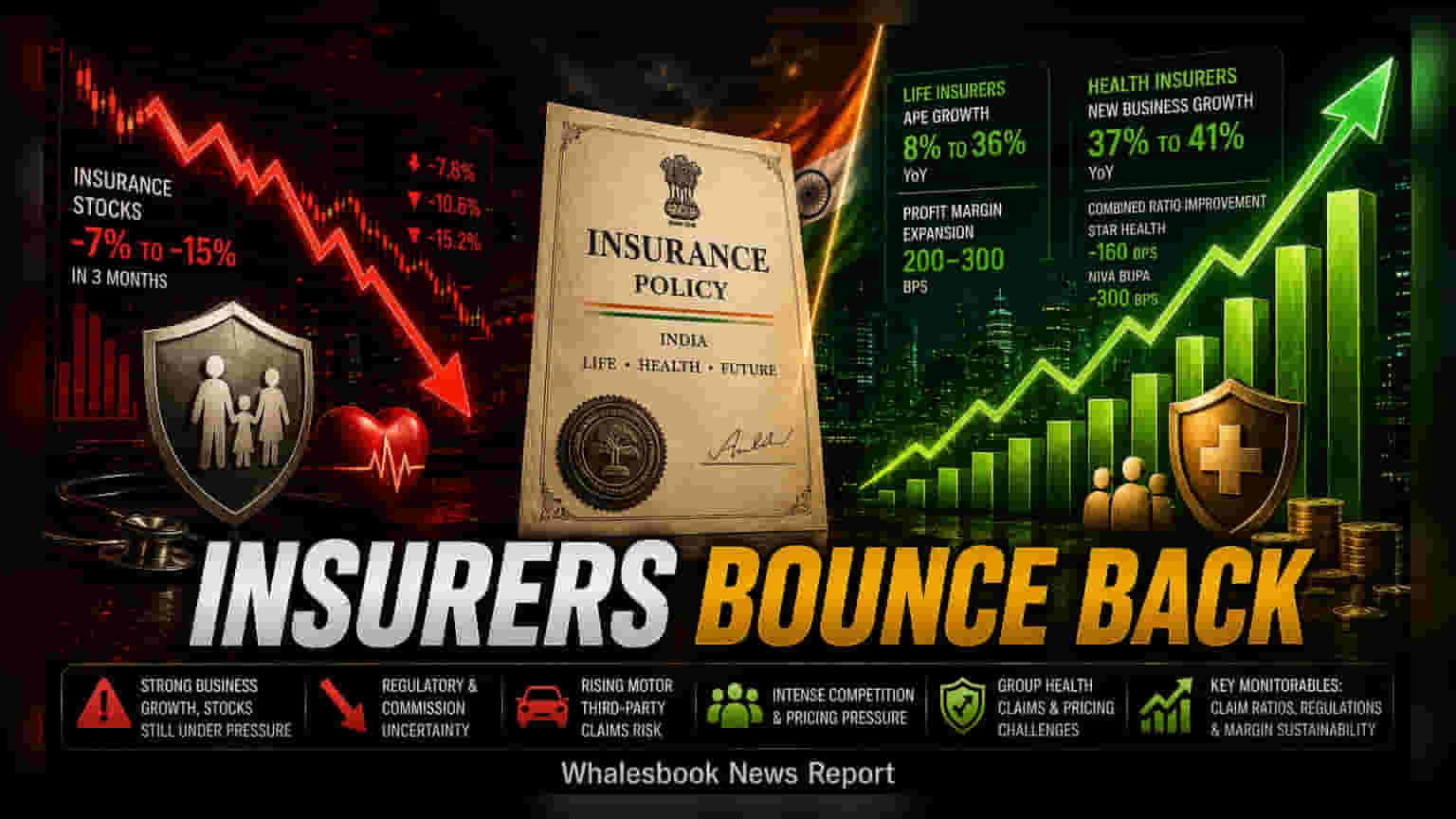
Life and health insurers reported strong Q1 FY27 growth of 8-41%, yet share prices have dipped 7-15% in three months. This disconnect between business performance and stock price highlights market caution, despite clear improvements in profitability and new business premiums.
The Indian insurance sector is currently presenting a unique picture where business growth is strong, but stock prices have not kept pace. While life and health insurers have reported significant operational improvements in the first quarter of the 2027 fiscal year, many insurance stocks have declined by 7% to 15% over the past three months. This disconnect suggests that while the underlying business is healthy, investors are remaining cautious.
Life insurance companies have been a key highlight, recording growth in Annualised Premium Equivalent—a standard measure of new business premiums—between 8% and 36% compared to the previous year. Alongside this top-line growth, companies have managed to improve their profit margins by 200 to 300 basis points. These gains were largely driven by a rise in demand for protection products, such as term insurance, as well as traditional savings and annuity plans. Even with the complexities introduced by Goods and Services Tax (GST) changes, which reduced input tax credits, insurers have successfully navigated the pressure by passing these premium savings on to customers, particularly in the term insurance category.
Health Insurance Performance
The health insurance segment has shown even higher momentum. New business growth for health insurers increased by 37% to 41% during the first quarter. Efficiency has also improved, with companies successfully controlling their costs. For instance, the combined ratio—which measures the relationship between premiums collected and claims paid—improved by 160 basis points for Star Health and by 300 basis points for Niva Bupa. A lower combined ratio generally indicates better underwriting profitability.
Why Stocks Are Lagging
Despite these strong numbers, the stock market has been hesitant. Analysts at Kotak Institutional Equities point out that while valuations may look attractive for some life insurers, the sector faces several underlying risks that explain the recent stock price correction.
For non-life insurers, there is growing concern over higher motor third-party claims, which could weigh on future profitability. Furthermore, the industry is still dealing with regulatory uncertainty regarding commission structures. While recent guidance has provided some clarity, the possibility of structural changes keeps investors on edge. Additionally, intense competition, especially among banks that distribute policies for multiple insurers, is putting pressure on pricing. There is also a risk of aggressive pricing and high claims within group health insurance portfolios, which can impact bottom-line results if not managed carefully.
For investors, the key monitorable going forward will be how insurers balance this growth with claim management, particularly as the sector deals with these regulatory and competitive hurdles. Monitoring updates on commission regulations and claim ratios in upcoming quarterly results will be essential to understanding whether the current valuation gap narrows.