

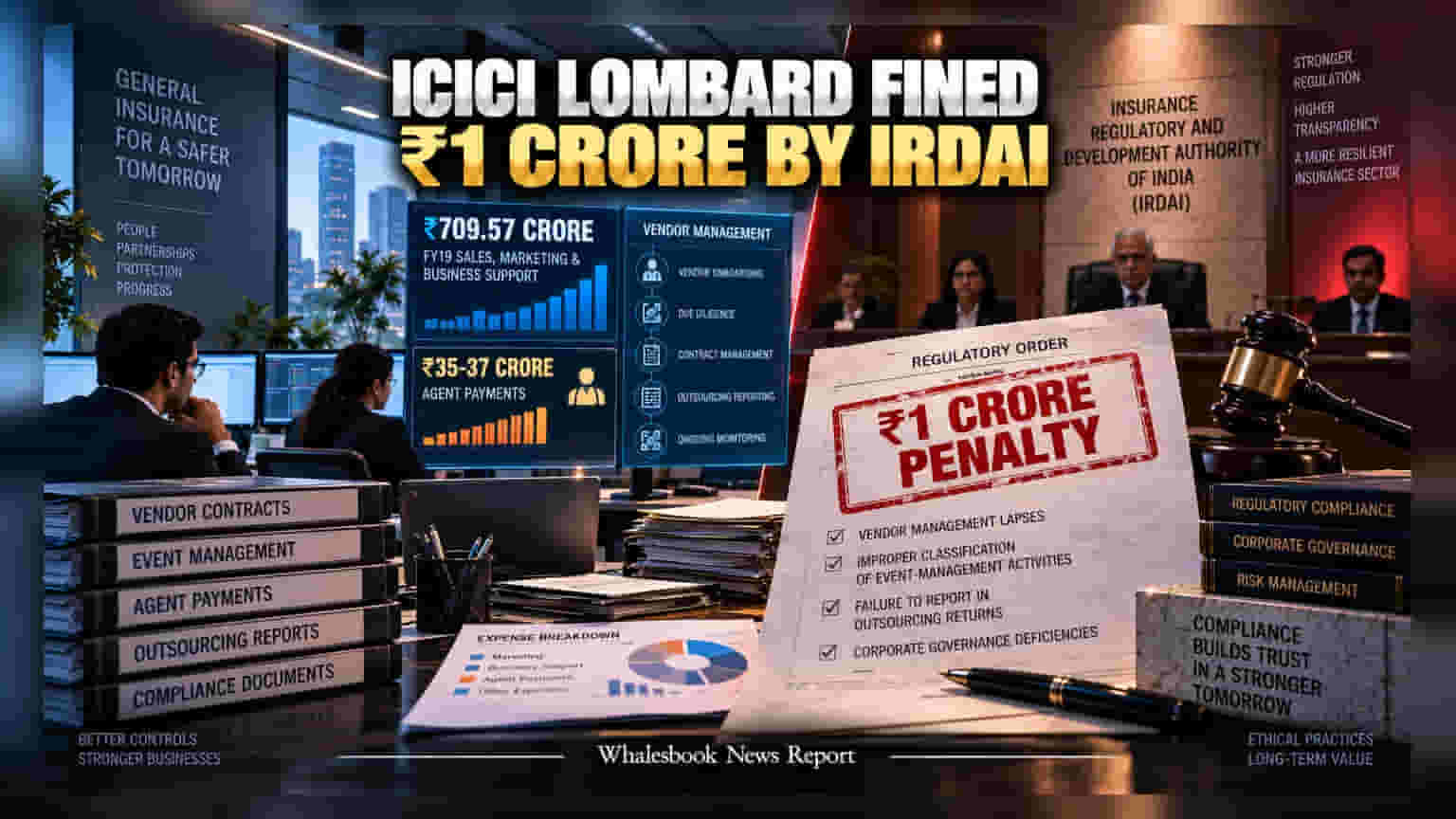
The Insurance Regulatory and Development Authority of India has penalized ICICI Lombard General Insurance ₹1 crore for governance and outsourcing lapses identified during a 2019 inspection. The insurer failed to report specific event-management services as outsourced activities, raising concerns about its vendor oversight controls amid recent operational headwinds.
On September 7, 2026, the Insurance Regulatory and Development Authority of India (IRDAI) imposed a penalty of ₹1 crore on ICICI Lombard General Insurance Company Limited. The regulator cited deficiencies in vendor management, outsourcing, and corporate governance practices that were originally identified during an inspection conducted in 2019.
Governance and Reporting Failures
The core issue highlighted by the regulator concerns how the insurance company classified certain event-management activities. According to the regulatory findings, ICICI Lombard utilized agents associated with other insurance companies for event-management services but did not treat these arrangements as outsourced activities. Because of this classification error, the insurer failed to report these specific activities within its mandatory outsourcing returns filed with the IRDAI.
For insurance companies, the regulator mandates strict oversight for any work outsourced to third parties. These rules exist to ensure that vendors are held to the same documentation and compliance standards as the insurer itself. By failing to categorize these arrangements correctly, the company created a gap in its regulatory reporting framework, which prevented the necessary scrutiny of these vendor relationships at the time.
Operational Context for Investors
While the ₹1 crore penalty is modest relative to the company’s overall scale, it draws attention to the quality of internal controls. This development comes at a sensitive time for the insurer, as it is already navigating operational challenges. In its first-quarter results for the 2027 fiscal year, ICICI Lombard reported a 46% year-on-year decline in profit. The company’s combined ratio—a key industry metric that measures claims and expenses against total premiums—also showed signs of pressure.
Investors typically view regulatory compliance as a proxy for the strength of a company’s management and internal audit processes. When a regulator flags governance or reporting lapses, it often prompts the market to consider whether these were isolated historical issues or if they indicate a broader need for more robust vendor-oversight systems. Frequent or recurring compliance deficiencies can lead to increased supervisory attention, higher remediation costs, and potential reputational risks.
Next Steps to Monitor
The immediate market focus will likely turn to how the company addresses these specific control lapses and whether it provides further disclosures on corrective measures taken since the 2019 inspection. Investors may monitor future regulatory filings and management commentary to see if the insurer has successfully strengthened its vendor-management protocols. The key monitorable remains whether the company can resolve these governance issues while simultaneously improving its operational performance and profitability metrics in the coming quarters.