

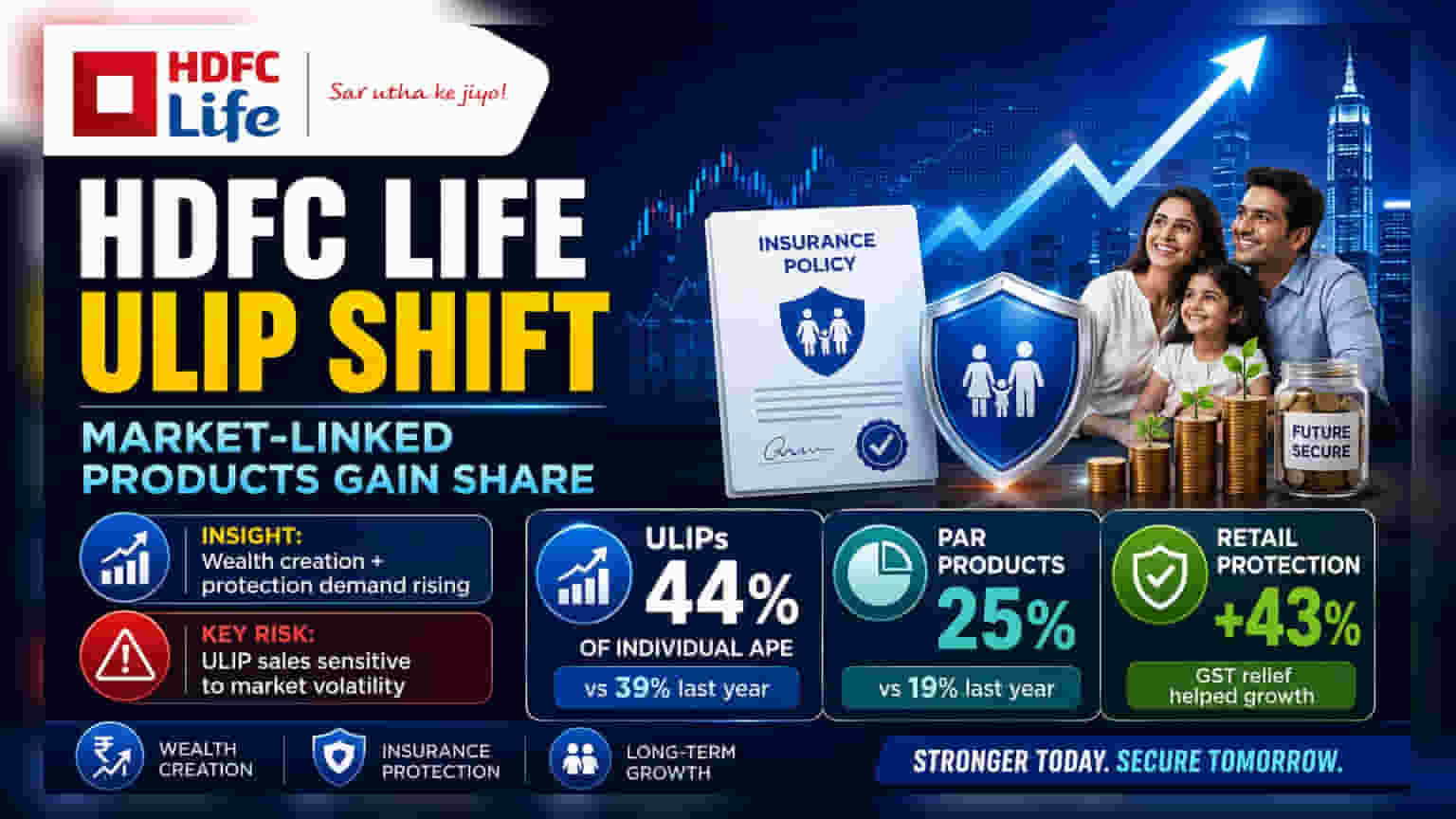
HDFC Life’s FY26 annual report reveals a major shift in its product mix, with Unit Linked Insurance Plans (ULIPs) climbing to 44% of individual business. This trend highlights a growing investor preference for market-linked wealth creation. Investors should watch how this portfolio change impacts the company’s profit margins and sensitivity to capital market volatility in the coming quarters.
What Happened
HDFC Life Insurance Company released its integrated annual report for the fiscal year 2026, showing a distinct shift in how customers are choosing insurance products. The insurer reported that Unit Linked Insurance Plans (ULIPs) now account for 44 percent of its individual annualised premium equivalent (APE) mix, a jump from 39 percent in the previous year. Additionally, participating (Par) products—which offer policyholders a share in the insurer's profits via bonuses—grew their share of the business to 25 percent, up from 19 percent.
The Shift To Market-Linked Products
This move toward ULIPs and participating products suggests that Indian savers are increasingly seeking wealth-creation tools alongside life insurance coverage. According to the company's management, including MD and CEO Vibha Padalkar, factors like rising disposable incomes and better financial awareness are driving this trend.
For investors, this shift is meaningful because market-linked products generally carry different capital requirements and fee structures compared to pure protection or traditional non-participating plans. While ULIPs can attract higher customer interest during bull markets, they also expose the insurer to market volatility. If equity markets face a prolonged downturn, sales for these products can slow down, which is a structural risk investors often monitor in life insurance companies.
Protection Business And Tax Impact
Despite the popularity of market-linked instruments, HDFC Life maintained a diversified focus. The report highlighted a 43 percent expansion in the retail protection business during the year. The company stated that this significant growth was partly driven by the removal of Goods and Services Tax (GST) on retail life insurance premiums. For shareholders, this is a positive development, as protection products typically offer higher profit margins than savings-oriented insurance plans.
The Risks Of A Market-Linked Shift
While the growth in ULIPs and protection is a positive sign for topline growth, there are inherent risks. Life insurers rely on long-term policyholders to build a stable balance sheet. A heavy tilt toward ULIPs means that the insurer's new business growth is more sensitive to stock market performance. If the market sentiment turns negative, customers may pivot back to traditional guaranteed-return products or move their savings entirely to other investment vehicles like mutual funds.
Additionally, insurers face stiff competition from asset management companies (AMCs) and their SIP (Systematic Investment Plan) offerings. HDFC Life must ensure its persistency ratios—a measure of how many customers continue to pay their premiums over time—remain strong despite the change in product mix.
What Investors Should Track Next
The key monitorables for investors will be the sustainability of the protection business growth and the company's ability to manage margins as the product mix evolves. Investors may look for details in future quarterly earnings regarding:
- Persistency ratios across different product categories.
- New business margin trends as the sales mix shifts.
- Commentary on how the company manages the cost of acquisition for new policies.
- Exposure to potential market volatility and its impact on ULIP sales volumes.