

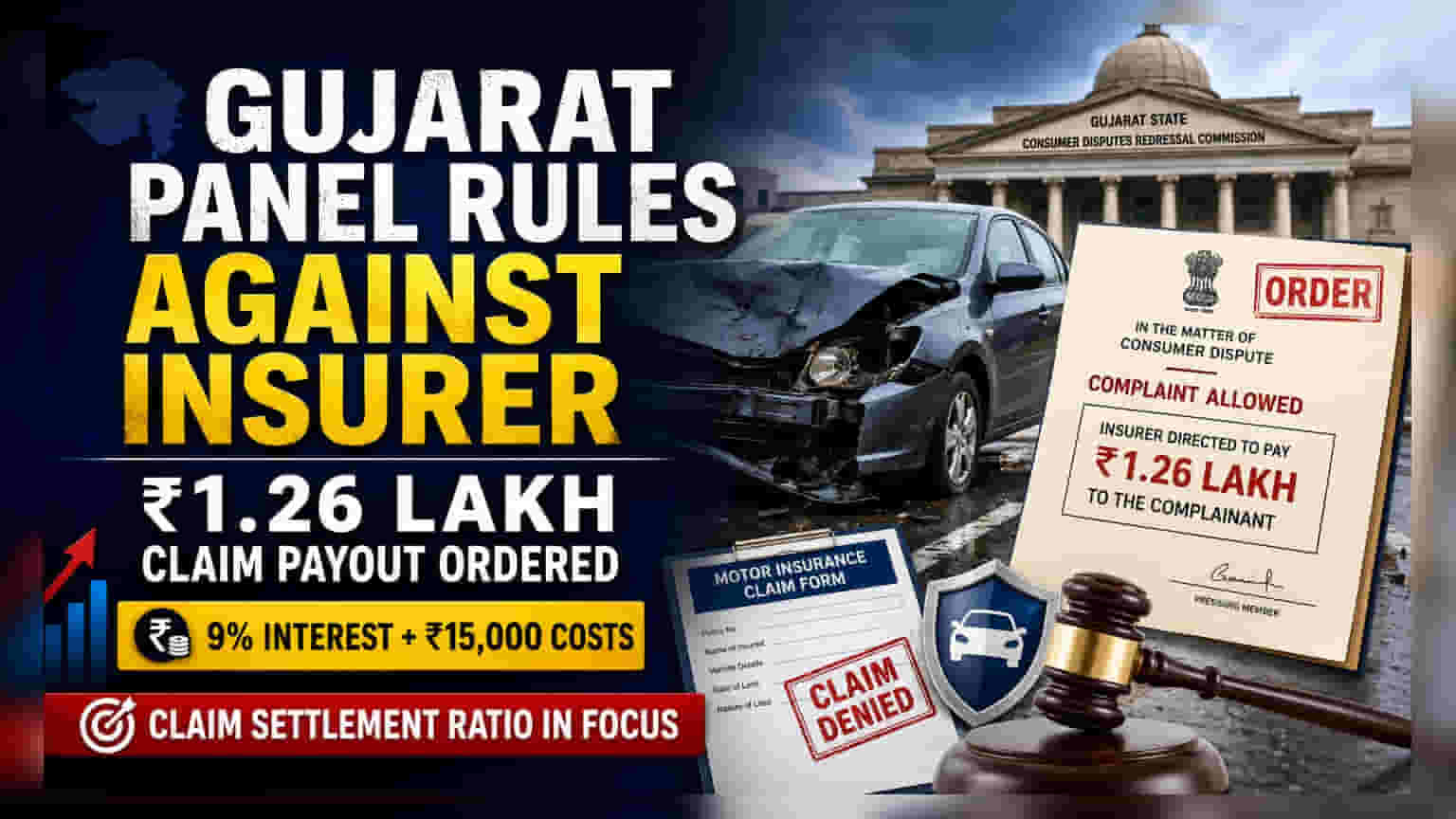
The Navsari Consumer Disputes Redressal Commission has ordered an insurance provider to pay ₹1.25 lakh to a policyholder for a rejected motor insurance claim. The ruling highlights the potential costs of aggressive claim rejection. For insurance investors, such consumer disputes provide insight into the operational and reputational risks that insurers face in the general insurance sector.
What Happened
The Navsari Consumer Disputes Redressal Commission in Gujarat has ruled against an insurance company regarding a denied motor insurance claim. The commission ordered the insurer to pay the policyholder, Chirag Desai, a sum of ₹1,25,895 for vehicle damage.
In addition to the claim amount, the commission directed the insurer to pay 9% annual interest on the amount from the date the complaint was filed. Furthermore, the company must pay an additional ₹15,000 to cover litigation costs and harassment. The order was issued on May 15 and has since been made public.
The Dispute Over Claim Rejection
The policyholder had filed a claim following a vehicle accident on June 20, 2023, near Valthan-Punagam chowkdi in Surat. The insurance company had initially rejected the claim, citing a lack of concrete evidence. Specifically, the insurer pointed to inconsistencies in the claimant’s account, the lack of third-party details such as the truck's registration number, and the absence of specific information regarding the driver of the other vehicle.
However, the consumer commission found the insurer’s complete rejection to be unjustified. While noting the lack of direct proof of the specific collision, the panel determined that the damage to the vehicle was evident. Consequently, the commission ruled that the total rejection of the claim constituted a deficiency in service.
Why This Matters for the Insurance Sector
For investors in the general insurance sector, claim management is a critical part of the business model. Insurance companies operate on the trust that valid claims will be settled promptly. When an insurer faces frequent consumer disputes or is penalized by regulators and commissions, it can signal deeper operational issues.
First, high rates of contested or rejected claims can harm a company’s brand, leading to lower customer retention in a highly competitive market. Second, these legal battles increase operational expenses, such as legal fees and interest penalties, which can pressure profit margins. Third, frequent adverse orders from consumer forums can attract the attention of the Insurance Regulatory and Development Authority of India (IRDAI), which oversees the conduct of these firms.
What Investors Should Track
Investors looking at insurance companies typically monitor the 'Claim Settlement Ratio.' This is a key metric that shows how many claims a company pays out compared to the number of claims received. A consistent, high settlement ratio is generally viewed as a sign of healthy service standards.
Going forward, shareholders and analysts keep an eye on how insurance firms manage their grievance redressal process. They also track reports from the Insurance Ombudsman, which often reflect the nature and volume of consumer complaints against various players. Sustained issues in settling claims can lead to regulatory scrutiny, which is a risk factor for long-term operational stability.