

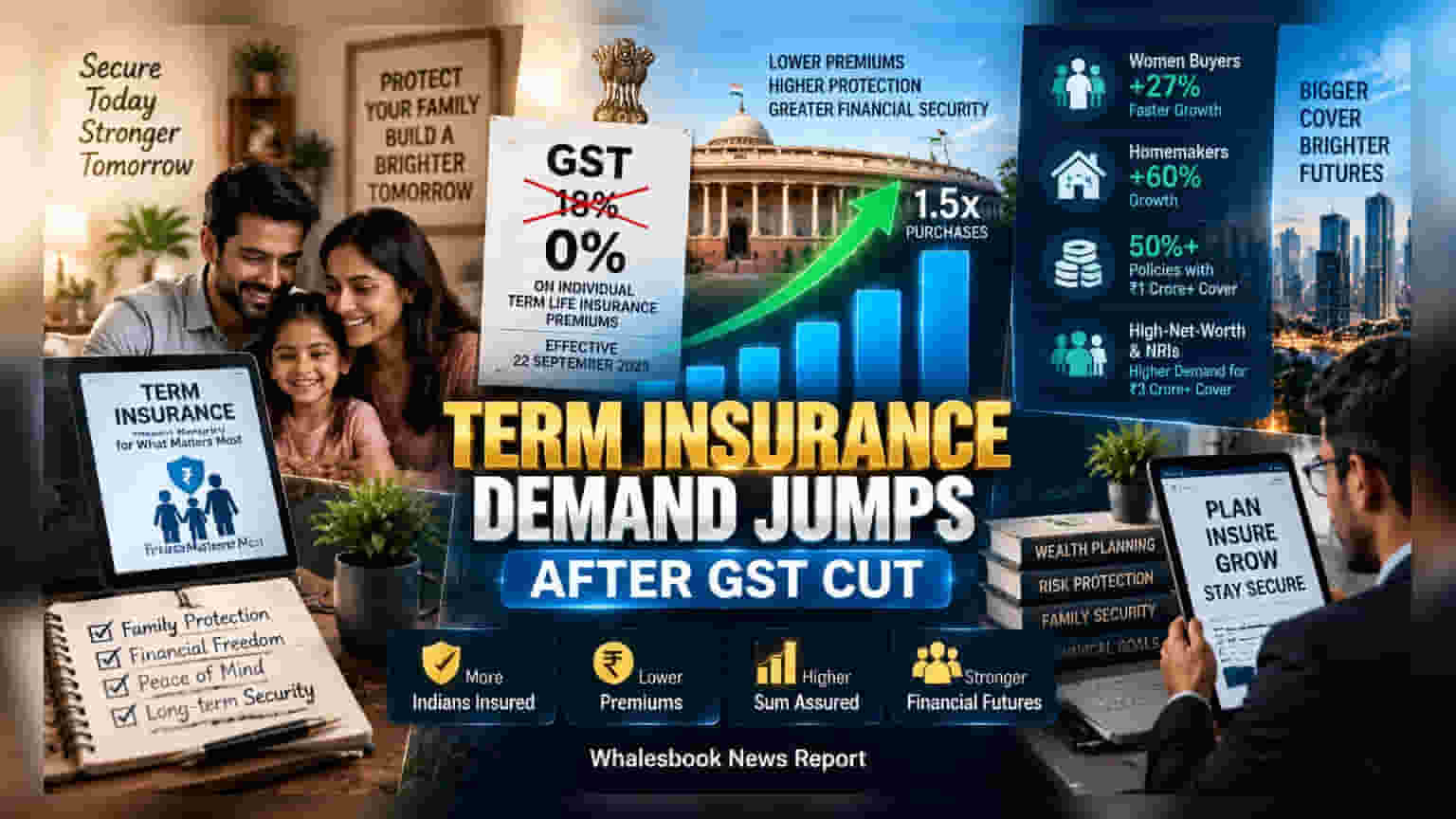
One year after the removal of 18% GST on individual term life insurance, purchase volumes have grown 1.5 times. Investors should note that while consumer demand for high-value policies is up, the sector faces structural tax credit changes, and group insurance remains taxable.
One year after the Indian government removed the 18% GST on individual term life insurance premiums, the insurance sector is witnessing a marked shift in buying patterns. Data compiled since the exemption took effect on September 22, 2025, shows that total term insurance purchases have increased 1.5 times compared to the pre-tax-cut period.
The removal of the 18% levy acted as a direct price cut for consumers, making pure protection products more affordable. This has led to a significant change in the types of policies being bought. More than half of all term insurance purchases today involve a sum assured of ₹1 crore or more. This indicates that buyers are using the savings from lower premiums to increase the total protection amount for their families rather than just keeping their costs low.
Shifts in Buyer Demographics and High-Value Policies
The impact has been particularly strong among specific groups. Women customers recorded 27% faster adoption growth compared to men, while the homemaker segment saw 60% more growth than other groups. This suggests a growing awareness regarding the financial contribution of homemakers and the need for adequate life coverage in household planning.
Affluent segments have also responded actively. High-net-worth individuals and non-resident Indians have significantly increased their purchase of high-value covers of ₹3 crore and above. This move toward larger policy sizes helps insurance companies grow their top-line revenue even as individual premiums become more competitive.
The Investor Angle: Tax Changes and Margin Dynamics
While the demand boost is a positive sign for life insurance companies, investors should observe the structural changes in how these companies handle taxes. Because individual term insurance is now exempt from GST, insurance companies can no longer claim Input Tax Credit on the expenses they incur to run these specific policies.
In simple terms, insurers cannot claim a refund or set off the tax they pay on services and goods (like marketing or office operations) against the tax they collect from customers, because there is no tax being collected on these policies. This change can create pressure on operating margins, as companies must absorb these costs internally. The net impact on profitability is a key monitorable in the coming quarterly results for listed insurance players.
Market Segmentation: Group vs. Individual
It is important for investors to note that this tax exemption applies only to individual term life insurance. Group term insurance plans—the policies often provided by employers to their staff—continue to be taxed at the standard 18% rate. This creates a two-tier market. The growth seen in the individual segment does not automatically translate to the group insurance business, which remains sensitive to corporate buying patterns and the higher cost structure due to the tax.
Moving forward, the primary focus for the sector will be whether this 1.5x jump in volume represents a sustained change in household financial habits or a temporary spike caused by the sudden drop in premiums. Investors will also watch to see if insurers can maintain their profit margins despite the loss of Input Tax Credit, and whether competition leads to further price adjustments in the coming months.